
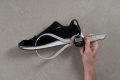
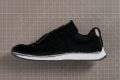
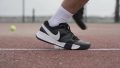
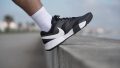

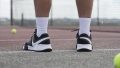
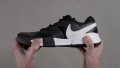

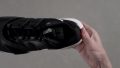
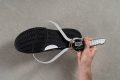


Our verdict
- Top pick in best Nike tennis shoes
- Top pick in best cheap tennis shoes
Pros
- Solid lateral support for an entry-level shoe
- Wide and stable base
- Great durability for the price
- Sufficient impact protection
- Lively and responsive midsole
- Wide and stable base
- Decent weight
- Accommodating toebox
Cons
- Not so breathable
- Not very comfy
Audience verdict
- Top 24% most popular tennis shoes
Comparison
The most similar tennis shoes compared
|
++ Add a shoe
|
|||||
|---|---|---|---|---|---|
| Audience score |
84
Good!
|
82
Good!
|
88
Great!
|
83
Good!
|
|
| Price |
$80
|
$90
|
$100
|
$160
|
|
| Shoe type |
All Court
|
All CourtHard Court
|
All Court
|
All CourtHard Court
|
|
| Construction |
Stability
|
Speed
|
Speed
|
Stability
|
|
| Breathability |
Moderate
|
Breathable
|
Moderate
|
Moderate
|
|
| Weight lab | 12.8 oz / 363g | 11.9 best cheap tennis shoes | 12.6 Footwear testing / Prototype testing | 14.7 oz / 417g | |
| Lightweight | ✗ | ✓ | ✗ | ✗ | |
| Drop lab | 9.5 mm | 11.2 mm | 9.4 mm | 7.5 mm | |
| Owners of this shoe, how does it fit |
Wide
|
Medium
|
Medium
|
Wide
|
|
| Toebox width |
Medium
|
Wide
|
Wide
|
Medium
|
|
| Size |
Half size small
|
True to size
|
True to size
|
Half size small
|
|
| Midsole softness |
Balanced
|
Firm
|
Balanced
|
Firm
|
|
| Stiffness |
Moderate
|
Flexible
|
Moderate
|
Moderate
|
|
| Torsional rigidity |
Stiff
|
Stiff
|
Moderate
|
Stiff
|
|
| Midsole softness soft to firm |
Moderate
|
Moderate
|
Moderate
|
Moderate
|
|
| Midsole width - forefoot |
Average
|
Wide
|
Average
|
Average
|
|
| Midsole width - heel |
Wide
|
Wide
|
Average
|
Average
|
|
| Outsole durability |
Decent
|
Good
|
Decent
|
Good
|
|
| The difference between the two stack heights gives the Midsole softness soft to firm a heel-to-toe drop of 9.5 mm |
Good
|
Good
|
Bad
|
Decent
|
|
| Heel stack lab | 28.5 mm | 26.7 mm | 28.9 mm | 30.0 mm | |
| Forefoot | 19.0 mm | 15.5 mm | 19.5 mm | 22.5 mm | |
| Insole thickness |
Average
|
Very thin
|
Thin
|
Average
|
|
| Removable insole | ✓ | ✓ | ✓ | ✓ | |
| Heel tab |
None
|
None
|
None
|
None
|
|
| Toebox durability |
Good
|
Good
|
Decent
|
Decent
|
|
| Outsole hardness |
Hard
|
Average
|
Average
|
Average
|
|
| Outsole thickness |
Very thick
|
Average
|
Average
|
Average
|
|
| Ranking |
#23 Bottom 41%
|
#27 Bottom 30%
|
#14 Top 36%
|
#25 Bottom 35%
|
|
| Popularity |
#9 Top 24%
|
#10 Top 26%
|
#18 Top 47%
|
#16 Top 42%
|
Who should buy
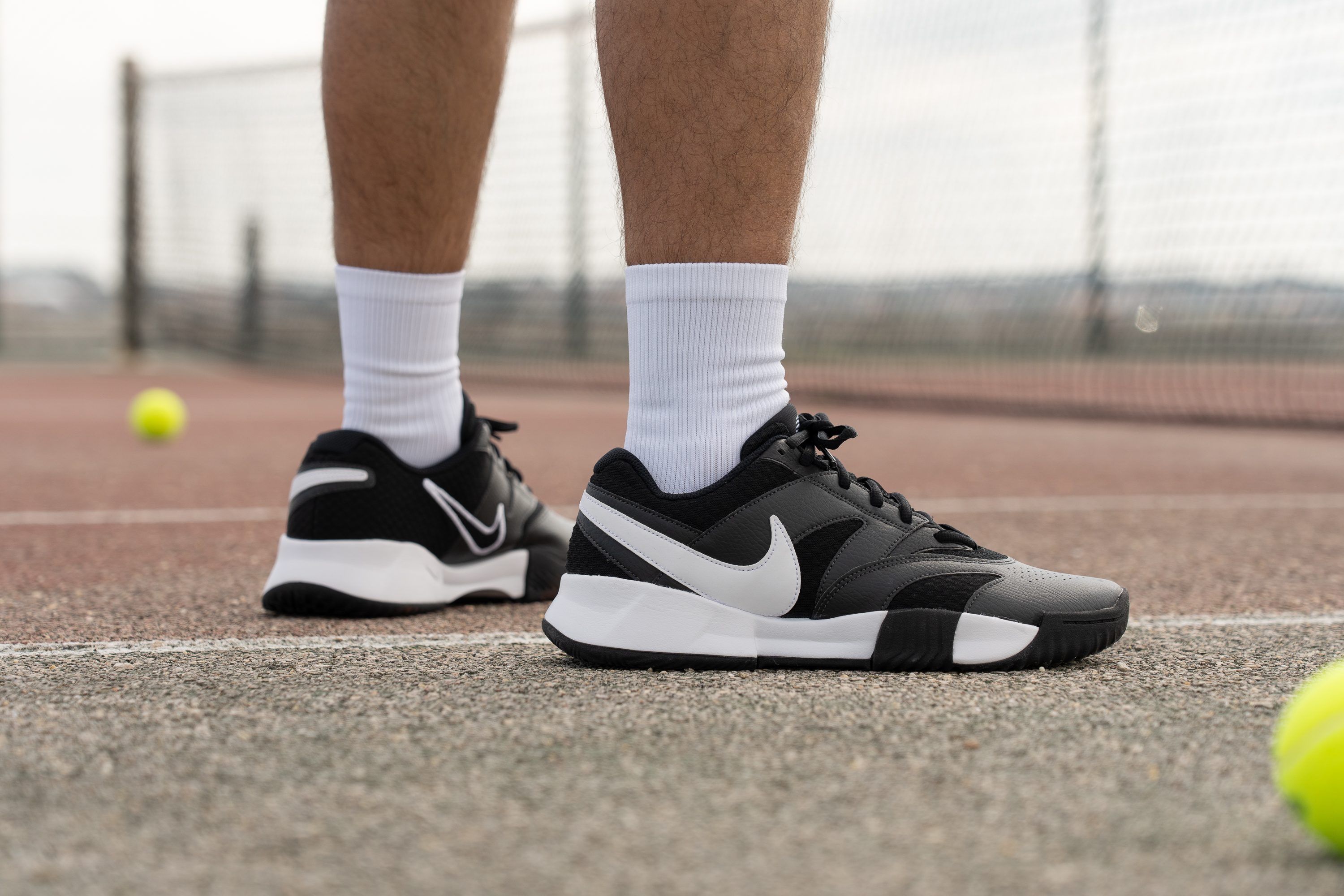
We believe that the NikeMidsole softness soft to firm is worth your attention if:
- you are just starting out with the sport and you need a basic shoe for 1-2 games a week
- you want an affordable option with good value for money (durability in particular)
Who should NOT buy
The Midsole softness soft to firm is just a normcore tennis shoe but it definitely lacks the pop of more expensive options.
If you don't mind stretching your budget a little bit more, you can opt for the more comfortable and performance-oriented ASICS Gel Challenger 14 and K-Swiss Hypercourt Express 2.
Cushioning
Shock absorption
Despite its cheaper price point, the NikeMidsole softness soft to firm ensures that you have enough impact protection to get through a training session or a match.
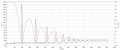
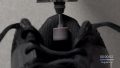
With shock absorption measurements of 91 SA in the heel and 66 SA in the forefoot, this Nike shoe turned out to be on par with the average of tennis shoes, both cheap and expensive ones.
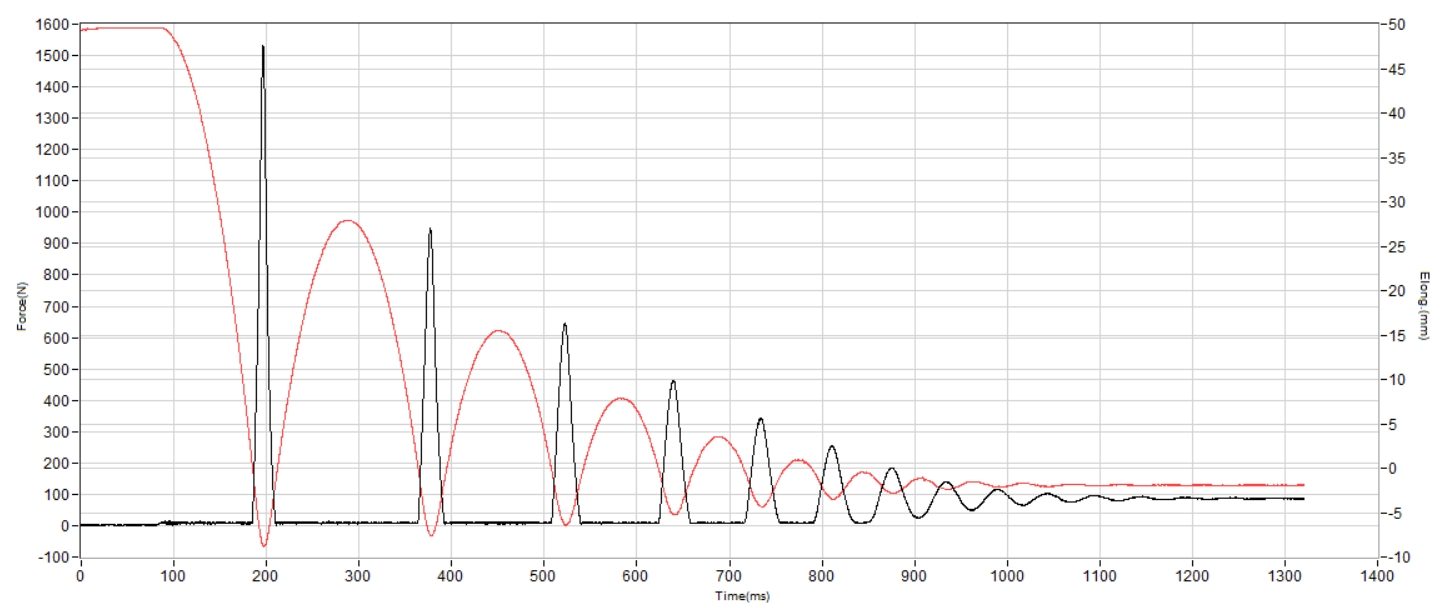
| Midsole softness soft to firm | 91 SA |
| Average | 99 SA |
Energy return
The rebound of this Nike shoe is akin to a tennis ball - its firm midsole has minimal compression and returns most of the force you exert back to your feet.
Thus, it feels quite nimble and responsive, with above-average energy return measurements of 58.4% in the heel and 60.6% in the forefoot.
| Midsole softness soft to firm | 58.4% |
| Average | 48.8% |
Heel stack
Nike doesn't skimp on the amount of cushioning foam in the Midsole softness soft to firm.
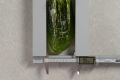
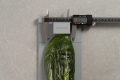
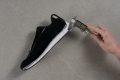
Measuring its stack height in the heel returned a standard caliper reading of 28.5 mm which translates to a sufficient buffer between the foot and the court.
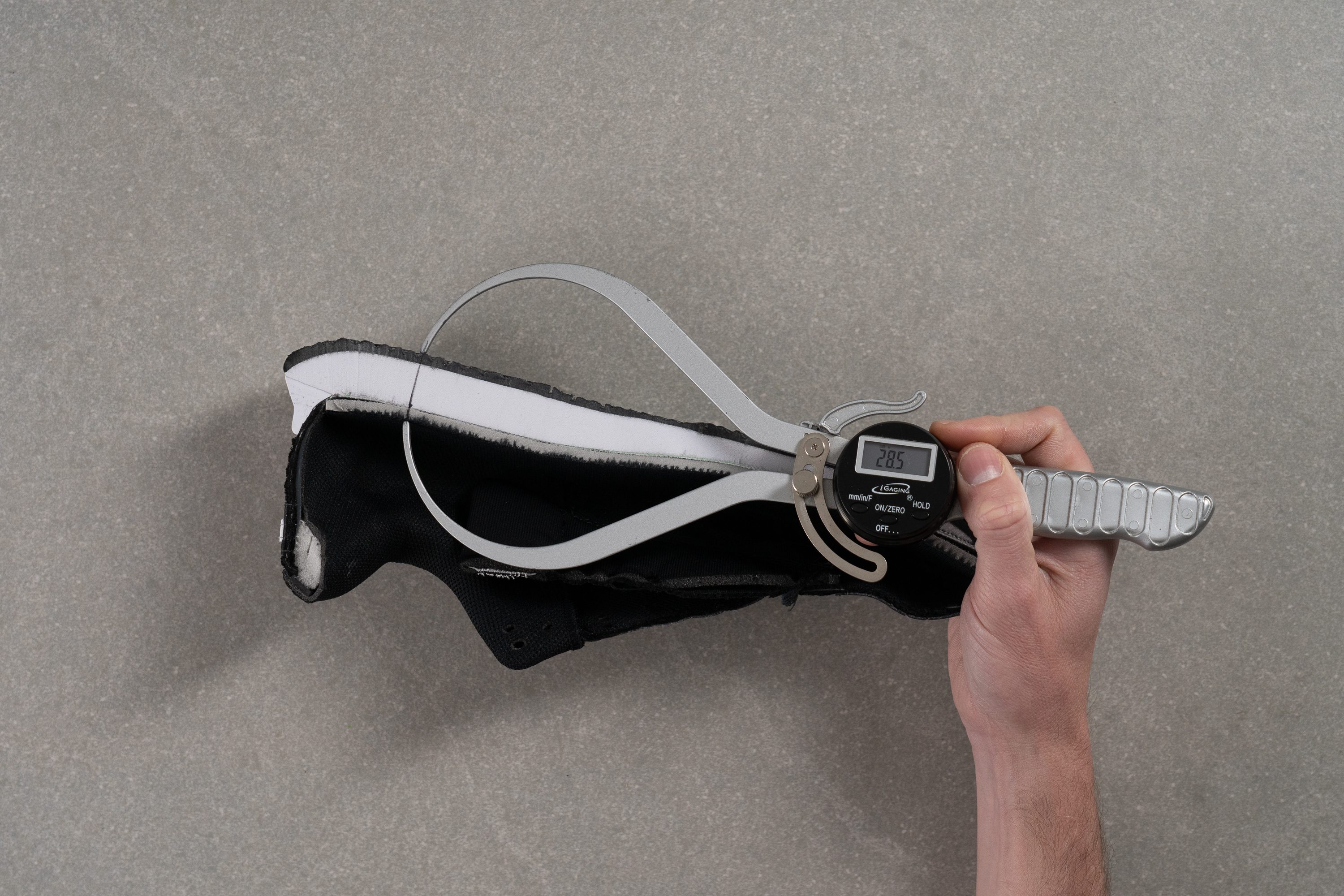
| Midsole softness soft to firm | 28.5 mm |
| Average | 29.2 mm |
Forefoot stack
The shoe also packs a solid amount of cushioning in the forefoot, protecting the ball of foot and the big toe joint from repetitive impact. Showing 19.0 mm on the caliper, it proves to be on par with the category average.
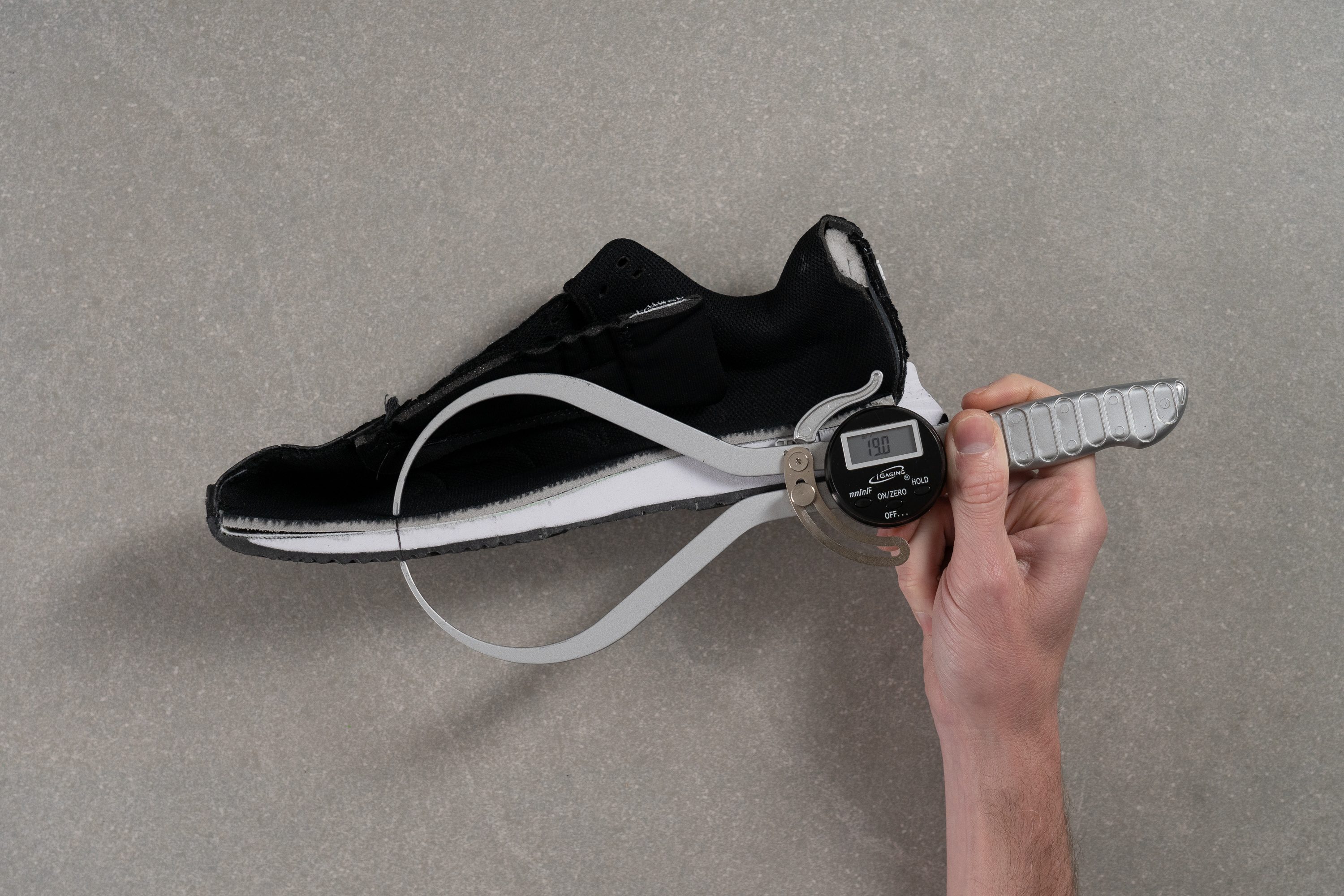
| Midsole softness soft to firm | 19.0 mm |
| Average | 19.5 mm |
Drop
The difference between the two stack heights gives the Midsole softness soft to firm a heel-to-toe drop of 9.5 mm.
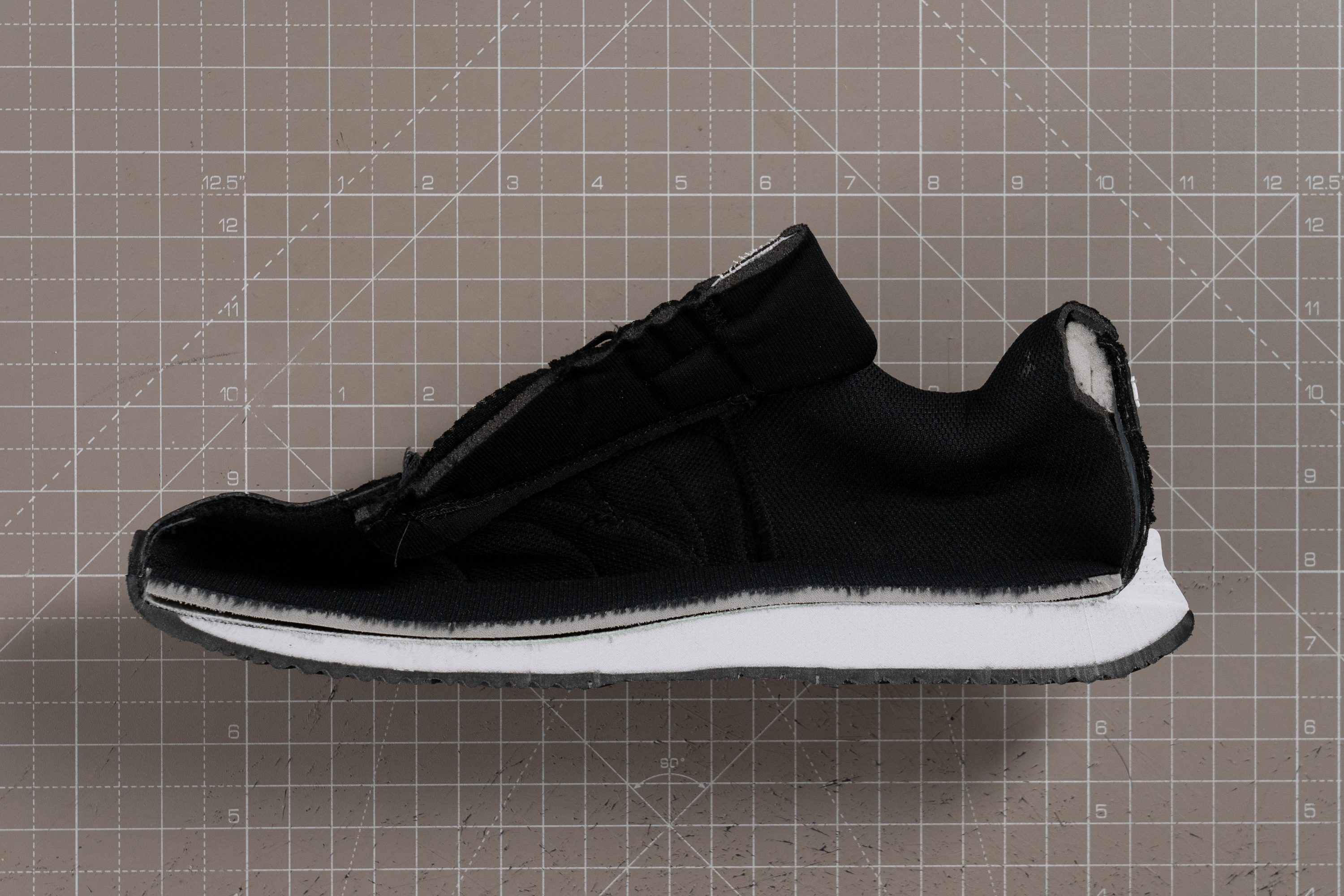
This is a standard offset for a tennis shoe in which the heel is slightly raised above the toes to provide more impact protection while the forefoot stays a bit closer to the court for control and maneuverability.
| Midsole softness soft to firm | 9.5 mm |
| Average | 9.7 mm |
Midsole softness
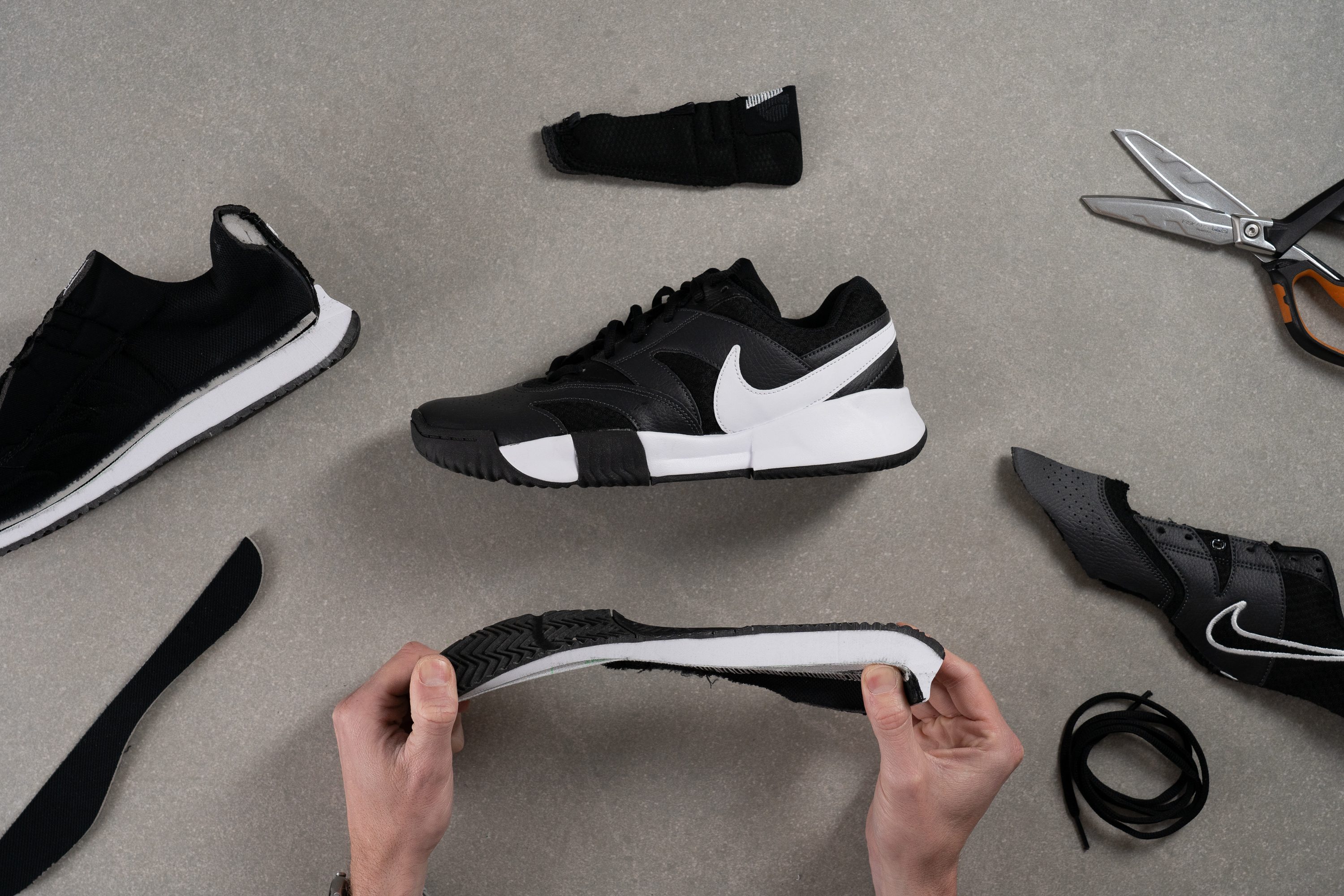
But please note that this low-cost Nike shoe relies on a very basic type of EVA foam for its primary cushioning. It is a pretty dense material without a ton of energy return.
This is clearly reflected in the shoe's midsole firmness which returned a higher durometer reading of 29.9 HA - not the softest tennis shoe midsole out there.
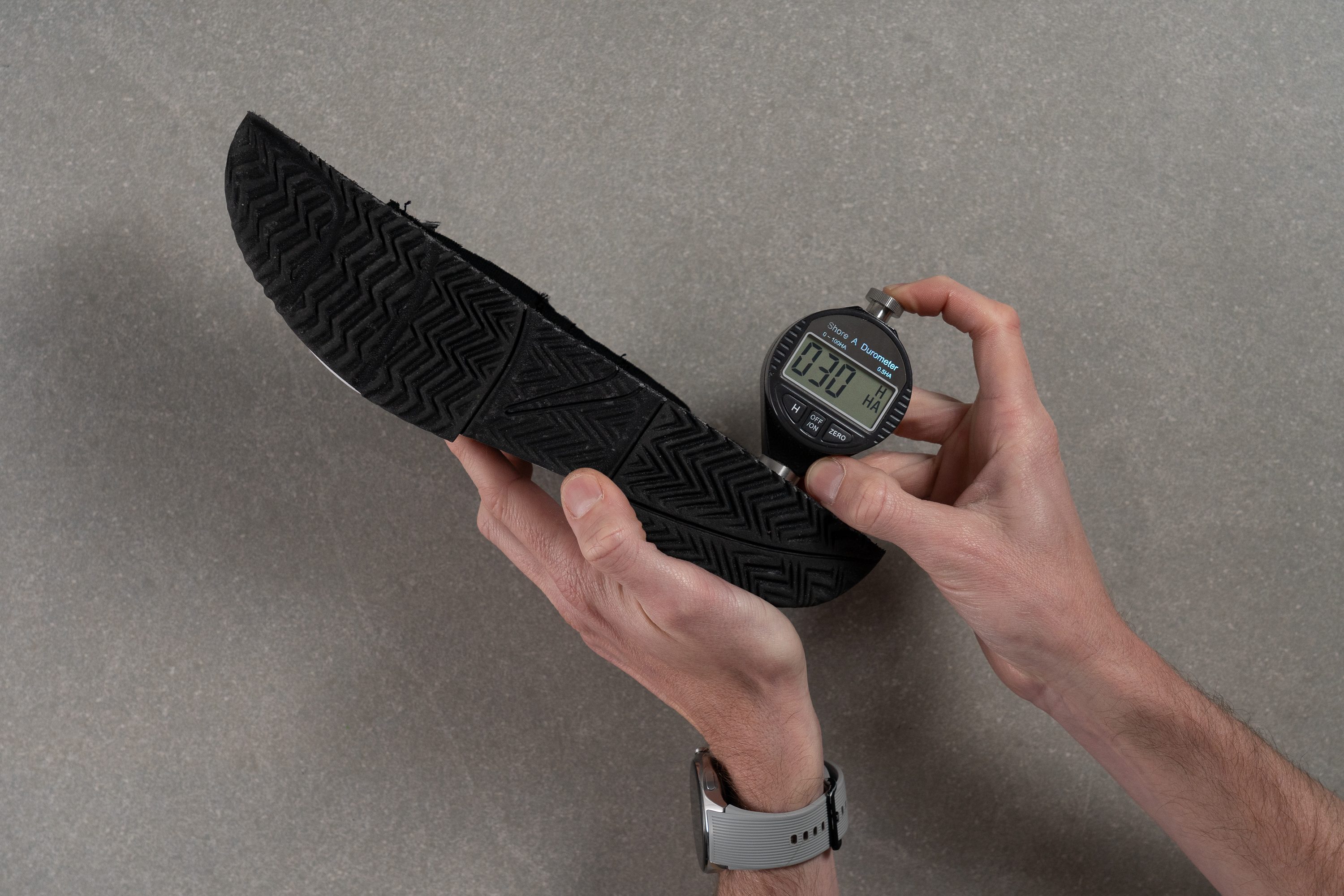
| Midsole softness soft to firm | 29.9 HA |
| Average | 28.1 HA |
Size and fit
Size
NikeMidsole softness soft to firm fits half size small (28 votes).
Consider sizing up
Not very comfy
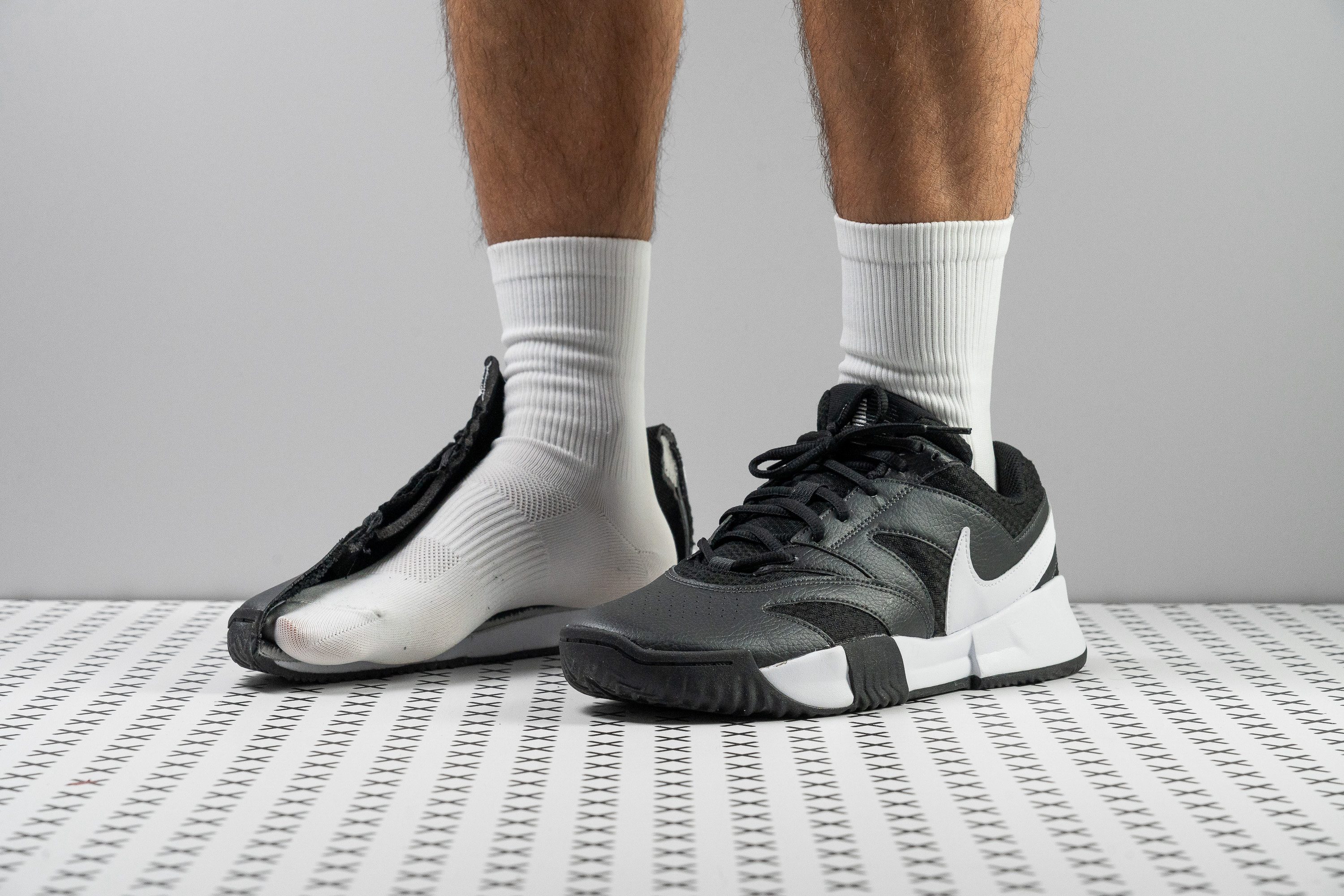
We were surprised to see the brand's recommendation to get a half size larger in the Midsole softness soft to firm because the shoe didn't seem small in our regular men's US size 9. Neither did the shoe's gel mold pose any concerns about the fit.
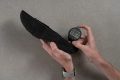
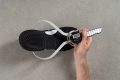
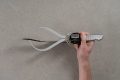
Measuring the widest area of the mold, our caliper returned a pretty high reading of 95.5 mm - that's even a couple of millimeters wider than average!
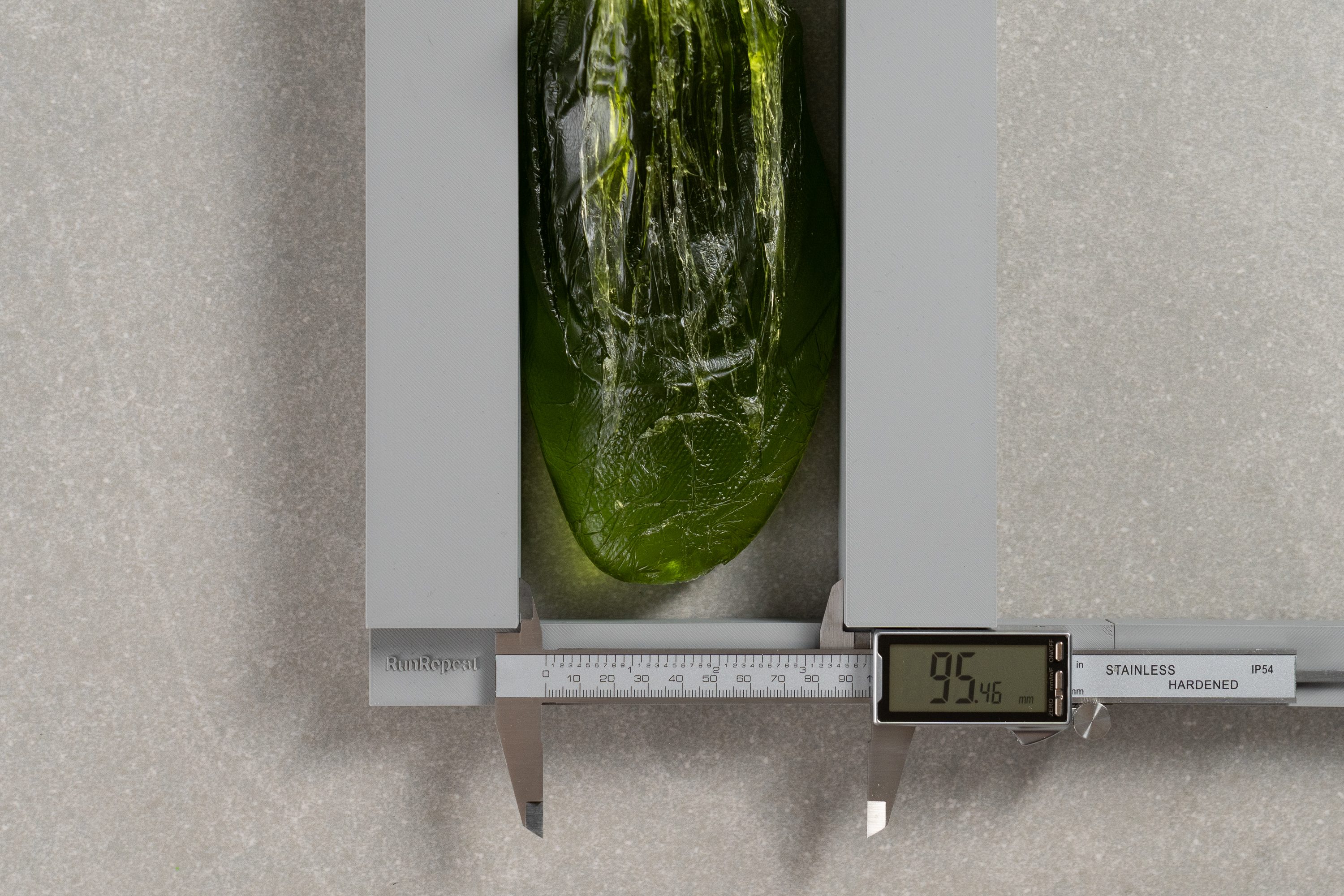
| Midsole softness soft to firm | 95.5 mm |
| Average | 92.9 mm |
Toebox width
However, there is a visible taper angle in the shoe's gel replica. We can see how some people may feel restricted because of its somewhat pointy shape. But even in the big toe area, the Midsole softness soft to firm showed nothing less than the average 69.4 mm of width!
We don't see the need to size up if you have regular medium-width feet. But you may prefer to do so if you want a bit of extra space in front of your toes.
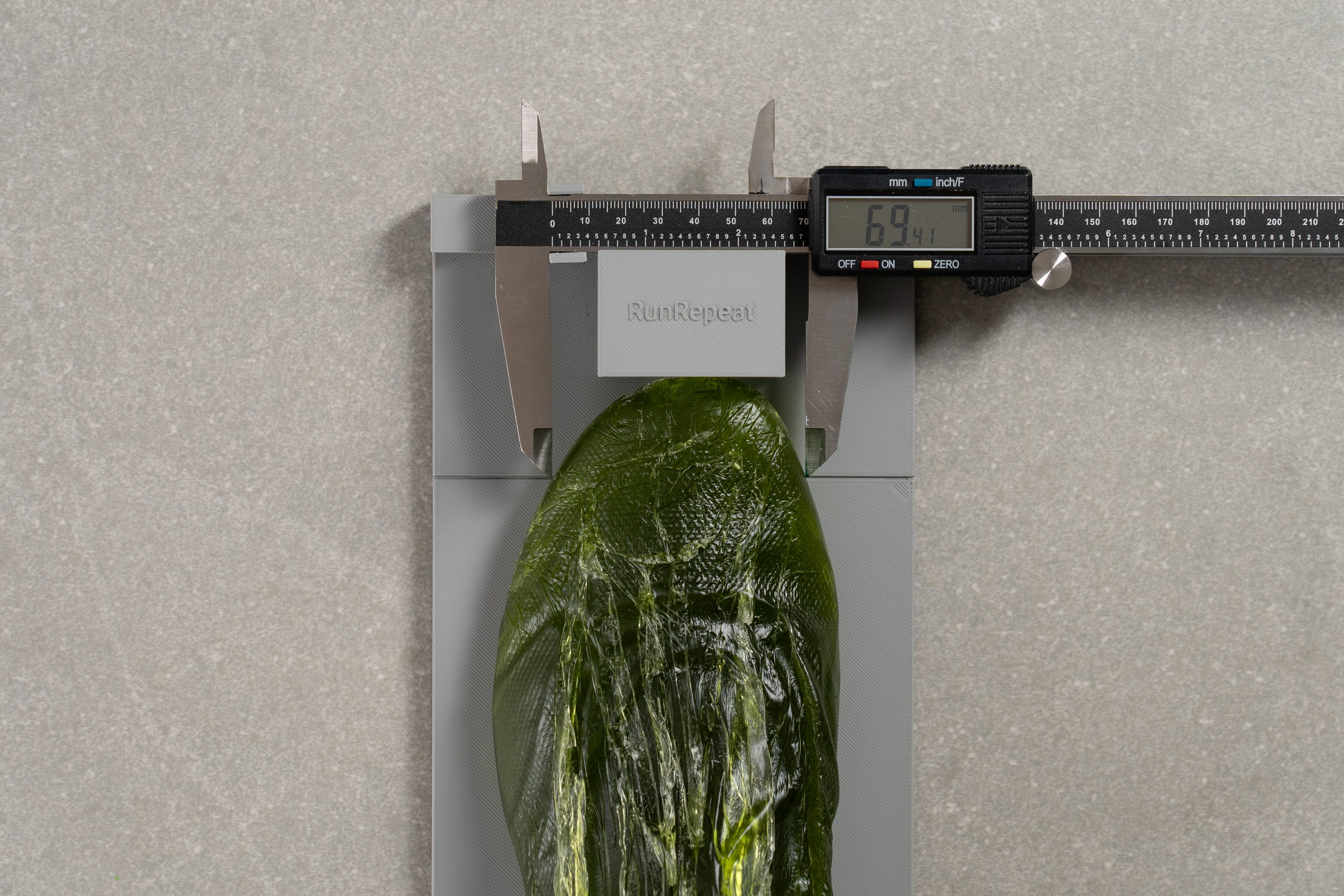
| Midsole softness soft to firm | 69.4 mm |
| Average | 69.2 mm |
Toebox height
Even the shoe's vertical space proved to be on par with the average and nowhere near restricting. Measuring its toebox height, we got a regular reading of 25.9 mm.
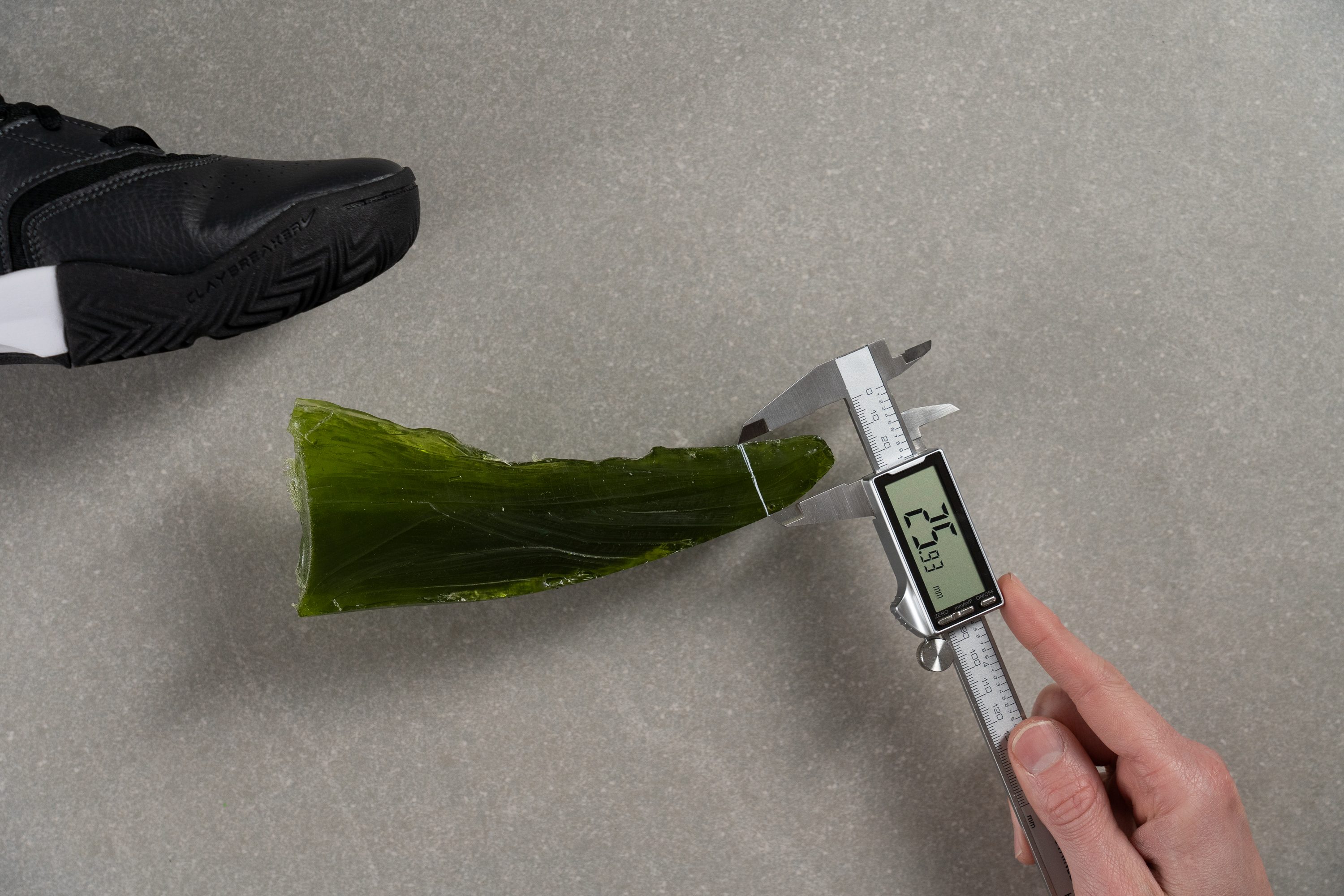
| Midsole softness soft to firm | 25.9 mm |
| Average | 25.1 mm |
Traction / Grip
Forefoot traction
Disclaimer: In this review, we are testing the CLY (Clay) version of the Midsole softness soft to firm. The results can differ from the shoe's hard court version.
Despite its cheaper price point, the NikeMidsole softness soft to firm offers a very confidence-inspiring bite on the court. Measuring the shoe's coefficient of friction on dry concrete, we recorded an impressive reading of 0.81!
| Midsole softness soft to firm | 0.81 |
| Average | 0.76 |
Outsole design
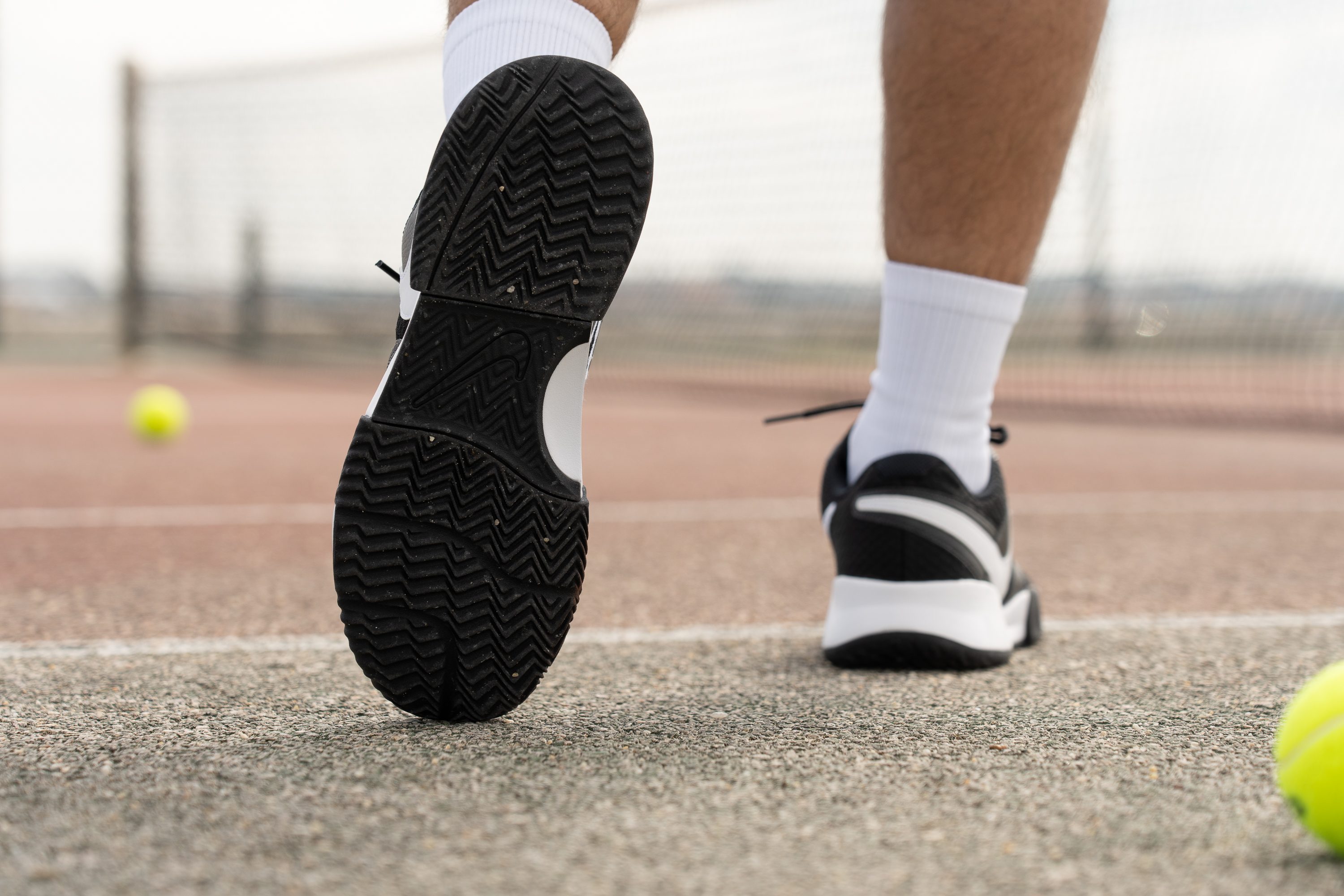
Nike relies on a traditional herringbone tread pattern for the NikeMidsole softness soft to firm's clay version. It also features deep flex grooves in the forefoot to ensure pliability.
Flexibility / Stiffness
We found that the shoe's built-up design affects its flexibility, too. But it's not so critical.
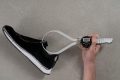
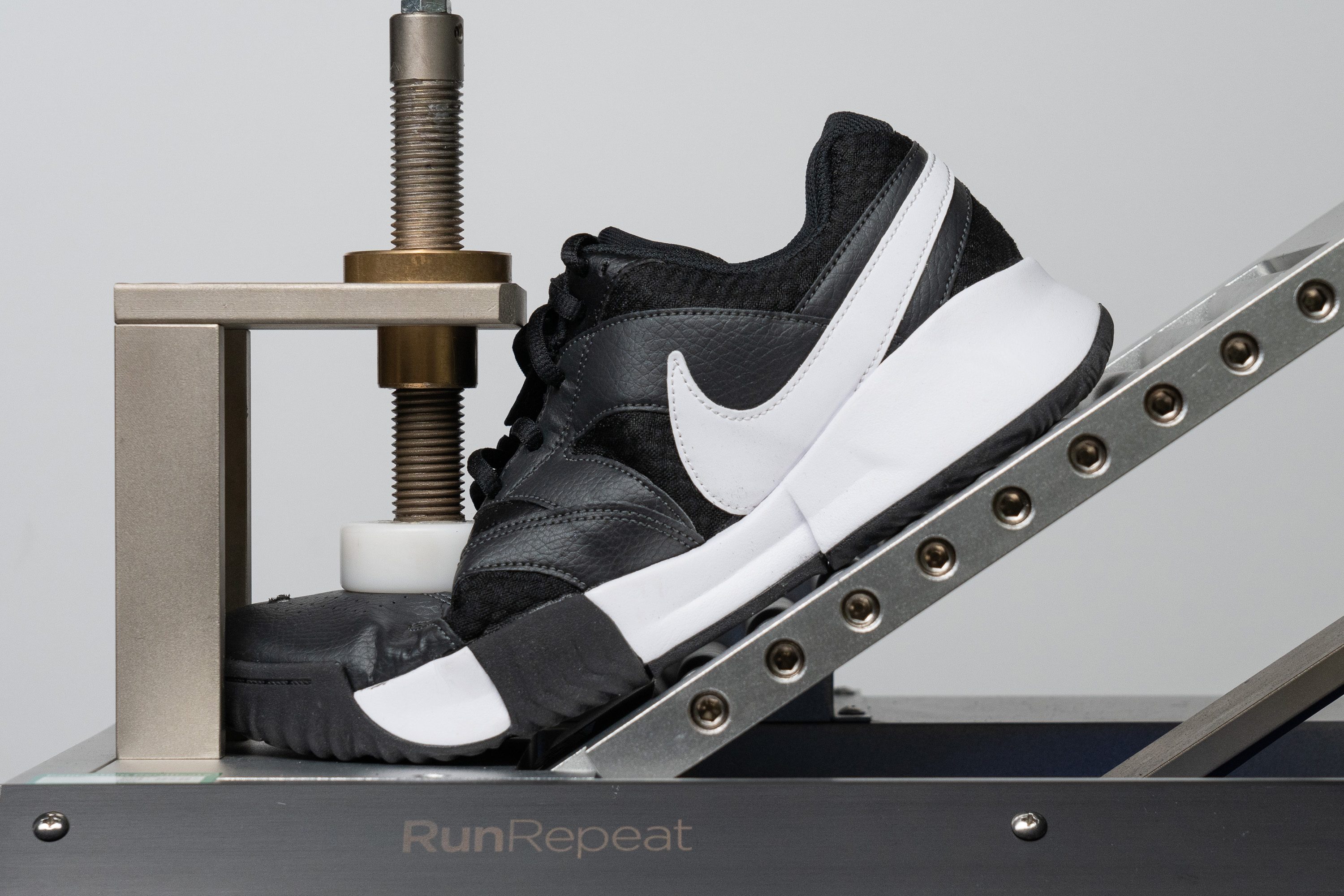
Bending the Midsole softness soft to firm to a 30-degree angle, our shoe flex tester showed a medium-range reading of 16.6N. That's just as much force as it takes an average tennis shoe.
This limits the shoe's maneuverability but offers greater forefoot support and stability in return.
| Midsole softness soft to firm | 16.6N |
| Average | 16.6N |
Weight
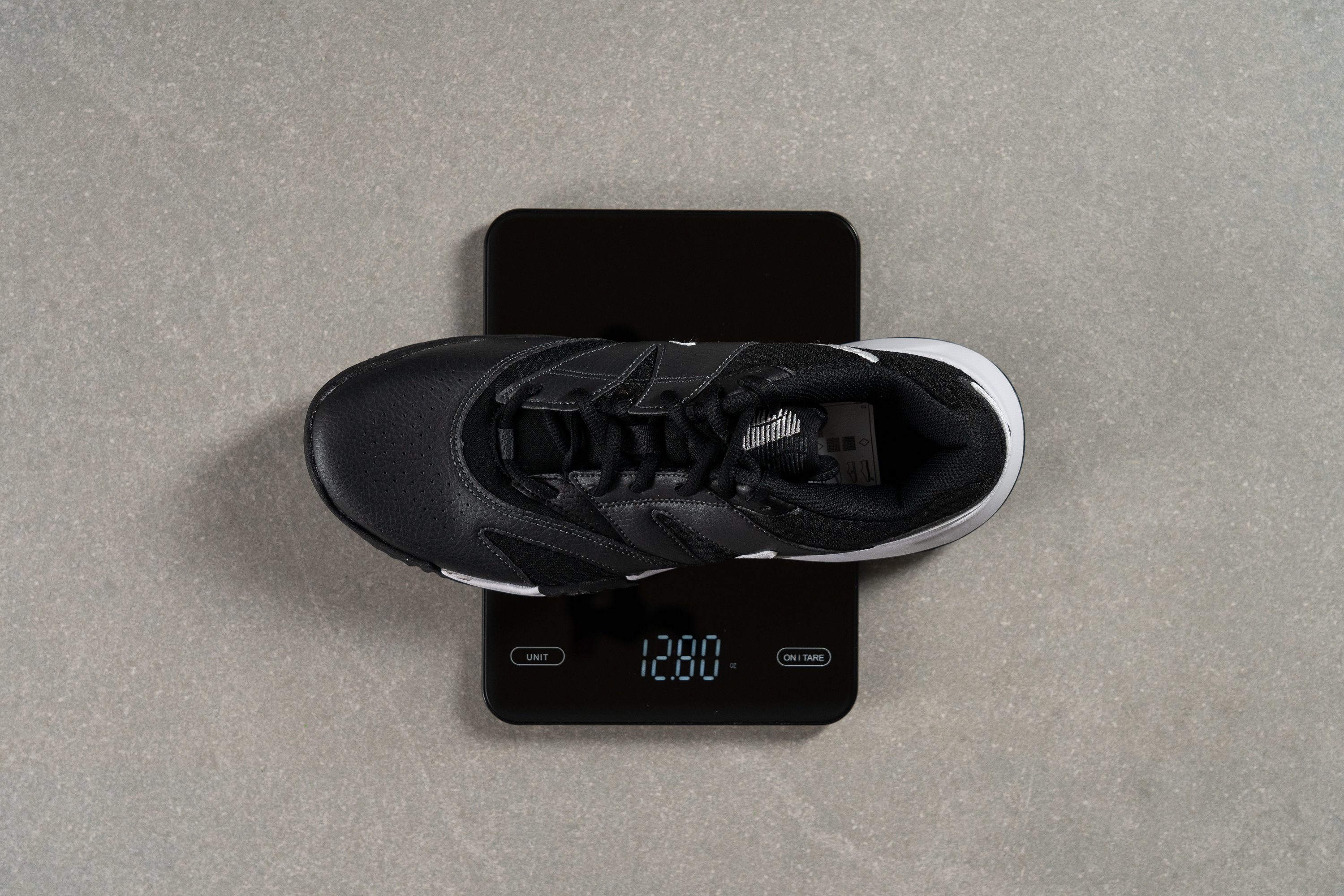
Weighing the Midsole softness soft to firm on our scale showed that the word "Lite" in its name doesn't necessarily correspond to the true nature of this Nike shoe.
At 12.8 oz (363g), it sits right at the average of tennis shoes but we think that it could have been lighter given the absence of the technical bells and whistles.
If you prefer a lighter shoe for easier acceleration on the court, try the Toe guard durability.
| Midsole softness soft to firm | 12.8 oz (363g) |
| Average | 12.8 oz (362g) |
Breathability
In its product description, Nike promises a breathable upper in the Midsole softness soft to firm. But it never specified the level of breathability...
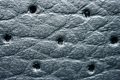
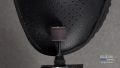
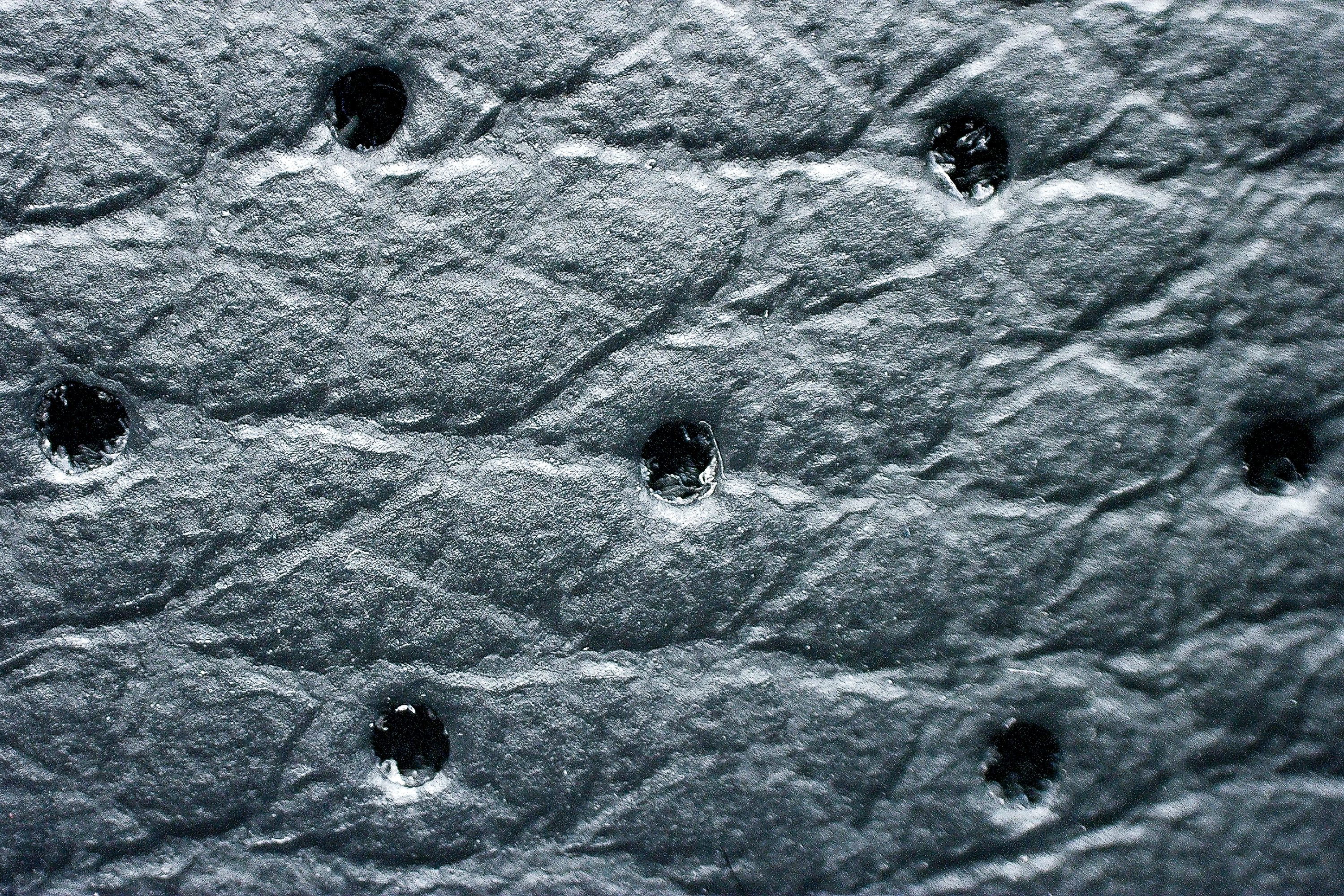
Instead, our own testing revealed that the shoe's ventilation capacity is rather limited and it is primarily because of the thick synthetic overlays all over it!
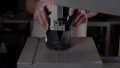
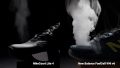
The video above shows how much the airflow is being restricted by the shoe's synthetic toebox. And the perforations throughout it can only do this much.
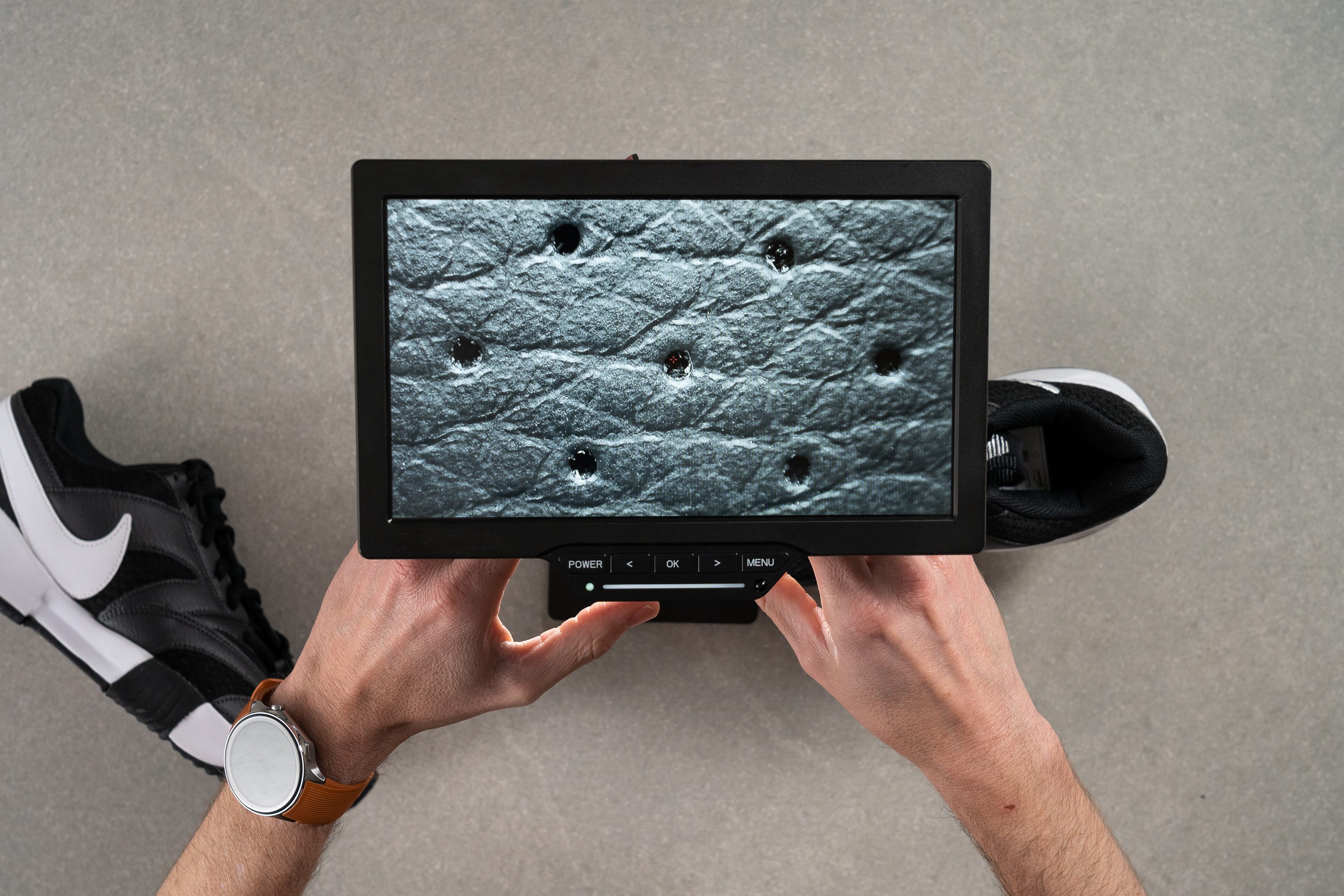
Taking all this into account and comparing the Midsole softness soft to firm's breathability to other tennis shoes, we gave it a pretty moderate score of 3/5. It's not too toasty, but you may want a better aerated shoe for hot weather (score 4 or 5).
| Midsole softness soft to firm | 3 |
| Average | 3.2 |
Stability
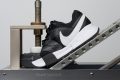
Lateral stability test
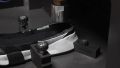
There are no internal shanks or major stabilizing components on the NikeMidsole softness soft to firm but the shoe still delivered sufficient lateral stability to keep us surefooted.
Torsional rigidity
Its firm midsole, targeted side panels, and synthetic leather overlays all work together to make this Nike shoe as resistant to twisting as possible.
The Midsole softness soft to firm truly amazed us with its torsional rigidity, earning the highest possible stiffness score of 5/5. Despite its more affordable nature, this entry-level tennis shoe made us feel as surefooted as some of the premium options.
| Midsole softness soft to firm | 5 |
| Average | 4.4 |
Midsole softness soft to firm
The shoe's stiff heel counter also kept our heels and ankles securely in place. It formed a supportive cage around the rearfoot minimizing the wobbles during intense side-to-side movements.
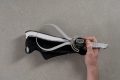
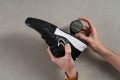
Pushing and squeezing the heel counter with our hands, we didn't hesistate to mark stiffness with a high score of 4/5.
| Midsole softness soft to firm | 4 |
| Average | 4.1 |
Midsole width - forefoot
Retailer Data Access API.
Measuring the widest part of its midsole in the forefoot, our caliper recorded an above-average reading of 113.5 mm. Having that much landing area inspired confidence for both landing and pushing off during the rallies.
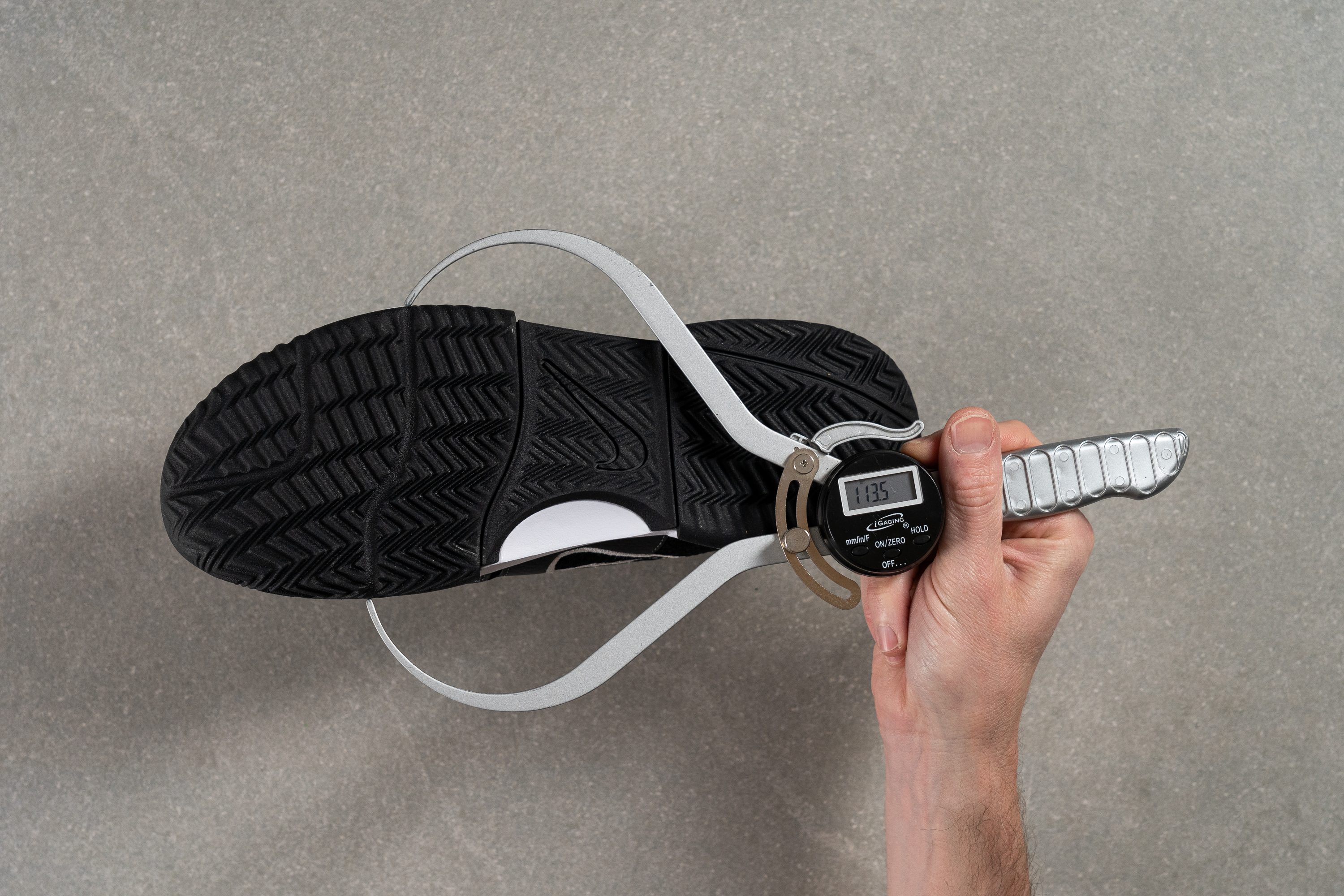
| Midsole softness soft to firm | 113.5 mm |
| Average | 111.9 mm |
Midsole width - heel
The same proved to be true for the shoe's heel, which returned a high caliper reading of 94.1 mm in the widest part. We believe that beginner players will highly appreciate the increased stability of the Midsole softness soft to firm.
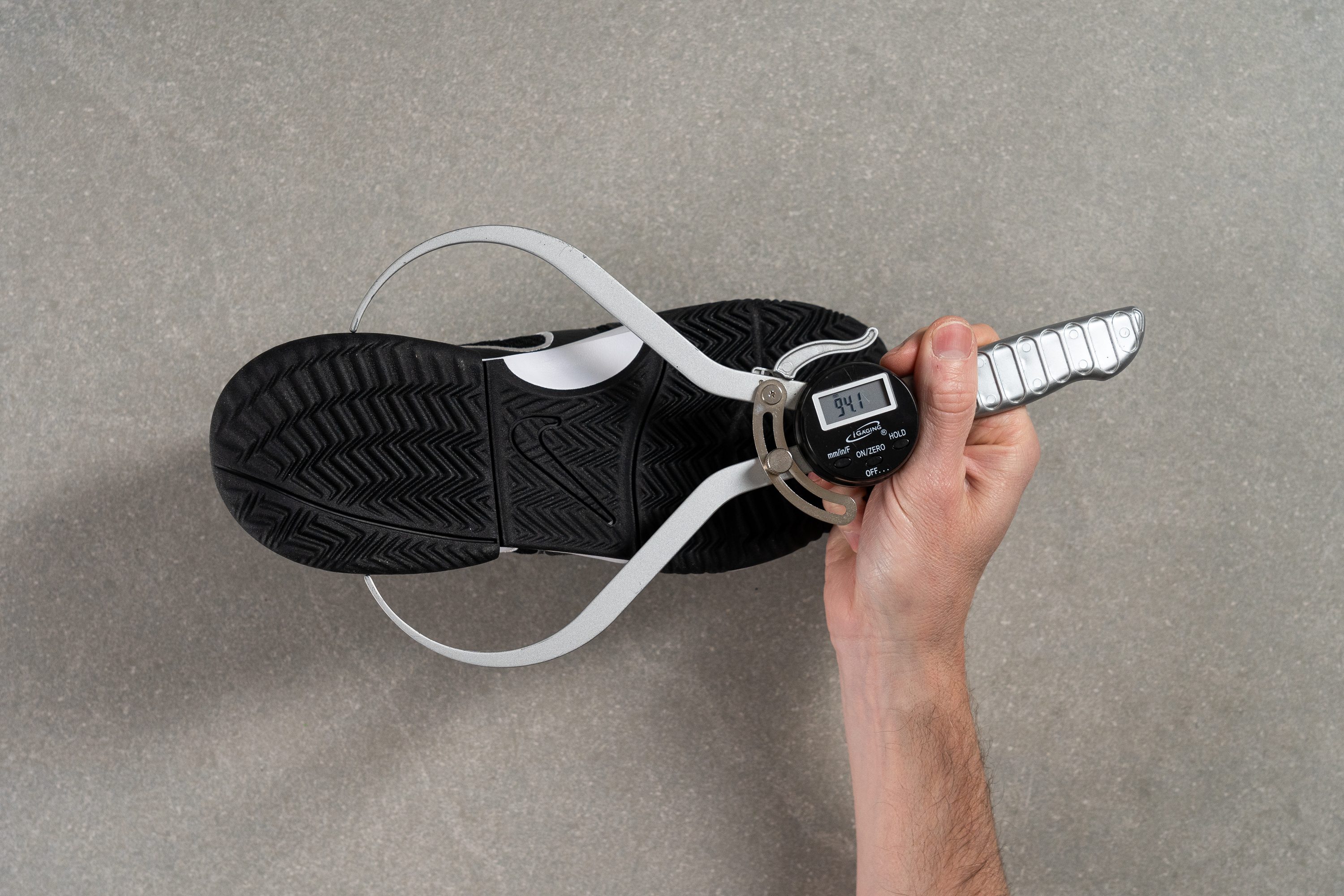
| Midsole softness soft to firm | 94.1 mm |
| Average | 89.6 mm |
Durability
Toe guard durability
Considering the shoe's price point, it's easy to assume that the Nike Midsole softness soft to firm lacks in the durability department. However, we are happy to report that it is not entirely true!
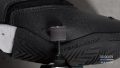
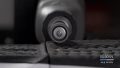
Sure, some of its parts are more prone to abrasion and one such example is the shoe's toe drag guard. More specifically, the synthetic leather overlay above the rubber. Using sandpaper and a Dremel, we literally put the material through the wringer to see how it holds up against the brutal slashing.
Because the Dremel tore through the topmost synthetic layer, we lowered the durability score to 3/5. But on the bright side, it wasn't a see through hole and there is still some life left in the shoe!
| Midsole softness soft to firm | 3 |
| Average | 3.3 |
Toebox durability
In the next test, we checked the top of the shoe's toebox using the same method. However, we lovered the Dremel speed from 10K to 5K RPM because it is not as exposed to court abrasion as the inner side of the shoe.
The damage was notably smaller leading to a higher durability scor fo 4/5!
| Midsole softness soft to firm | 4 |
| Average | 3.7 |
The difference between the two stack heights gives the Midsole softness soft to firm a heel-to-toe drop of 9.5 mm
We always have the biggest concerns about the shoe's inner collar lining (aka heel padding) because the fabric here tends to be so frail in many tennis shoes. And once you develop a hole here, the entire shoe starts to feel off... But not in the NikeMidsole softness soft to firm!
Given the shoe's price point, the applaud Nike's material choice here because it didn't even look like it was touched with sandpaper! That's an instant 5/5.
| Midsole softness soft to firm | 5 |
| Average | 3.3 |
Outsole hardness
Disclaimer: In this review, we are testing the CLY (Clay) version of the Midsole softness soft to firm. The results can differ from the shoe's hard court version.
We were just as pleased with the shoe's outsole durability results. Pressing a Shore A durometer against its rubber compound, we got an above-average reading of 89.5 HC. This on the harder size of tennis shoe rubbers!
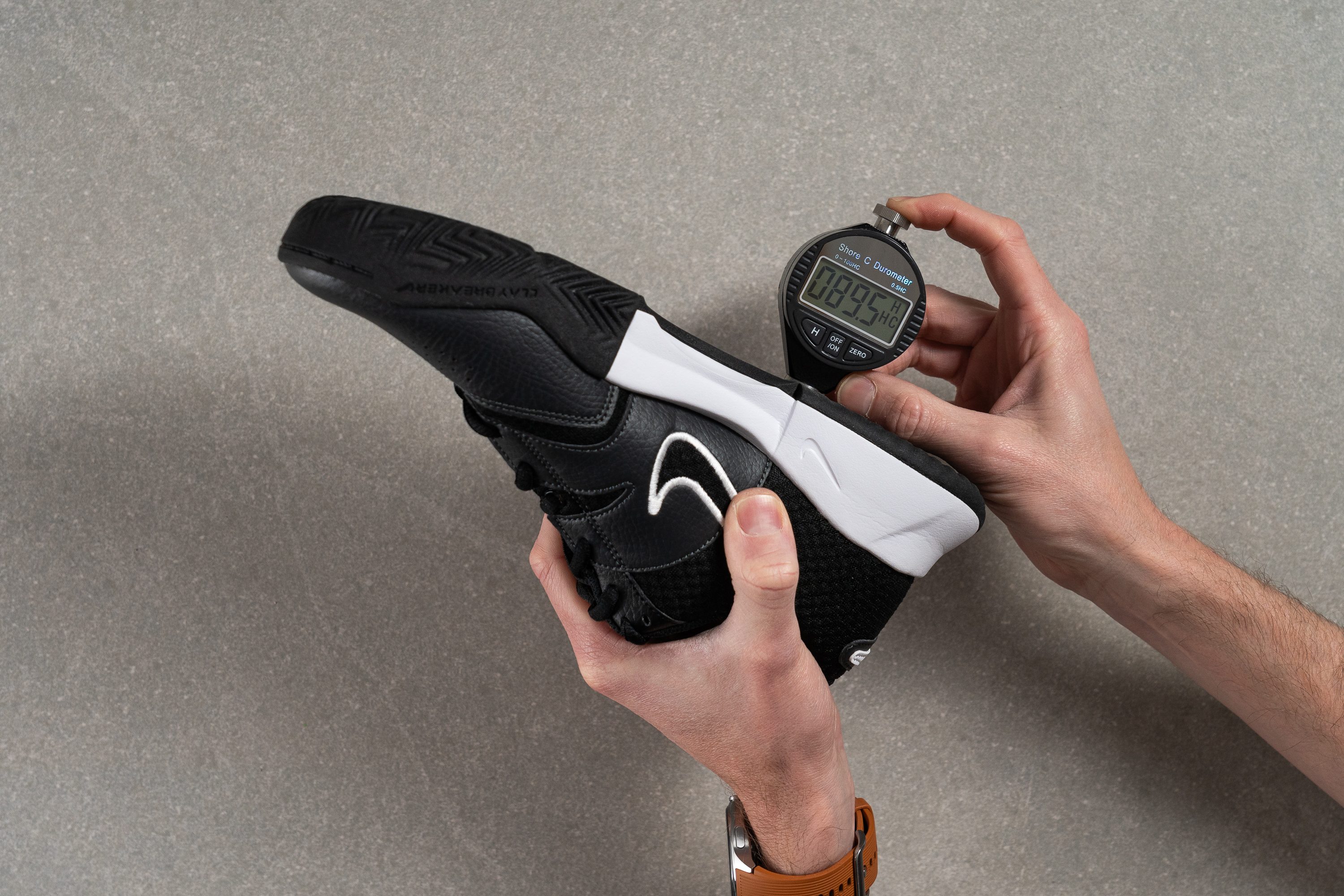
| Midsole softness soft to firm | 89.5 HC |
| Average | 86.0 HC |
Outsole durability
So when it came to applying our Dremel to that rubber, we expected some solid results as well.
The damage left by the tool was pretty moderate with a depth of only 1.0 mm, according to our tread gauge. This is exactly what we would expect from a tennis shoe in this price range.
| Midsole softness soft to firm | 1.0 mm |
| Average | 0.8 mm |
Outsole thickness
Nike also made sure that there was enough rubber on the Midsole softness soft to firm to sustain prolnged wear-and-tear. Our caliper measured ots outsole thickness at 5.2 mm which is about a milimeter thicker than average!
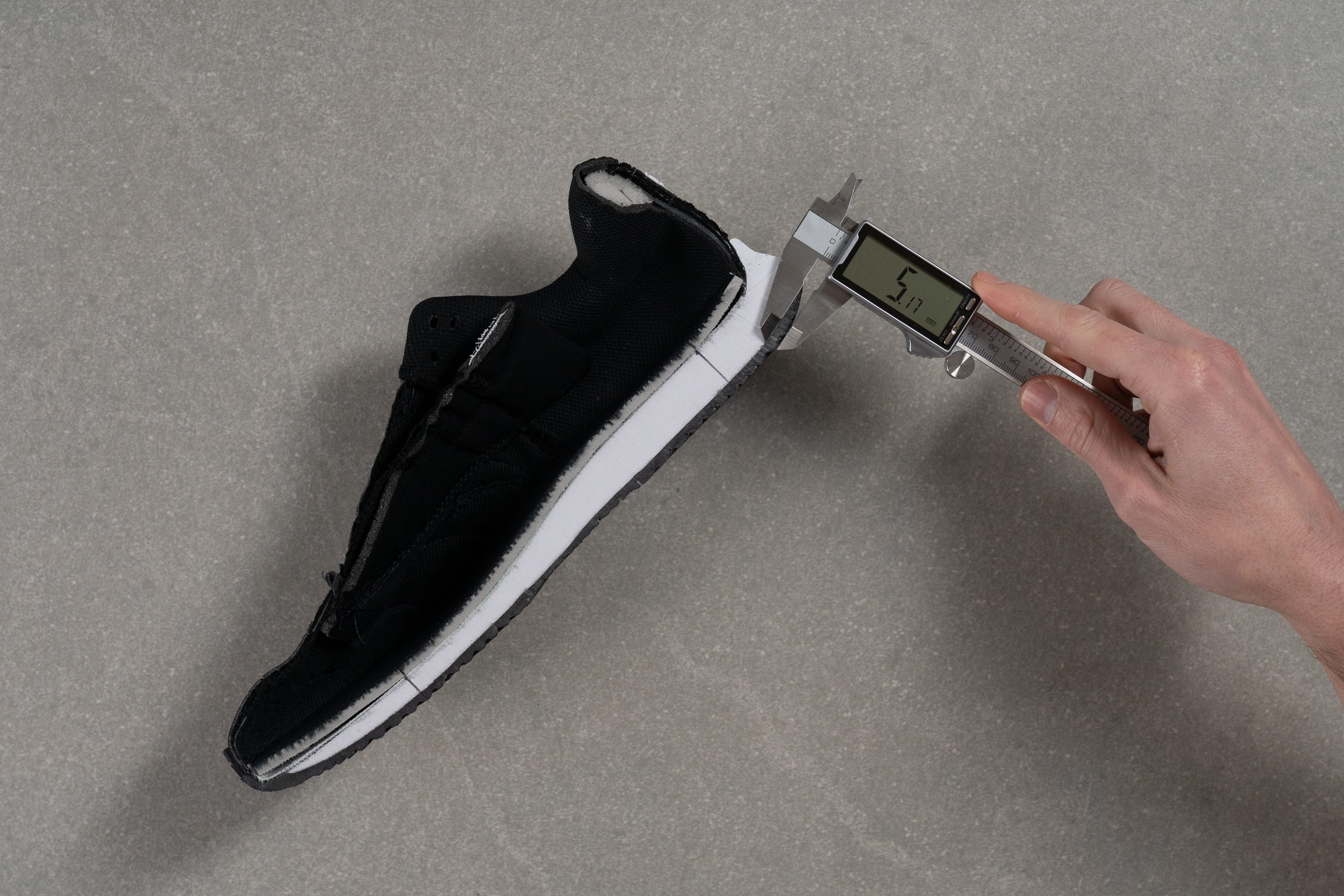
| Midsole softness soft to firm | 5.2 mm |
| Average | 4.2 mm |
Misc
Insole thickness
Some comfort is offered by the shoe's padded insole, which showed a decent thickness of 4.4 mm. It's not the cushiest out there but, once again, the padding is just right for a budget shoe.
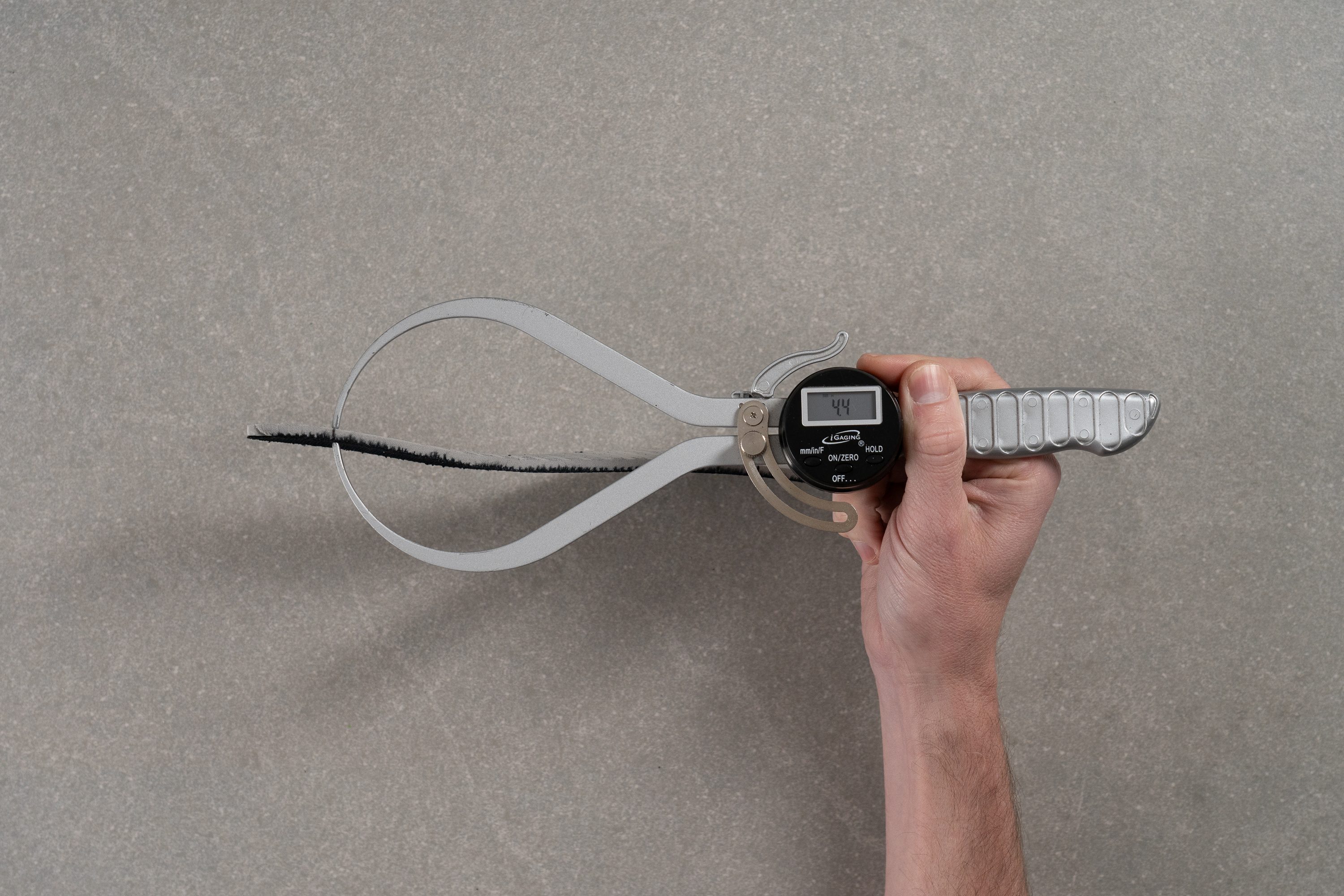
| Midsole softness soft to firm | 4.4 mm |
| Average | 5.1 mm |
Removable insole
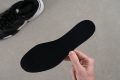
The shoe's stock insole is removable so you can always amp up the comfort by placing an insert of your own.
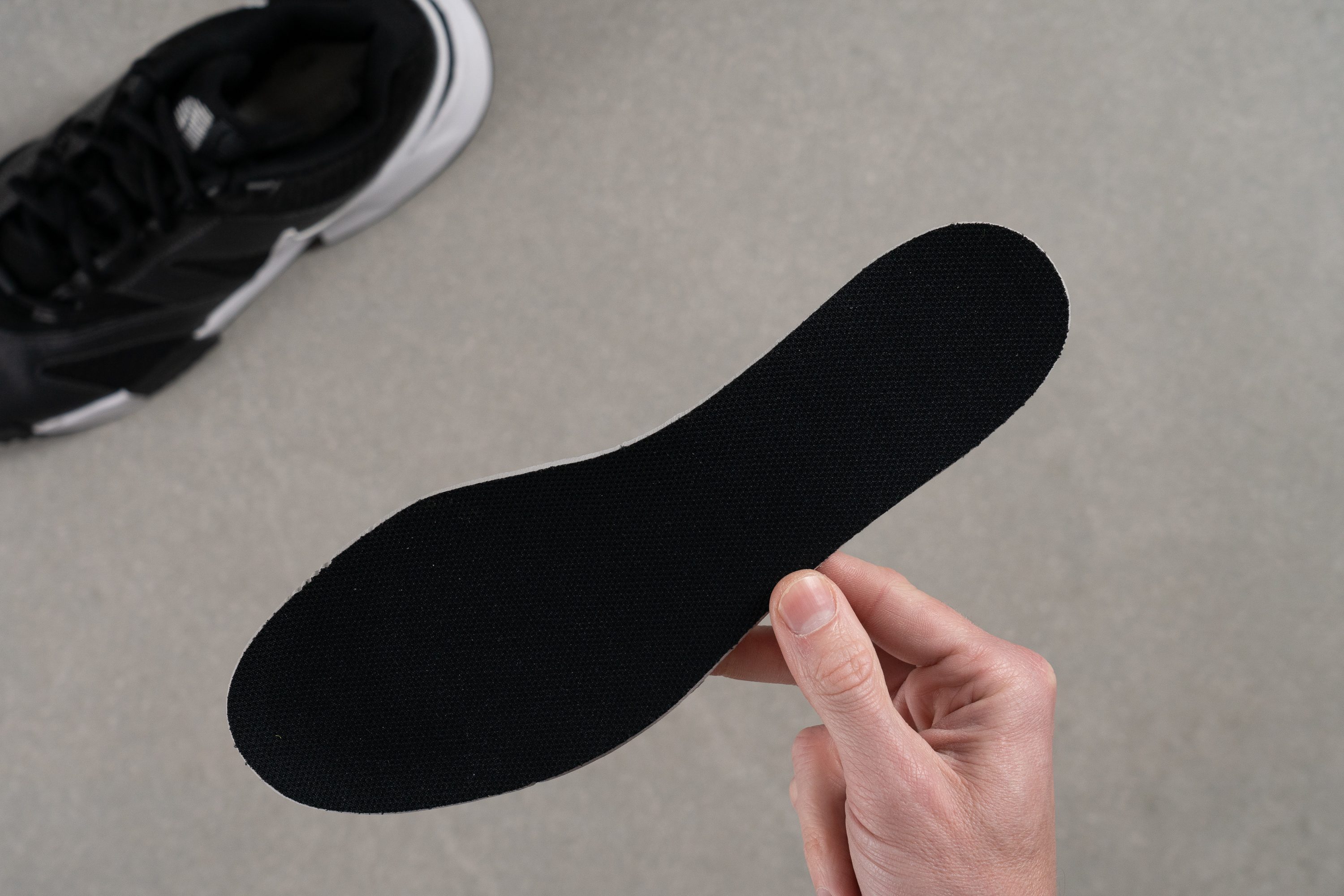
| Midsole softness soft to firm | Yes |
Tongue padding
The shoe's internal padding is not very abundant but it is sufficient to provide comfort throughout the game. Its tongue, for example, returned only 5.5 mm of thickness but it did a good job preventing lace bites.
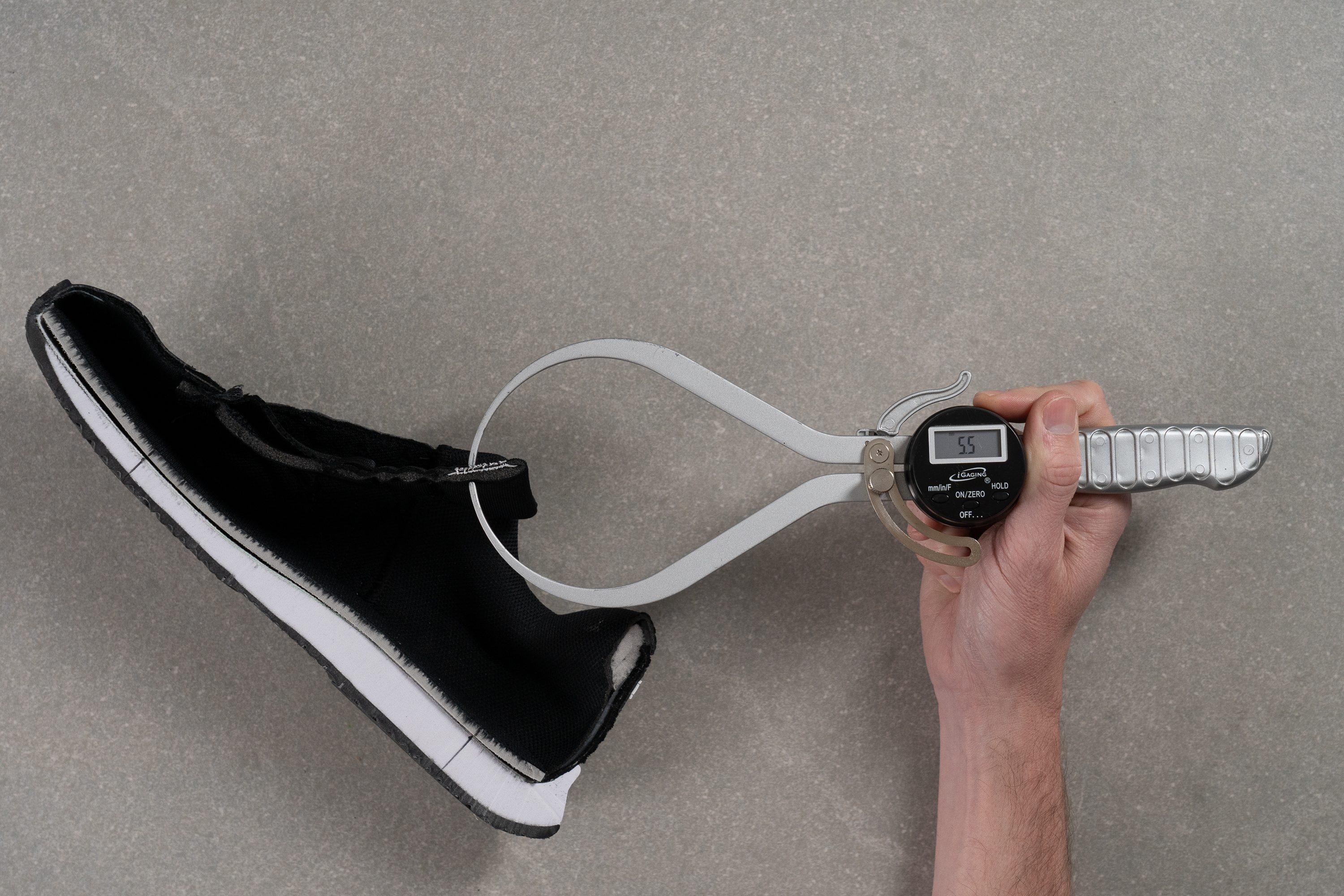
| Midsole softness soft to firm | 5.5 mm |
| Average | 8.1 mm |
Tongue: gusset type
The tongue of this Nike shoe is non-gusseted which means that it has no attachments to the rest of the upper. While this is normal for budget-friendly shoes, it can result in some unfortunate tongue shifting during the match.

| Midsole softness soft to firm | None |
Price
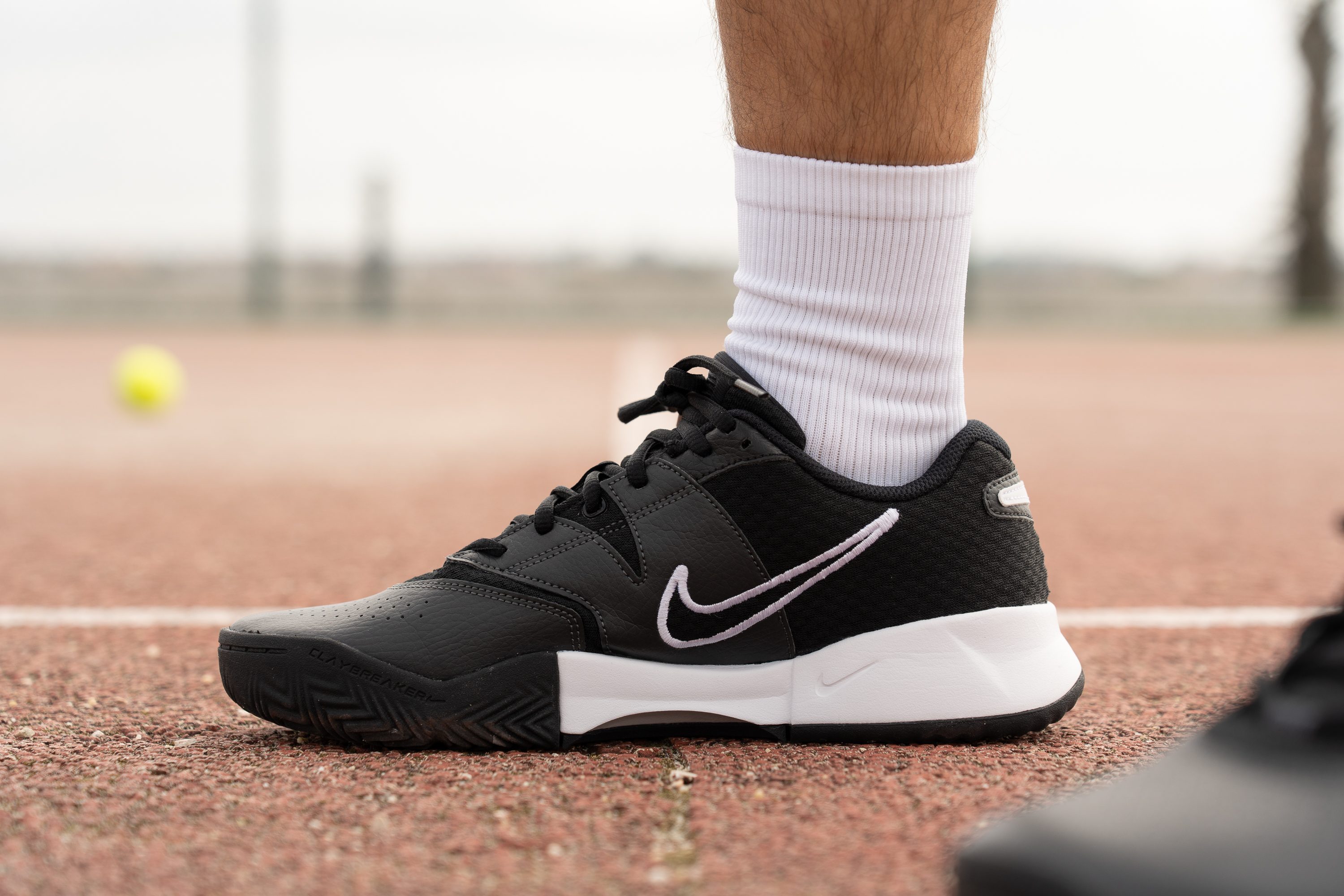
In our opinion, Nike did its best packing the Midsole softness soft to firm with all of the tennis shoe essentials while keeping the price point under $100.
Sure, we can feel its difference from the more premium options, but if you are a beginner player who just wants a decent tennis shoe without breaking the bank, this is it.
| Midsole softness soft to firm | $80 |
| Average | $132 |
Heel tab
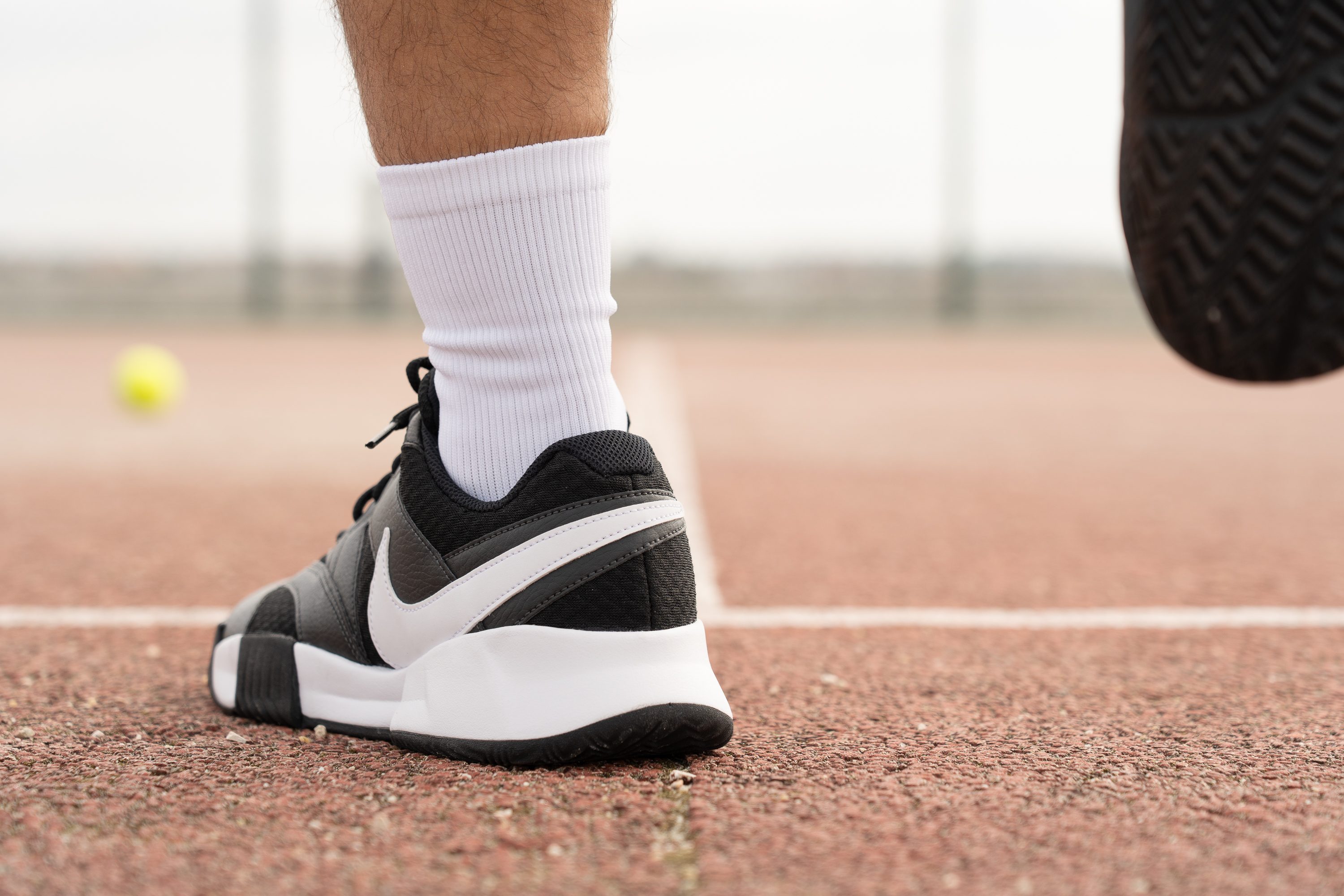
There is no heel tab to assist with the on-and-off but the shoe's stiff heel counter and low-cut profile allow for a pretty easy entry.
| Midsole softness soft to firm | None |