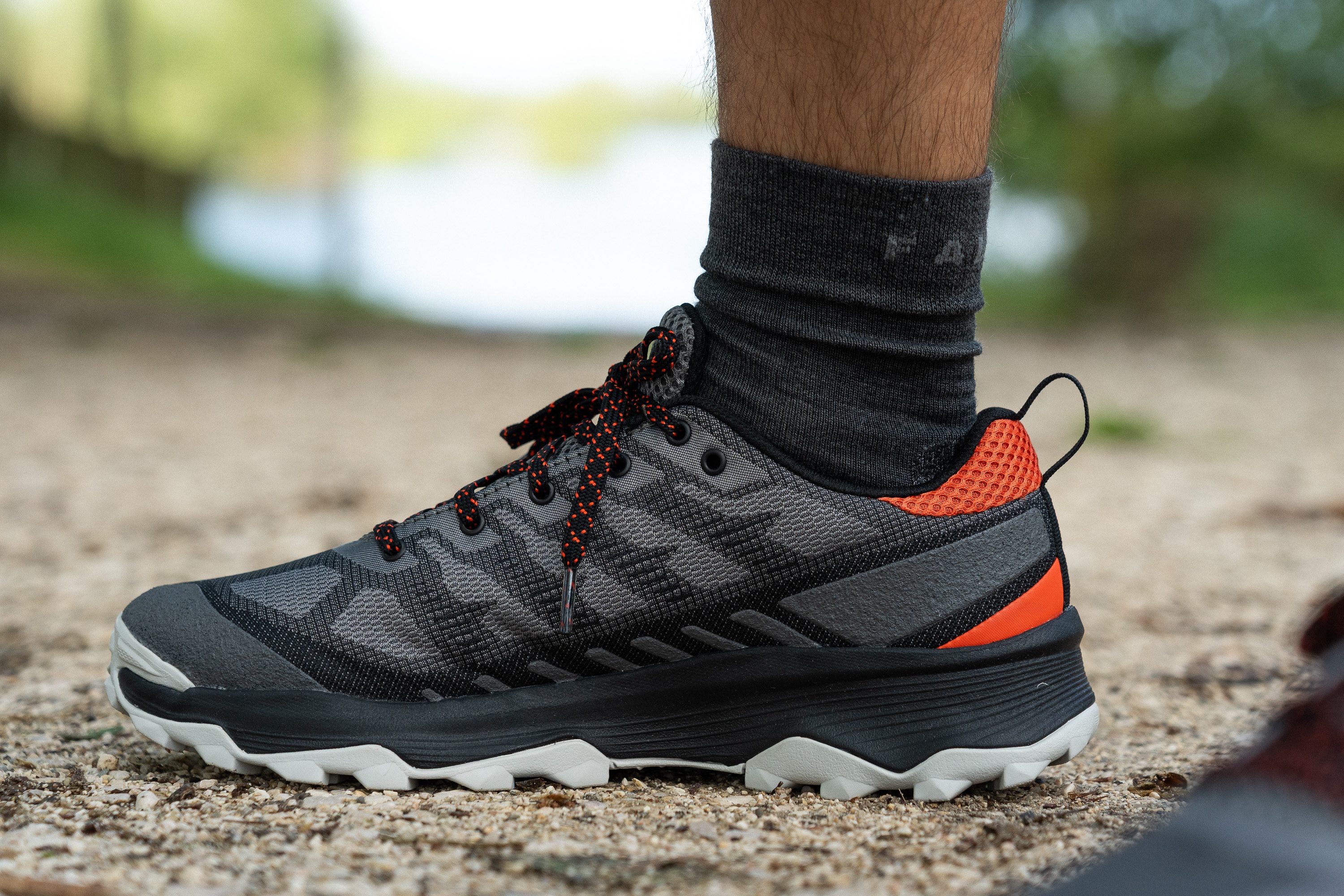






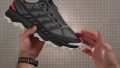

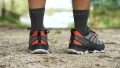
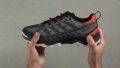
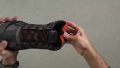



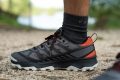
Our verdict
- Top pick inHeel counter stiffness
- Top pick inbest Merrell hiking shoes
Pros
- Balanced ground feel and impact protection
- Black Friday - best deals from 40 stores
- Firm and stable platform
- Notably lighter then average
- Highly durable upper mesh
- Affordable price point
- A tonne of recycled materials
- Fits true to width
- Doesn't get any firmer in cold
Cons
- Lacks breathability
- Frail inner lining
- oz / 270g
- Track and XC
- Not grippy on wet rocks
Audience verdict
Comparison
The most similar hiking shoes compared
|
++ Add a shoe
|
|||||
|---|---|---|---|---|---|
| Audience score |
83
Good!
|
88
Great!
|
82
Good!
|
89
Great!
|
|
| Price |
£120
|
£125
|
£160
|
£100
|
|
| Trail terrain |
Light
|
Moderate
|
Light
|
Moderate
|
|
| Weight labWeight brand | 11.6 oz / 329g9.5 Flexibility / Stiffness new method | 11.6 oz / 329g12.3 oz / 350g | 11 oz / 312g | 12.7 Flexibility / Stiffness8.8 Difference in midsole softness in cold | |
| Lightweight | ✓ | ✓ | ✓ | ✓ | |
| Breathability |
Moderate
|
Breathable
|
Moderate
|
Breathable
|
|
| Use |
Speed HikingLight HikingUrban hikingBeginners
|
Day HikingSpeed HikingLight Hiking
|
Day HikingLight HikingUrban hiking
|
Speed HikingLight HikingBeginners
|
|
| Orthotic friendly | ✓ | ✓ | ✓ | ✓ | |
| Drop lab | 12.0 mm | 15.0 mm | 9.1 mm | 9.6 mm | |
| Size |
True to size
|
Half size small
|
Slightly small
|
Slightly small
|
|
| Midsole softness |
Balanced
|
Soft
|
Firm
|
Balanced
|
|
| Difference in midsole softness in cold |
Small
|
Normal
|
Normal
|
Normal
|
|
| Torsional rigidity |
Stiff
|
Stiff
|
Moderate
|
Stiff
|
|
| Heel padding durability |
Flexible
|
Flexible
|
Flexible
|
Flexible
|
|
| Stiffness |
Flexible
|
Moderate
|
Moderate
|
Moderate
|
|
| Outsole hardness |
Average
|
Average
|
Average
|
Average
|
|
| Material |
Mesh
|
Mesh
|
Mesh
|
-
|
|
| Season |
All seasons
|
SummerAll seasons
|
All seasons
|
SummerAll seasons
|
|
| Toebox durability |
Good
|
Very good
|
Decent
|
Decent
|
|
| Heel padding durability |
Bad
|
Bad
|
Bad
|
Bad
|
|
| Outsole durability |
Decent
|
Good
|
Good
|
Bad
|
|
| Width / fit |
Medium
|
Medium
|
Medium
|
Medium
|
|
| Toebox width |
Medium
|
Wide
|
Wide
|
Medium
|
|
| Lug depth | 3.8 mm | 3.7 mm | 2.5 mm | 3.4 mm | |
| Heel stack lab | 32.4 mm | 38.8 mm | 35.5 mm | 30.6 mm | |
| Forefoot | 20.4 mm | 23.8 mm | 26.4 mm | 21.0 mm | |
| Widths available |
Normal
|
NormalWide
|
Normal
|
Normal
|
|
| Technology |
Vibram
|
-
|
-
|
-
|
|
| Heel tab |
Finger loop
|
Finger loop
|
Finger loop
|
Finger loop
|
|
| Removable insole | ✓ | ✓ | ✓ | ✓ | |
| Ranking |
#23 Bottom 34%
|
#9 Top 26%
|
#24 Bottom 31%
|
#6 Top 18%
|
|
| Popularity |
#26 Bottom 25%
|
#6 Top 18%
|
#20 Bottom 42%
|
#27 Bottom 22%
|

Who should buy
Don't miss out on the Difference in midsole softness in cold if:
- you need an affordable shoe for easy hikes on light terrain
- you give preference to sustainably made products
- Traction / Grip
Who should NOT buy
If you want an equally lightweight but more capable hiking shoe for longer hikes, the oz / 312g Shock absorption heel.
Another light and speedy alternative is the Salomon Outpulse. Stellar grip and outsole durability for its price!
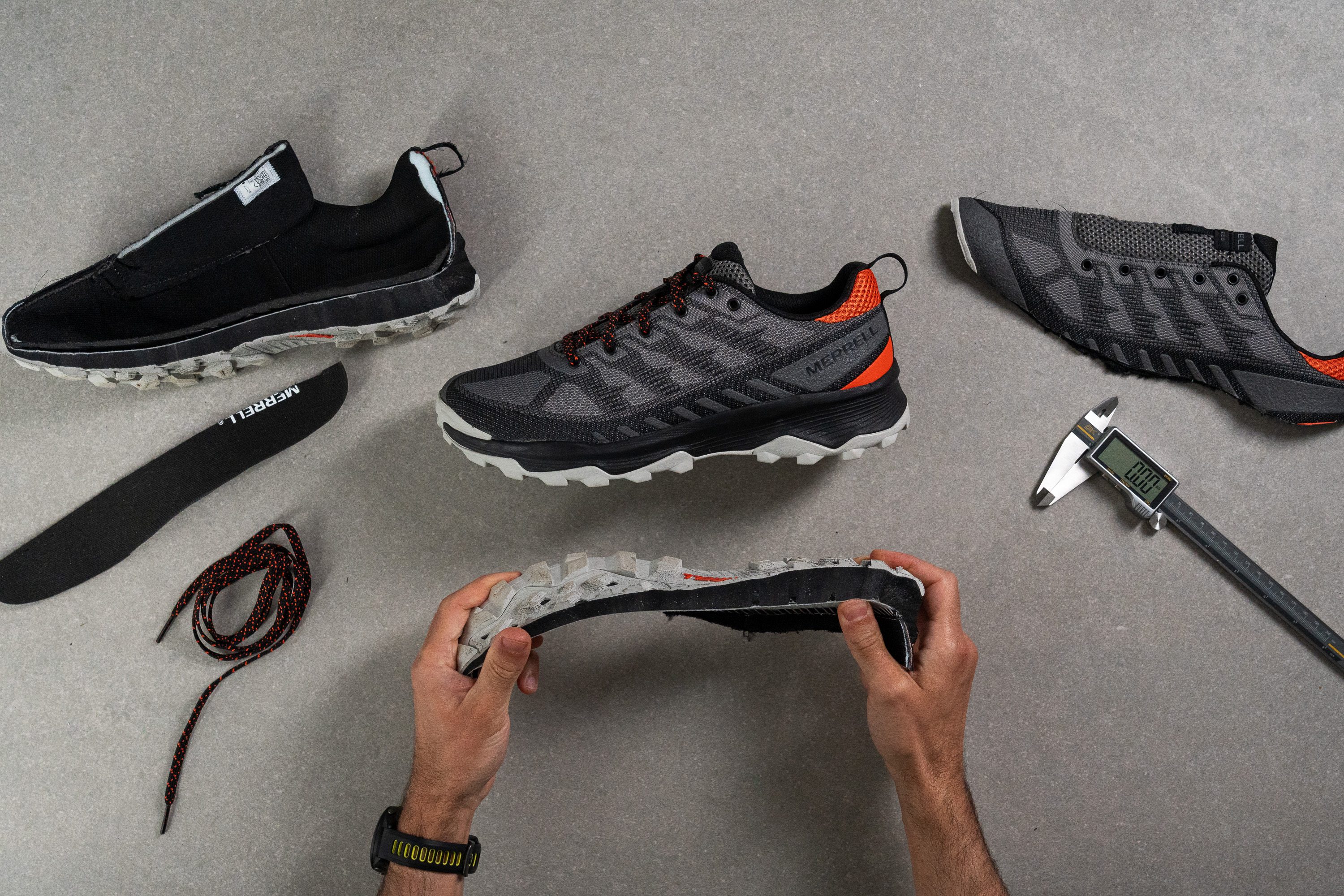
Cushioning
Shock absorption
NewWe are happy to report that the firmness and moderate sole thickness of the Speed Eco didn't compromise its ability to protect the foot from impact for hours on end.
With a shock absorption measurement of 104 SA, it reduces the load on the joints and prevents foot fatigue just as effectively as the average hiking shoe. It's not as abundantly cushioned as the Measuring the mould in the big toe area, we got an above-average reading of 73.7 mm (125 SA), but it offers the benefit of a more agile and connected shoe.
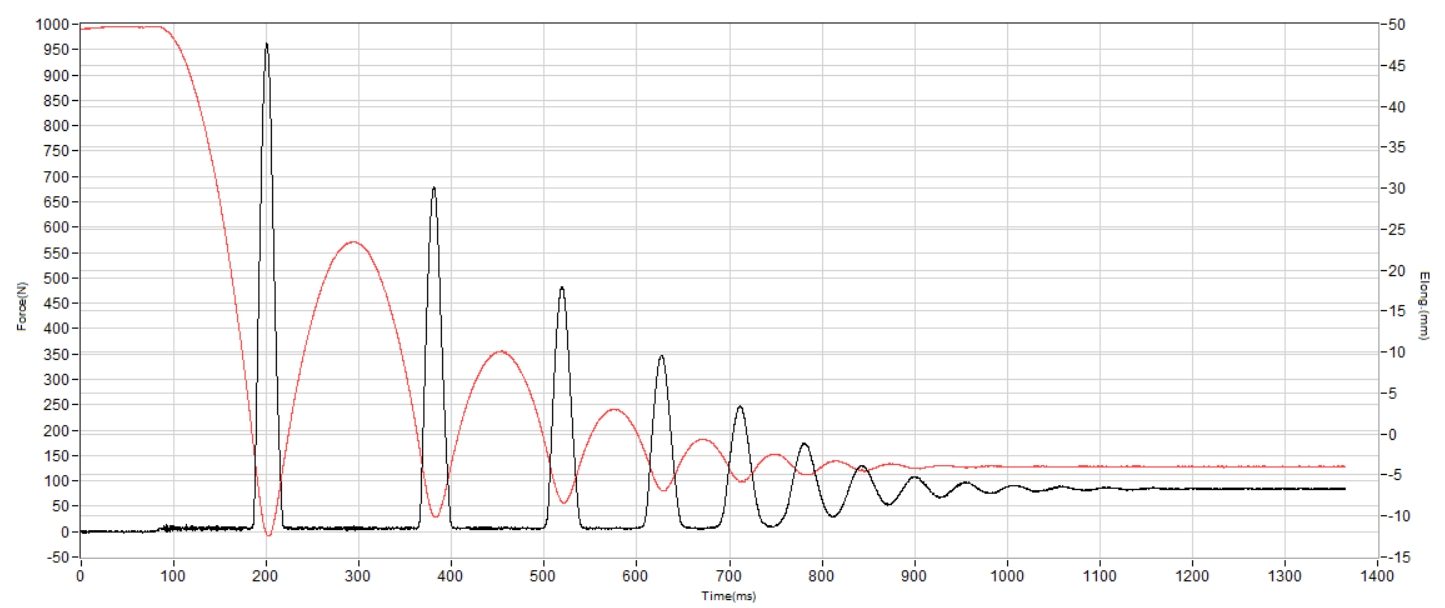
| Speed Eco | 104 SA |
| Average | 104 SA |
Energy return
NewThis Merrell shoe also pleased us with a fun and responsive ride which is reflected in its above-average energy return of 54%.
This is the kind of lively ride we expect from a speed-oriented shoe like the Speed Eco.
| Speed Eco | 54.0% |
| Average | 50.2% |
Heel stack
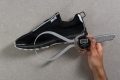
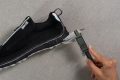
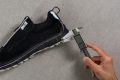
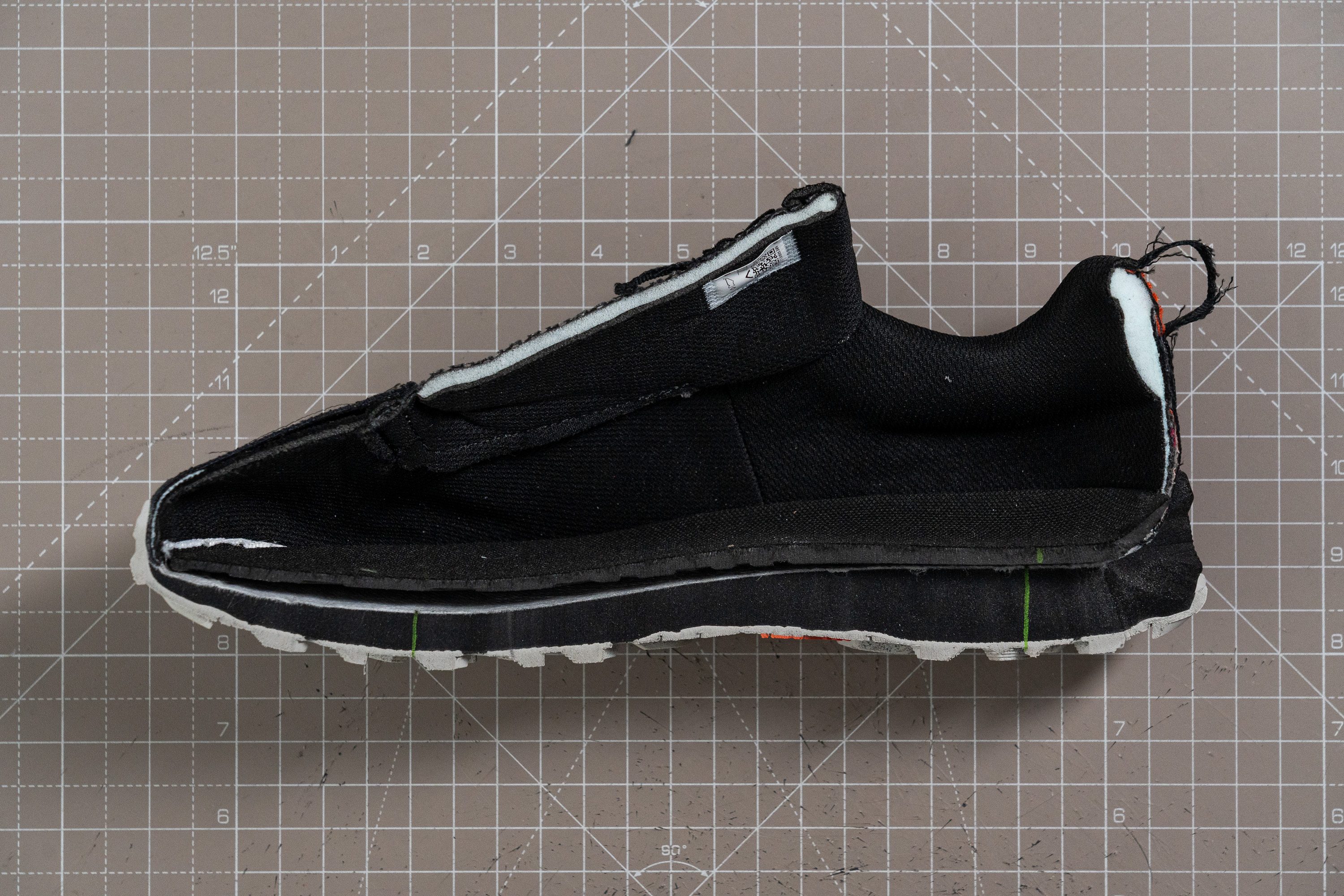
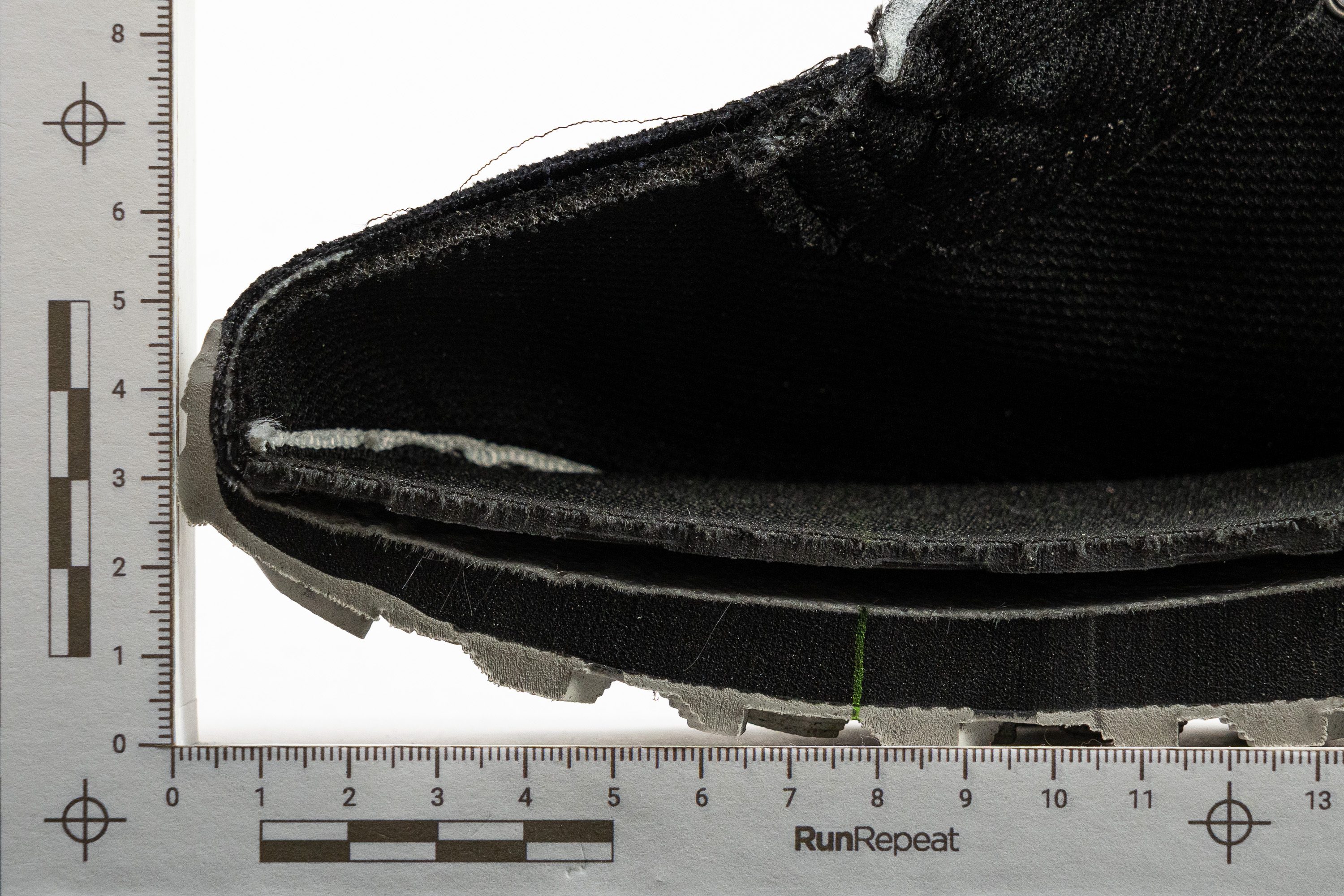
Measuring the Speed Eco's heel stack, our digital calliper recorded a moderate reading of 32.4 mm.
This is a standard platform thickness for a hiking shoe offering a middle ground between impact protection and contact with the trail.
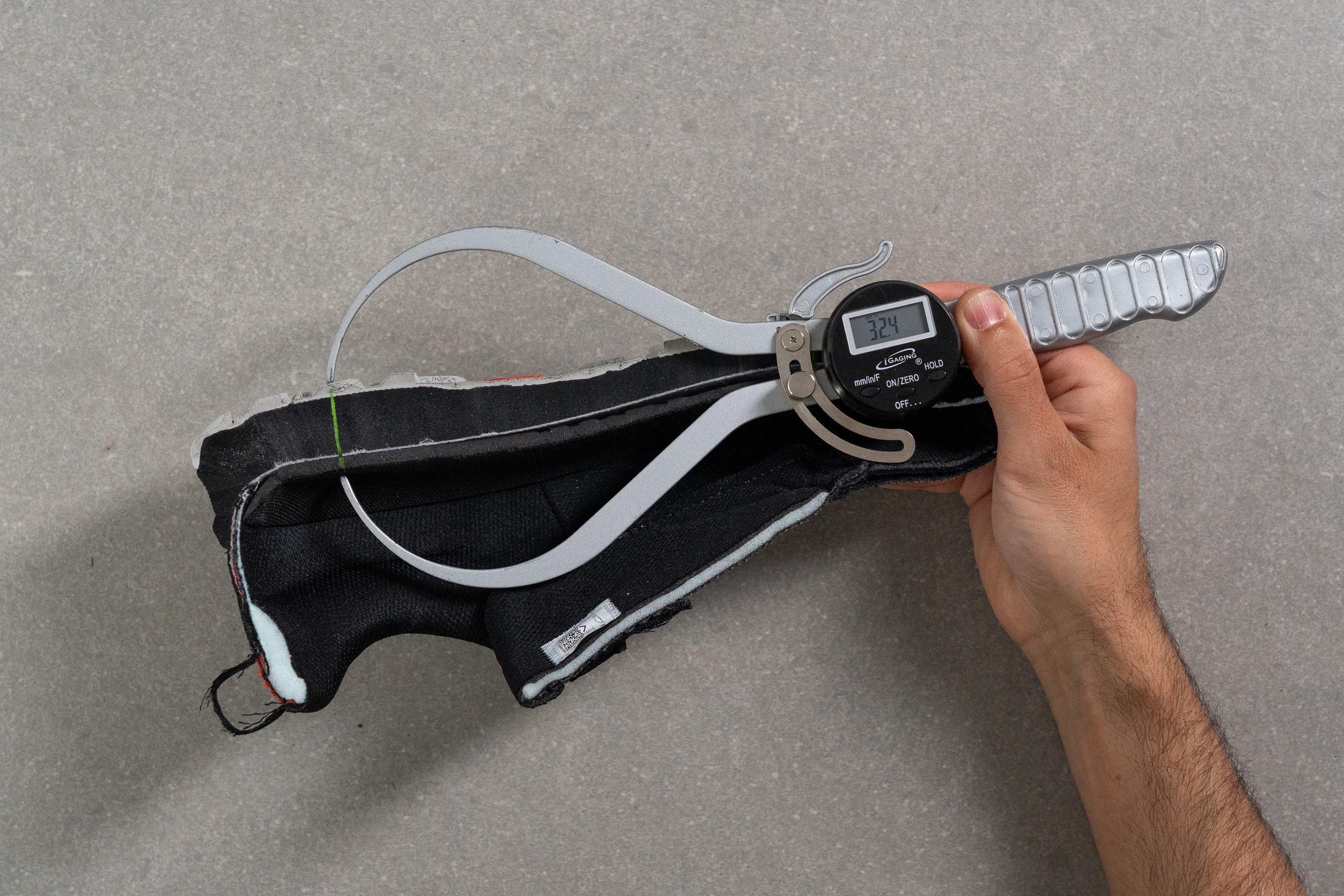
| Speed Eco | 32.4 mm |
| Average | 32.8 mm |
Forefoot stack
The shoe's forefoot stack came in at 20.4 mm which is slightly below the category average.
This is not a tonne of cushioning but makes the shoe more nimble and flexible - just as the 'Speed' in its name suggests.
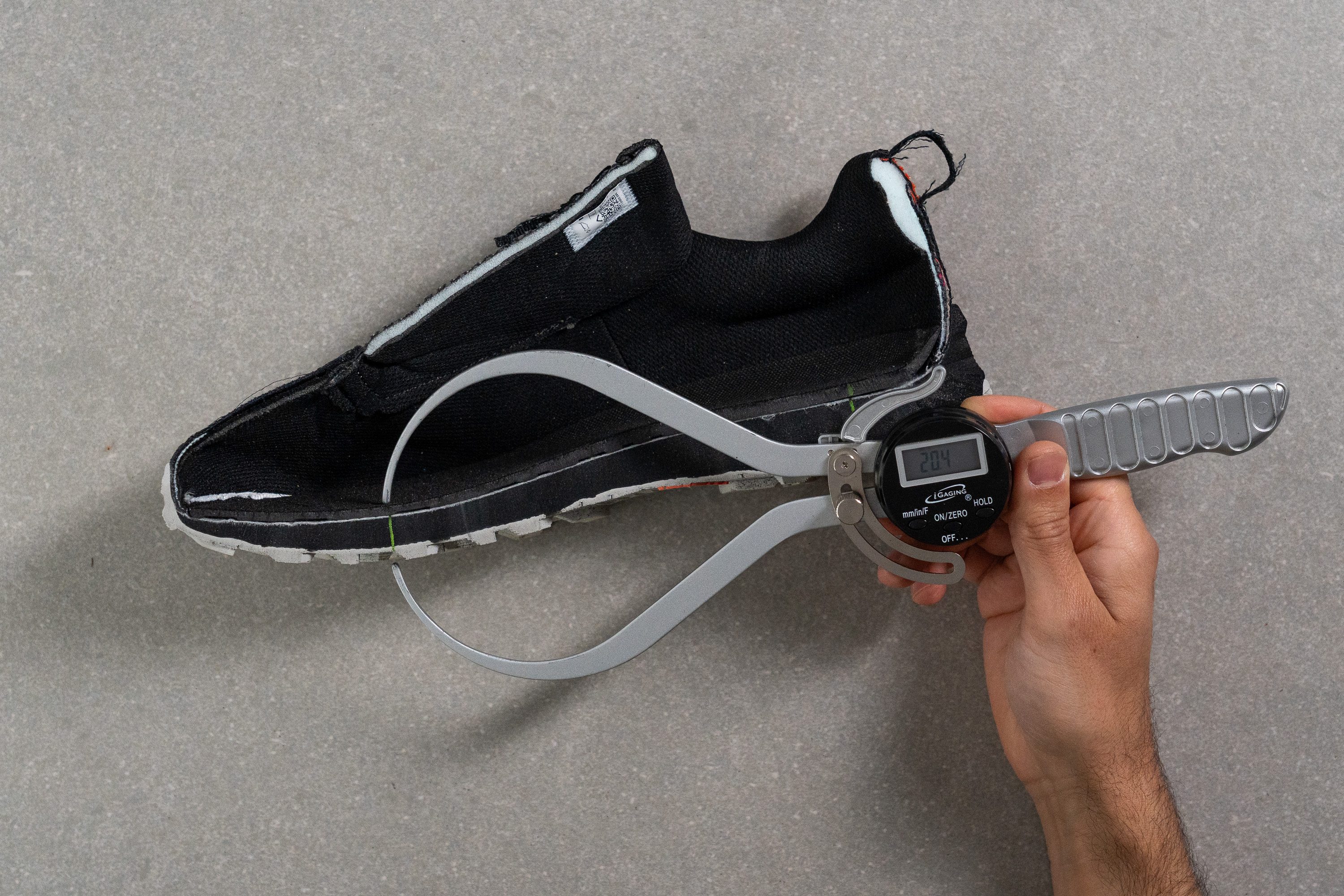
| Speed Eco | 20.4 mm |
| Average | 22.0 mm |
Drop
According to Merrell, the shoe's heel-to-toe drop measures 10 mm. However, our calliper readings proved it to be even higher at 12.0 mm.
Fortunately, this 2-mm difference is not noticeable on foot, and the Speed Eco feels a lot like most other hiking shoes.
Unless you are a fan of low-drop or even zero-drop shoes, a standard offset of 8-12 mm should feel optimal for long hours of hiking. It takes the pressure off the Achilles and calves, provides enhanced cushioning under the heel, and is more supportive for carrying a backpack.
| Speed Eco | 12.0 mm |
| Average | 10.7 mm |
Midsole softness
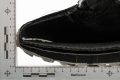
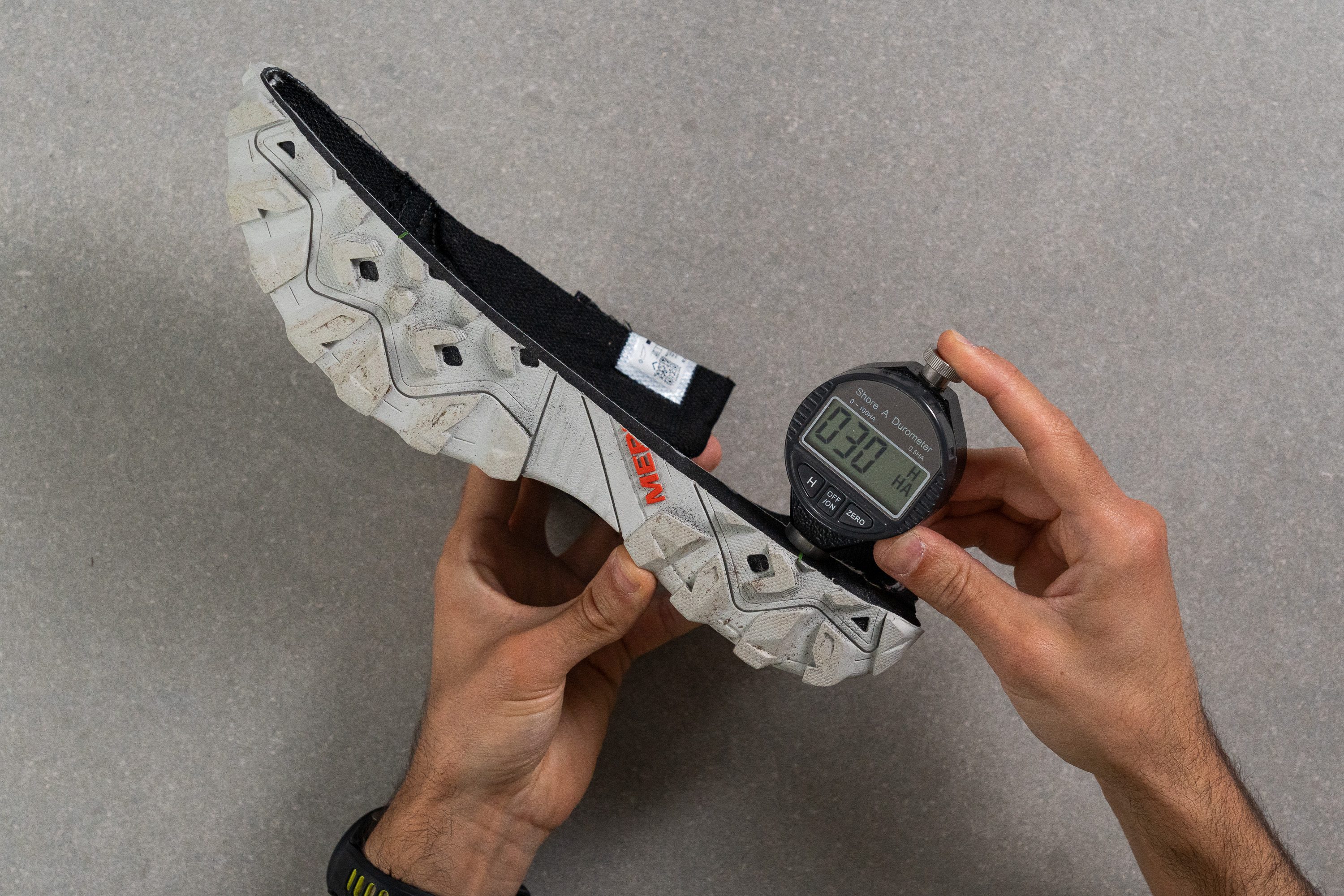
The Difference in midsole softness in cold uses a single-density EVA foam for midsole cushioning. We found that it is a pretty firm compound that doesn't compress so easily.
With a high durometer reading of 30.0 HA, its foam leans toward the firmer end of the spectrum. It is nowhere near as soft as the cushioning in the Measuring the mould in the big toe area, we got an above-average reading of 73.7 mm (19.0 HA).
| Speed Eco | 30.0 HA |
| Average | 27.0 HA |
Rocker
Size and fit
Size
Difference in midsole softness in cold fits true to size (16 votes).
Rubber outsole 30
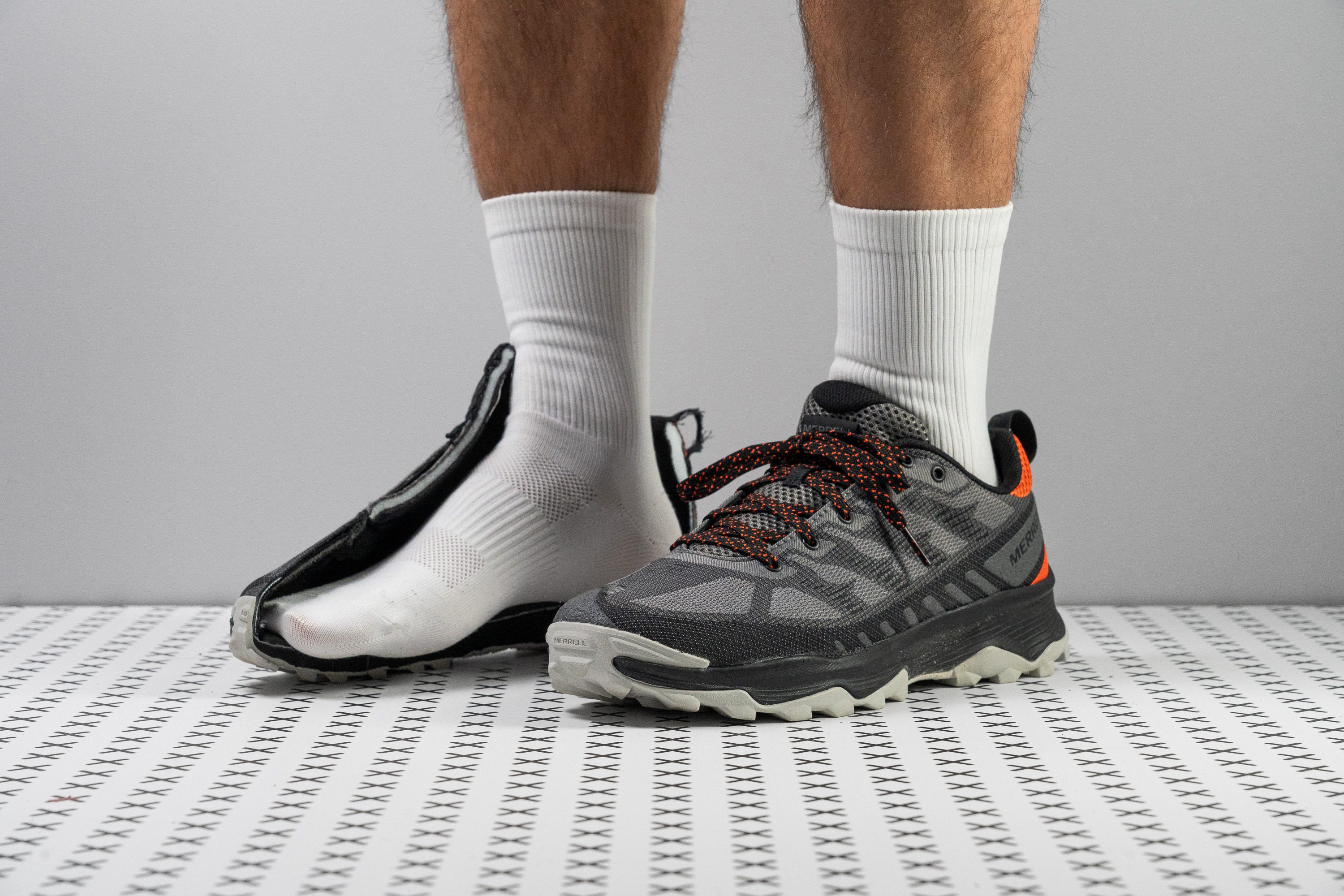
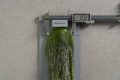
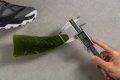
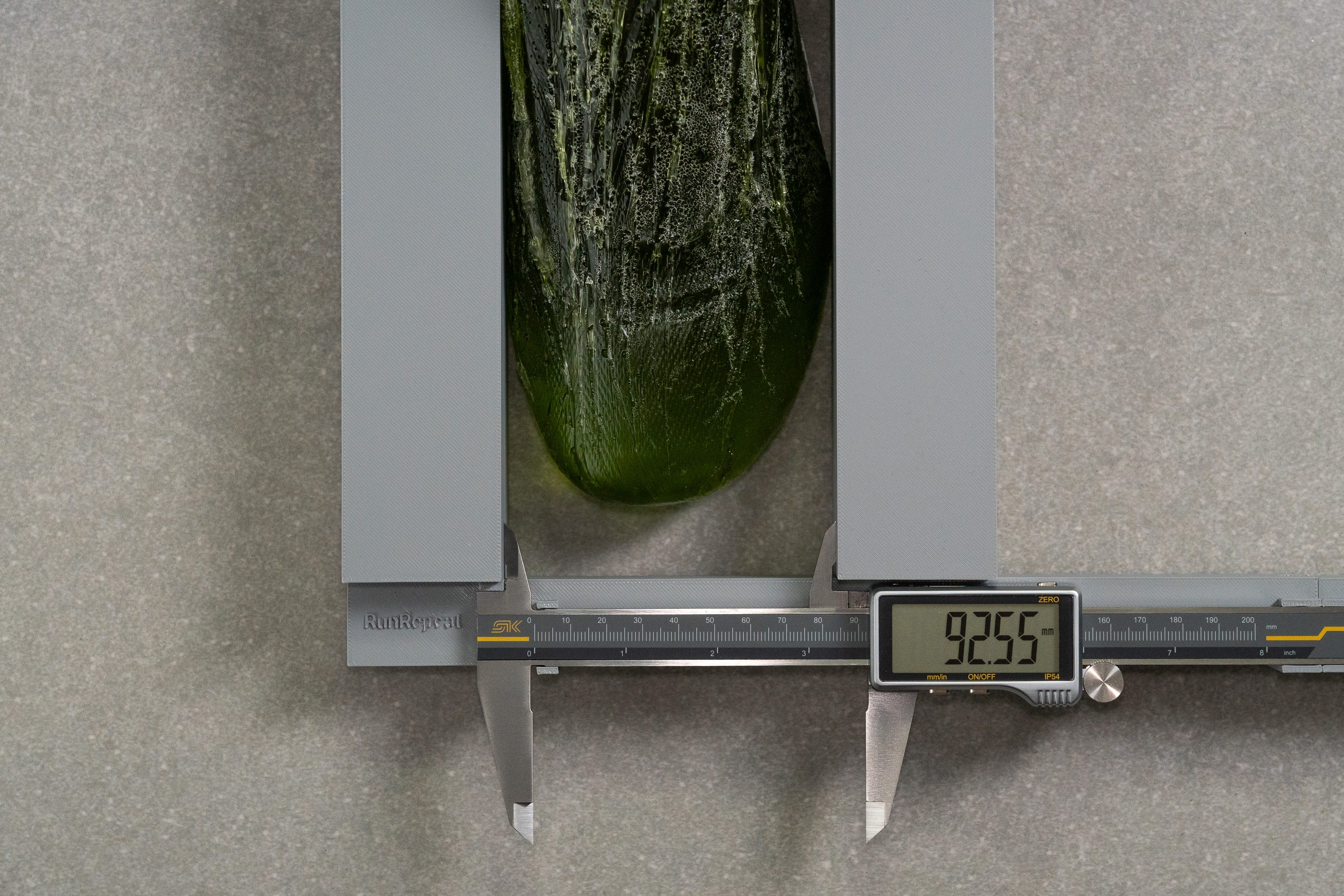
The Difference in midsole softness in cold offers a predictable D medium width which is neither too snug nor too roomy for our medium-width feet. But let's take a closer look at the gel replica of the shoe's interiors to confirm this.
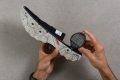
Using a digital calliper, we measured the widest part of the mould at 92.6 mm. While this came close to our narrow category, it is still within the medium range.
| Speed Eco | 92.6 mm |
| Average | 94.1 mm |
Toebox width
The absence of tapering and the rounded shape of the shoe's toebox make it accommodating for a medium-width foot.
Measuring the mould in the big toe area, we got an above-average reading of 73.7 mm.
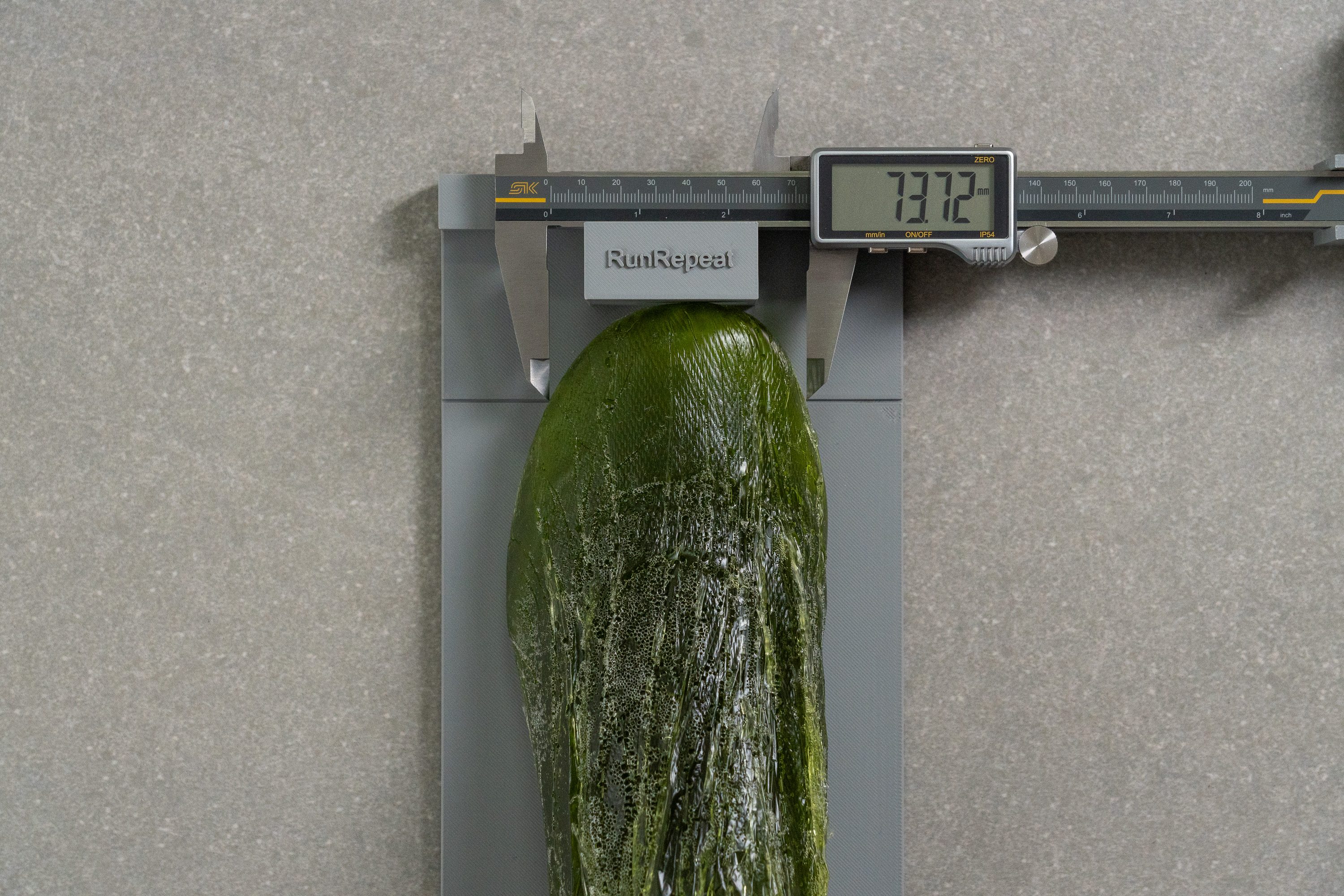
| Speed Eco | 73.7 mm |
| Average | 72.5 mm |
Toebox height
Merrell is pretty generous with the vertical space of the Speed Eco.
Clocking in at 30.8 mm, its toebox proved to be higher than average leaving some wiggle room above the toes.
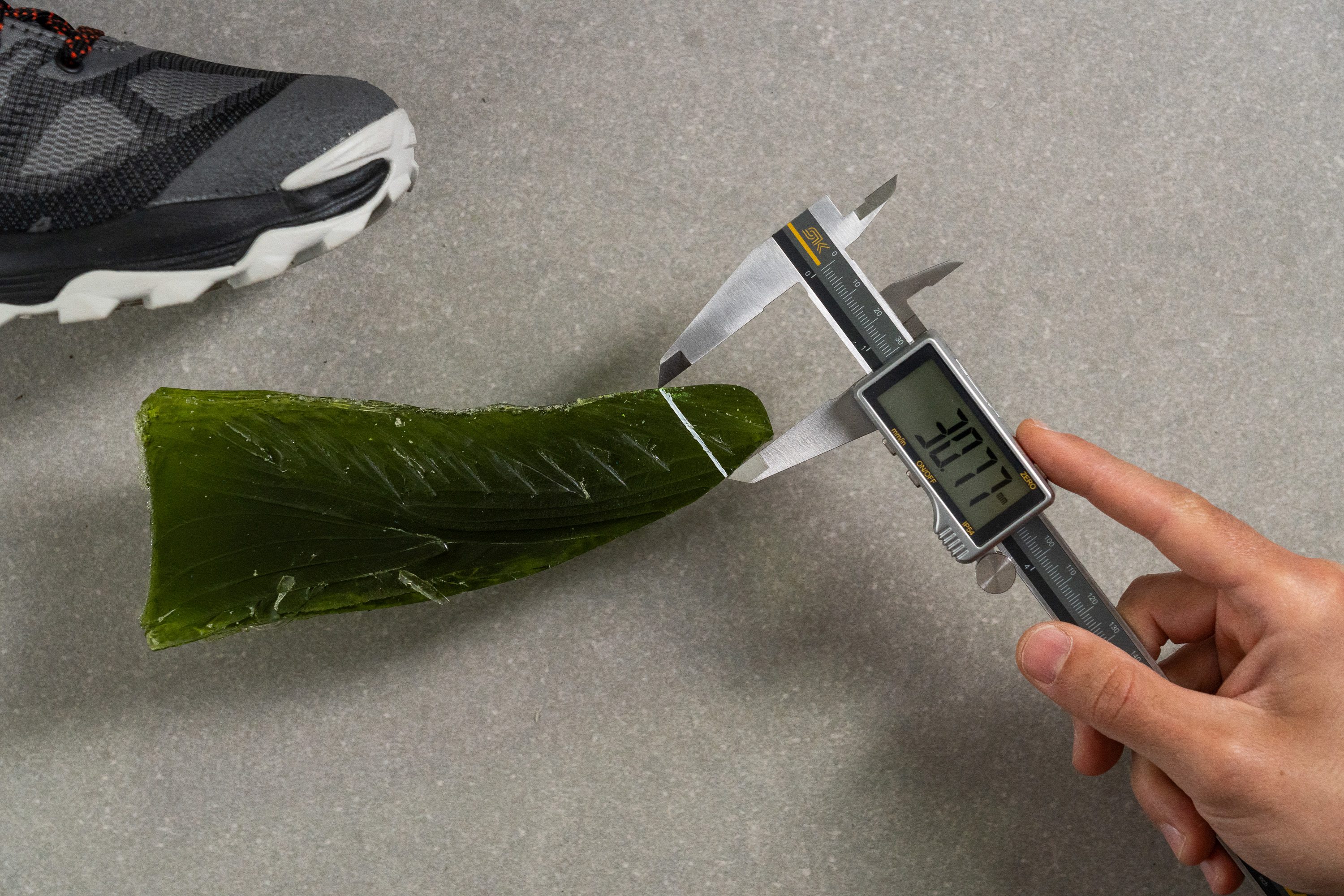
| Speed Eco | 30.8 mm |
| Average | 28.0 mm |
Traction / Grip
Forefoot traction
The Speed Eco showed some of the weakest traction scores on wet concrete. With a very low coefficient of friction (0.09), it doesn't make the best shoe for boulder-hopping, especially when the surface is wet.
| Speed Eco |
Lug depth
Merrell didn't lie when they promised 4 mm lugs on the Speed Eco. Our calliper confirmed it with a measurement of 3.8 mm.
This is surprisingly deep for the shoe's intended purpose but we can't complain since the extra millimetres helped with grip in light dirt and soft grassy patches.
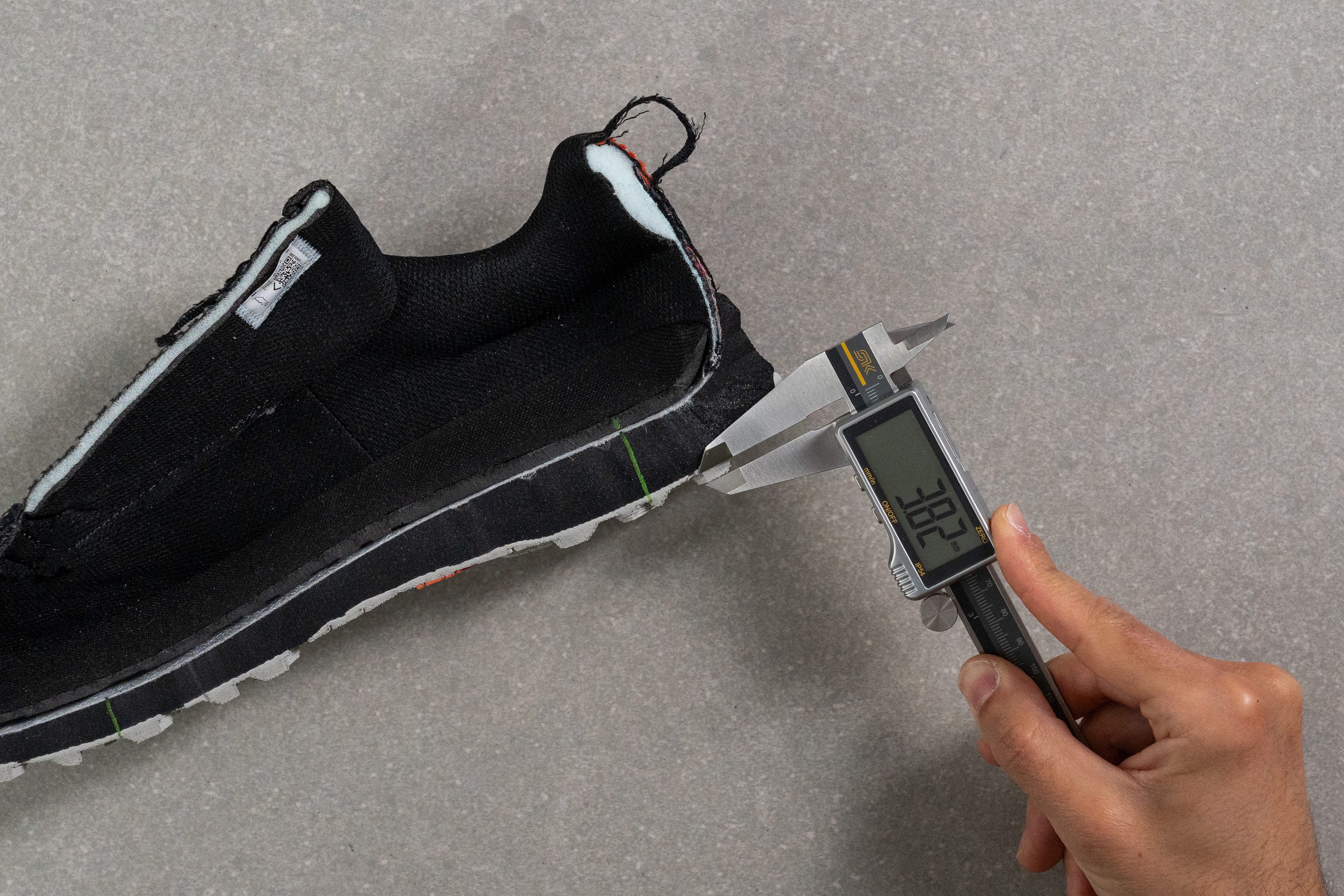
| Speed Eco | 3.8 mm |
| Average | 4.0 mm |
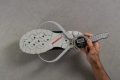
Outsole design
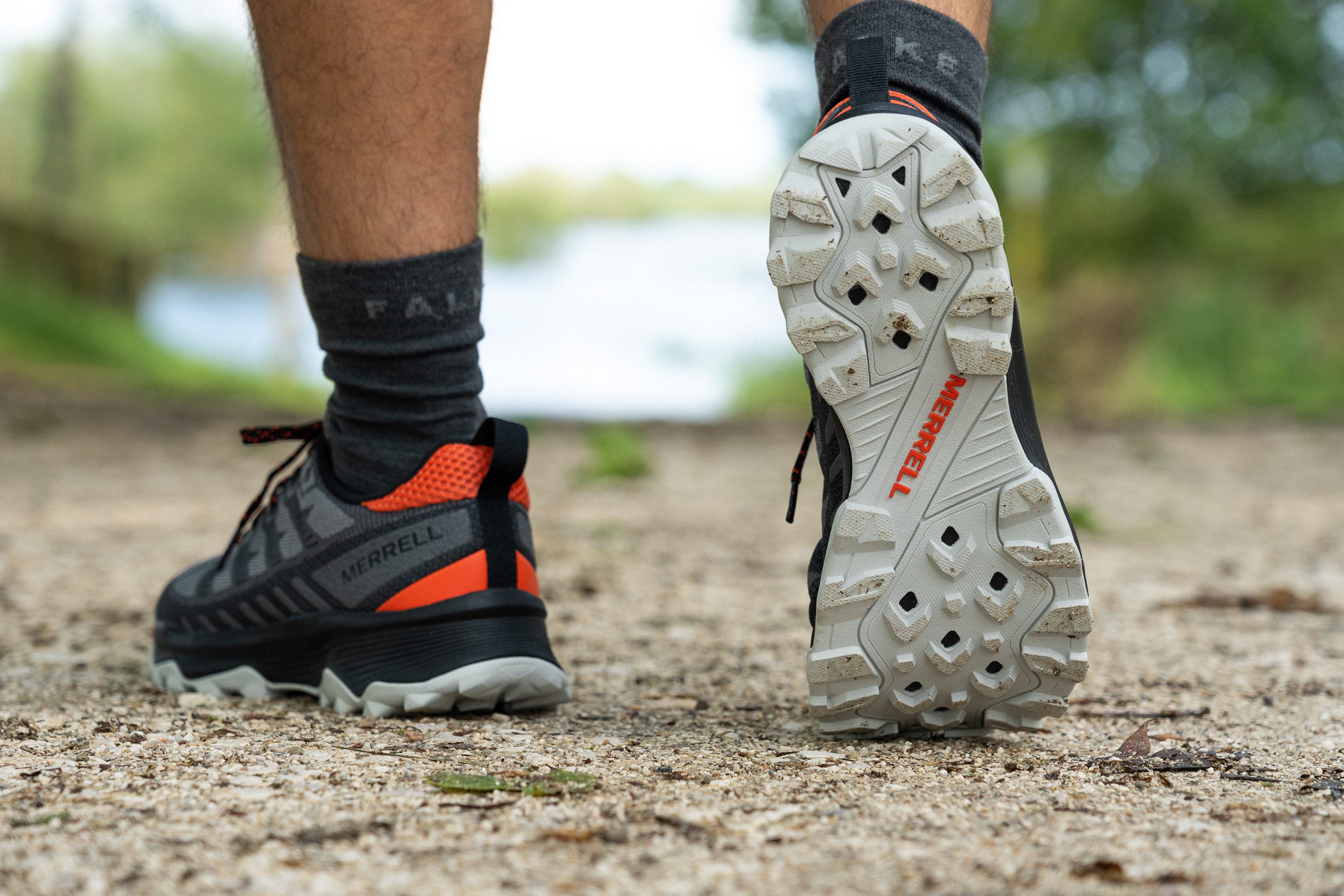
NewThe forefoot and heel lugs of the Speed Eco face different directions to accommodate ascents and descents respectively.
The triangular lugs in the middle bite into softer terrain while the wide and smooth lugs around them make the shoe more comfortable on hard-packed terrain.
Flexibility / Stiffness
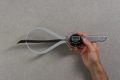
We are surprised to see that the Speed Eco's forefoot flexibility has not been affected by its rigid platform as much.
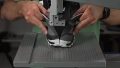
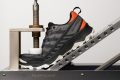
Fixing the shoe to our flexibility testing machine, we measured the amount of force it takes to bend it by 30 degrees. At 14.2N, it needs less effort than the average hiking shoe which makes its ride feel more natural.
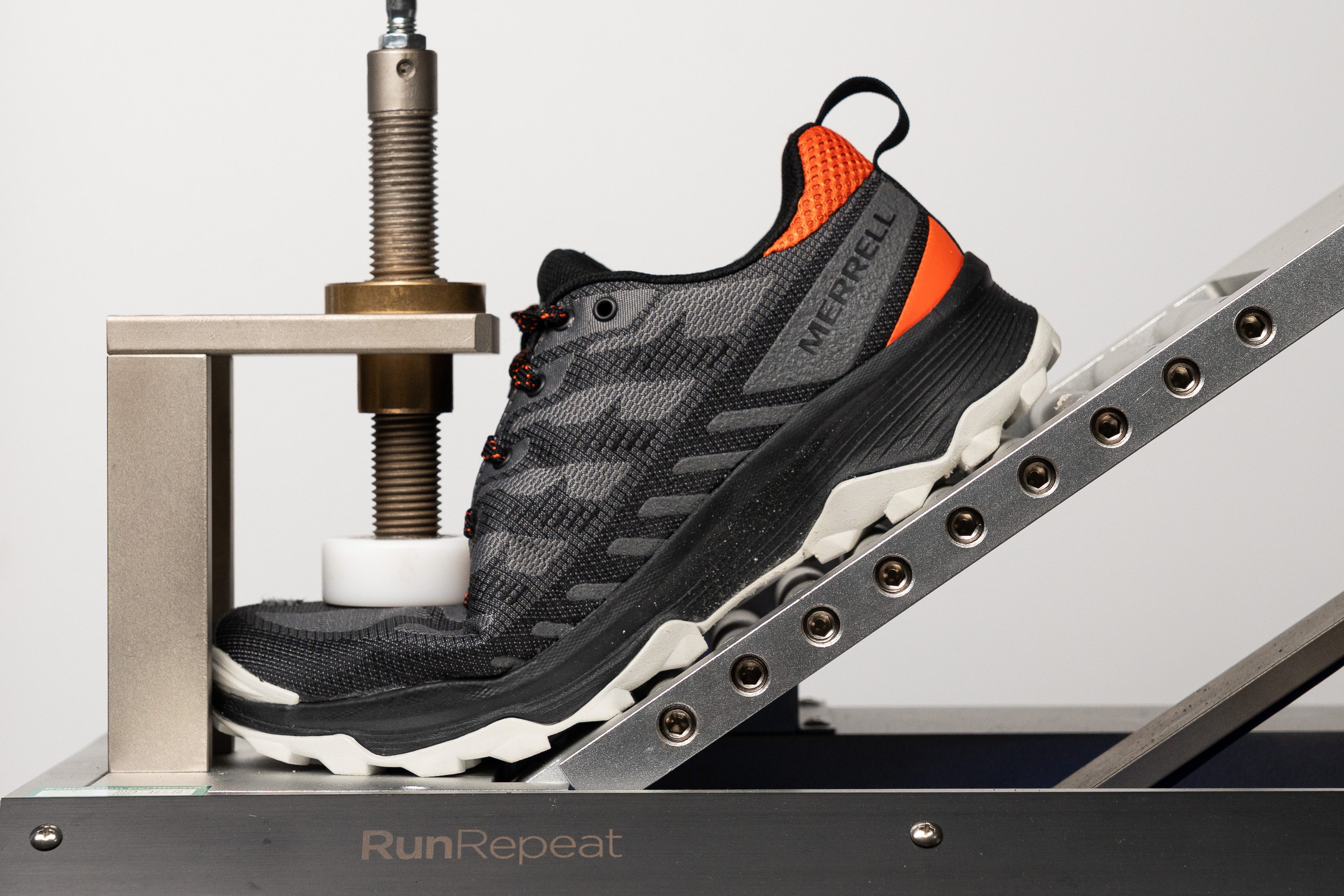
| Speed Eco | 14.2N |
| Average | 18.3N |
Weight
Designed for easy hikes, the Difference in midsole softness in cold can afford to be a lightweight shoe.
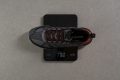
Tipping the scale at 11.6 oz (329g), it is nearly 2 oz lighter than the average. This makes the shoe feel airy and doesn't drag the foot down.
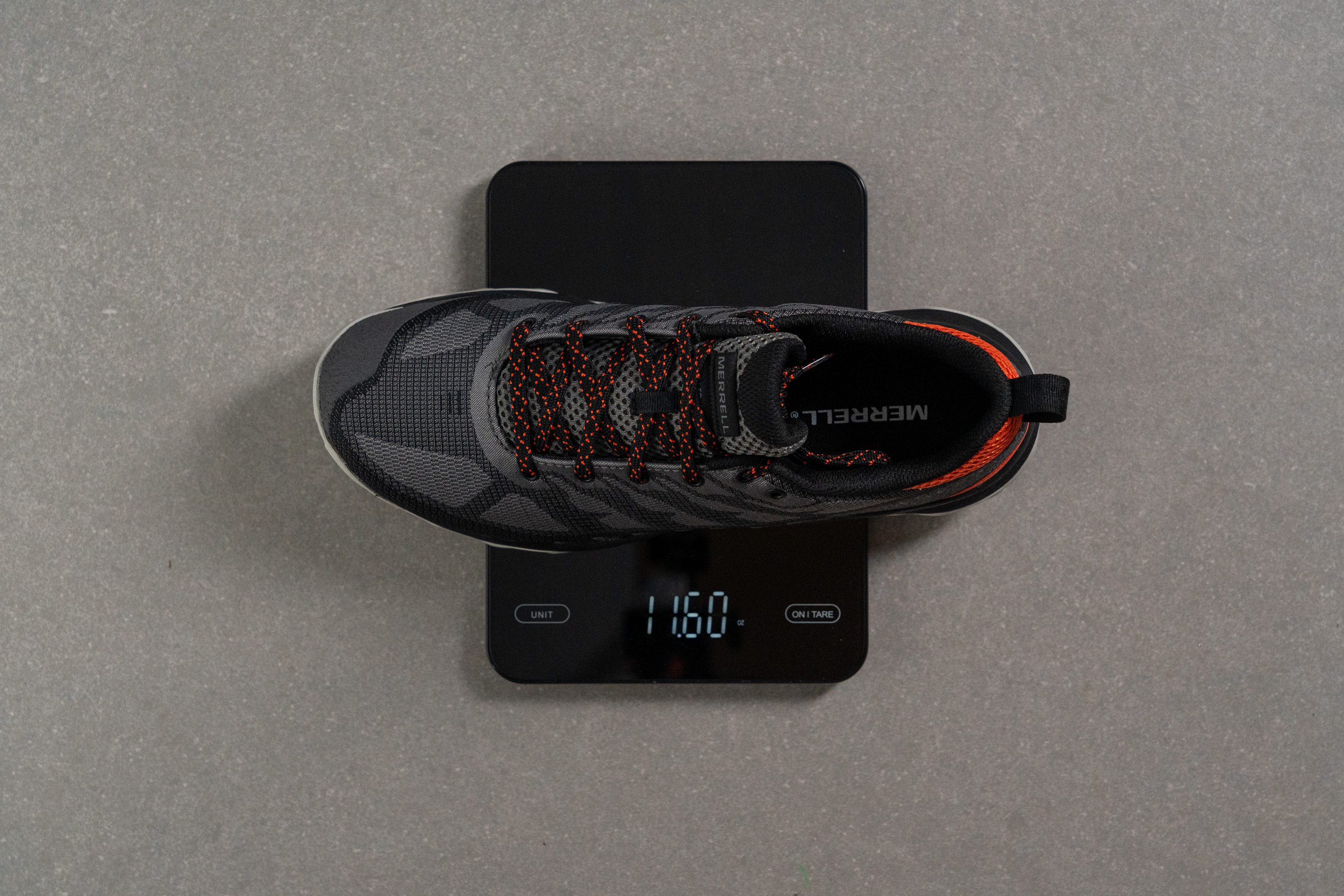
| Speed Eco | 11.6 oz (329g) |
| Average | 13.4 oz (380g) |
Breathability
The Speed Eco is not a waterproof shoe but its densely woven fabric hinders breathability quite a bit.
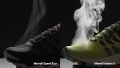
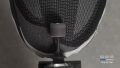
You can see how thin the billows of smoke are in the Difference in midsole softness in cold compared to the Merrell Antora 3 in our breathability test. Considering the difference, we couldn't rate the Speed Eco's ventilation capacity any higher than 2/5.
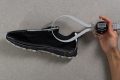
When we hovered the shoe's half-cut upper over the LED light, we didn't see any air channels or pores light up either.
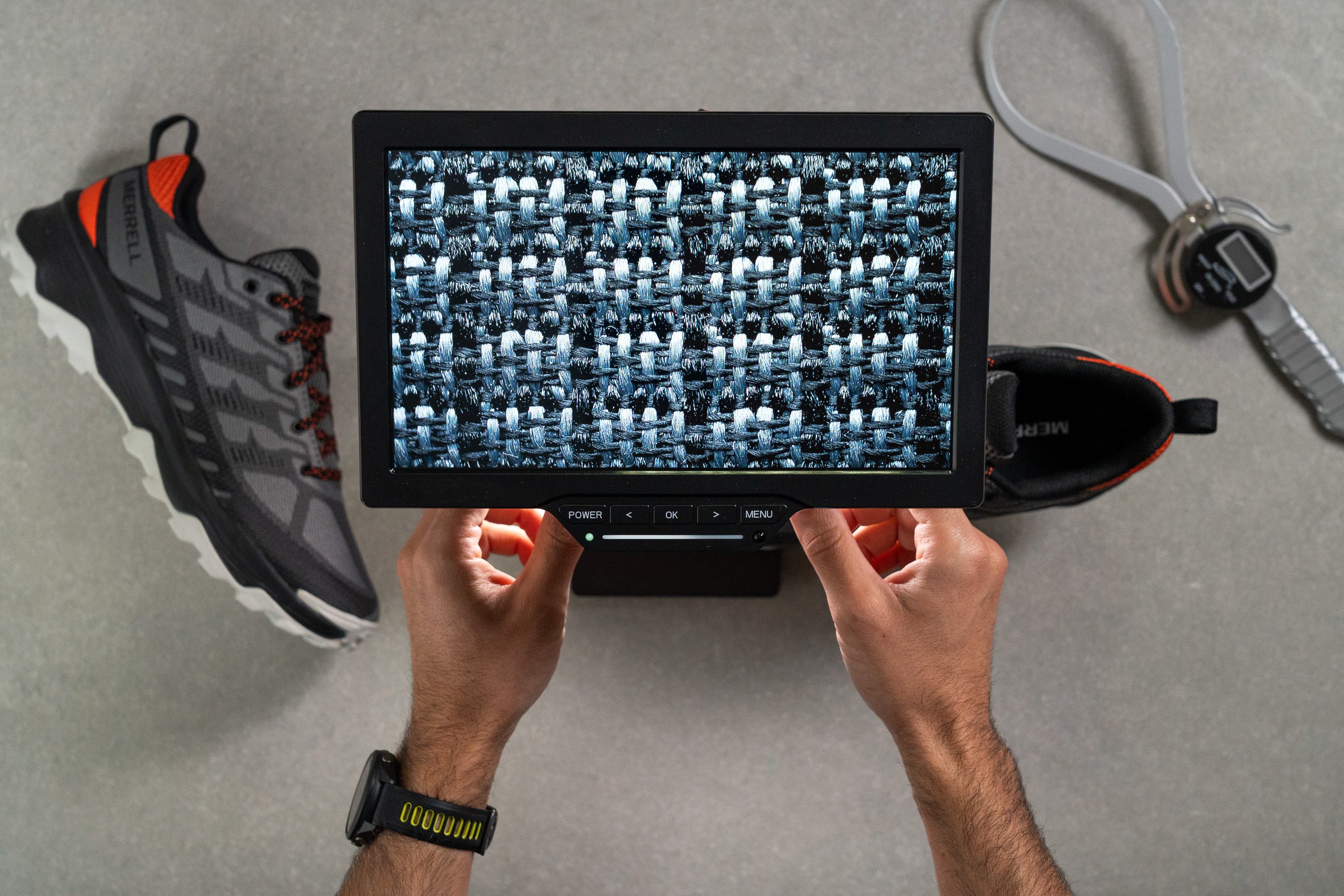
What's more, we couldn't even see any gaps between the threads in our microscope test! Only weaves of different thickness that fit tightly together.
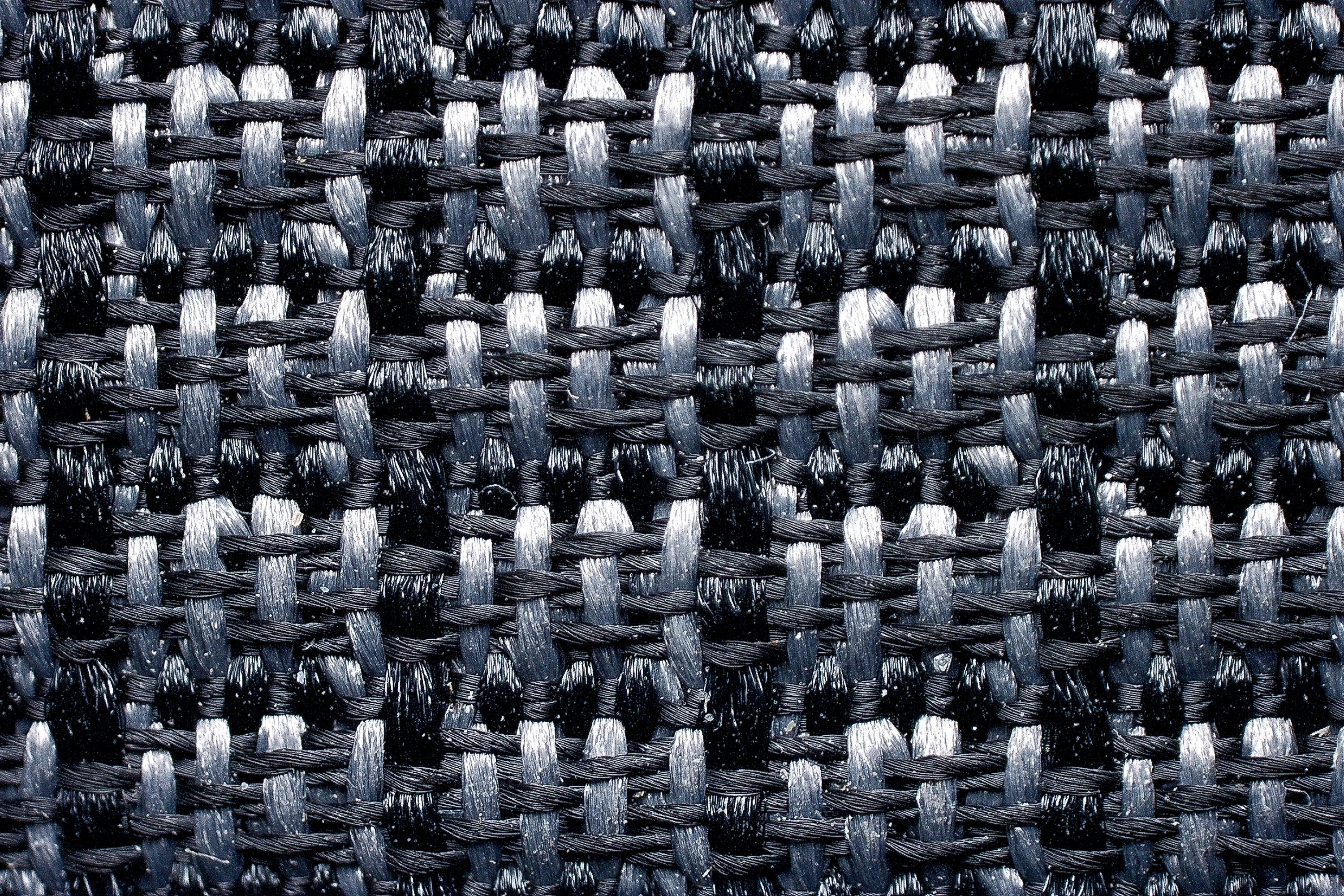
| Speed Eco | 2 |
| Average | 2.4 |
Stability
Lateral stability test
Even though it doesn't have any special supportive elements or foot-stabilising technologies, we found the Merrel Speed Eco to be an inherently stable shoe thanks to its firm platform.
But please note that its lateral stability is only sufficient for what the shoe is intended for - moderate hikes on light terrain. So it's not the support you need for tackling challenging terrain with a heavier load.
Torsional rigidity
Even though there is no shank inside, the Speed Eco turned out to have a lot of torsional rigidity in its midfoot. That made the shoe much harder to twist raising our stiffness score to 4/5.
This is the primary indicator of this Merrell shoe's lateral stability.
| Speed Eco | 4 |
| Average | 3.7 |
Heel padding durability
The shoe's heel counter also has some moderate rigidity to it earning a middle-range stiffness score of 3/5. However, this is just enough to add some rearfoot support for short hikes on easy trails.
| Speed Eco | 3 |
| Average | 3.7 |
Midsole width - forefoot
Neither too wide nor slim, the Speed Eco's midsole dimensions fall straight into the average range of hiking shoes.
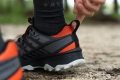
A finger loop at the back helps to slip into the shoe with less effort.
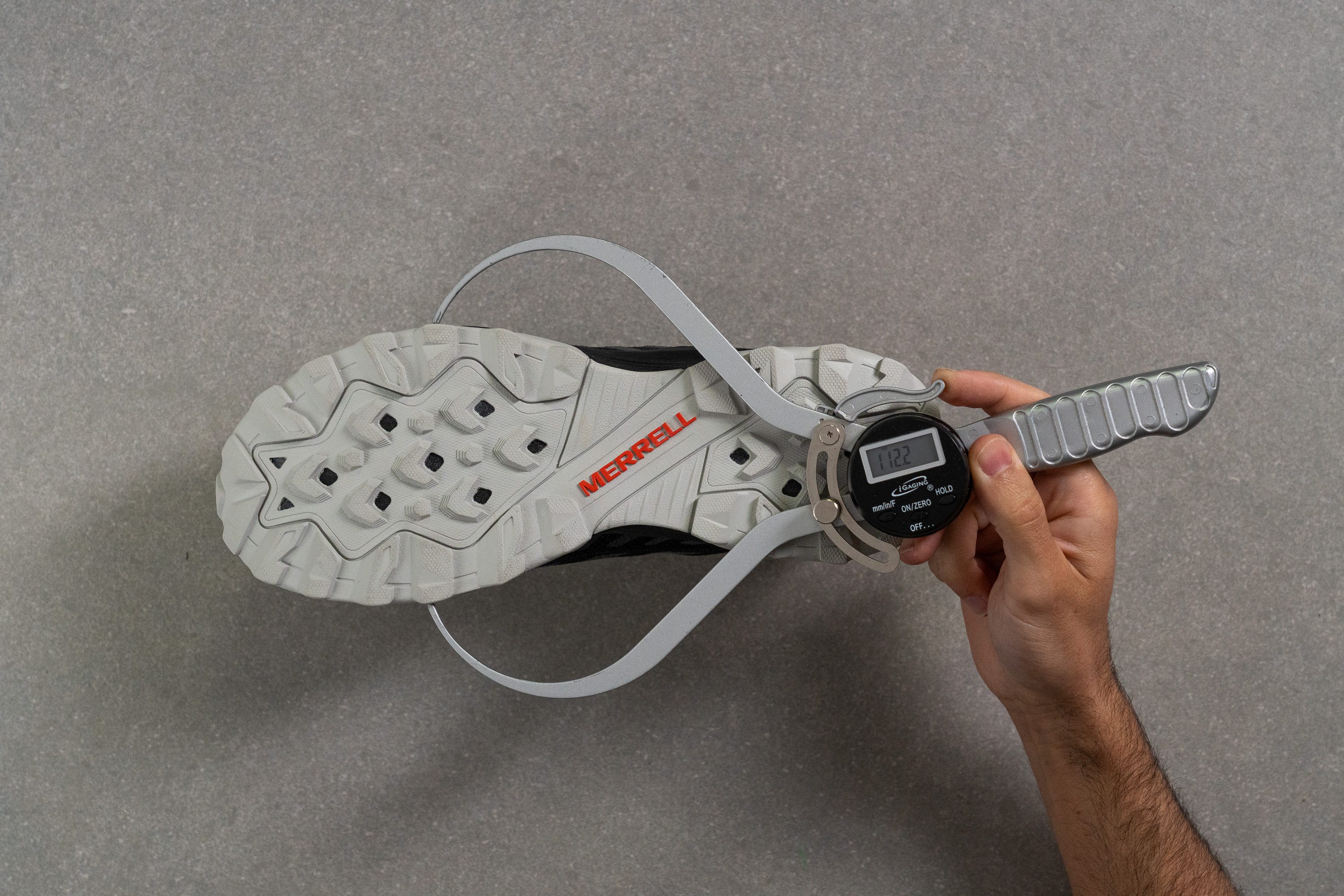
| Speed Eco | 112.2 mm |
| Average | 111.3 mm |
Midsole width - heel
The shoe's heel also proved to be on par with the average at 87.0 mm in its widest area. Not too platformy but with enough surface area to keep us feeling steady.
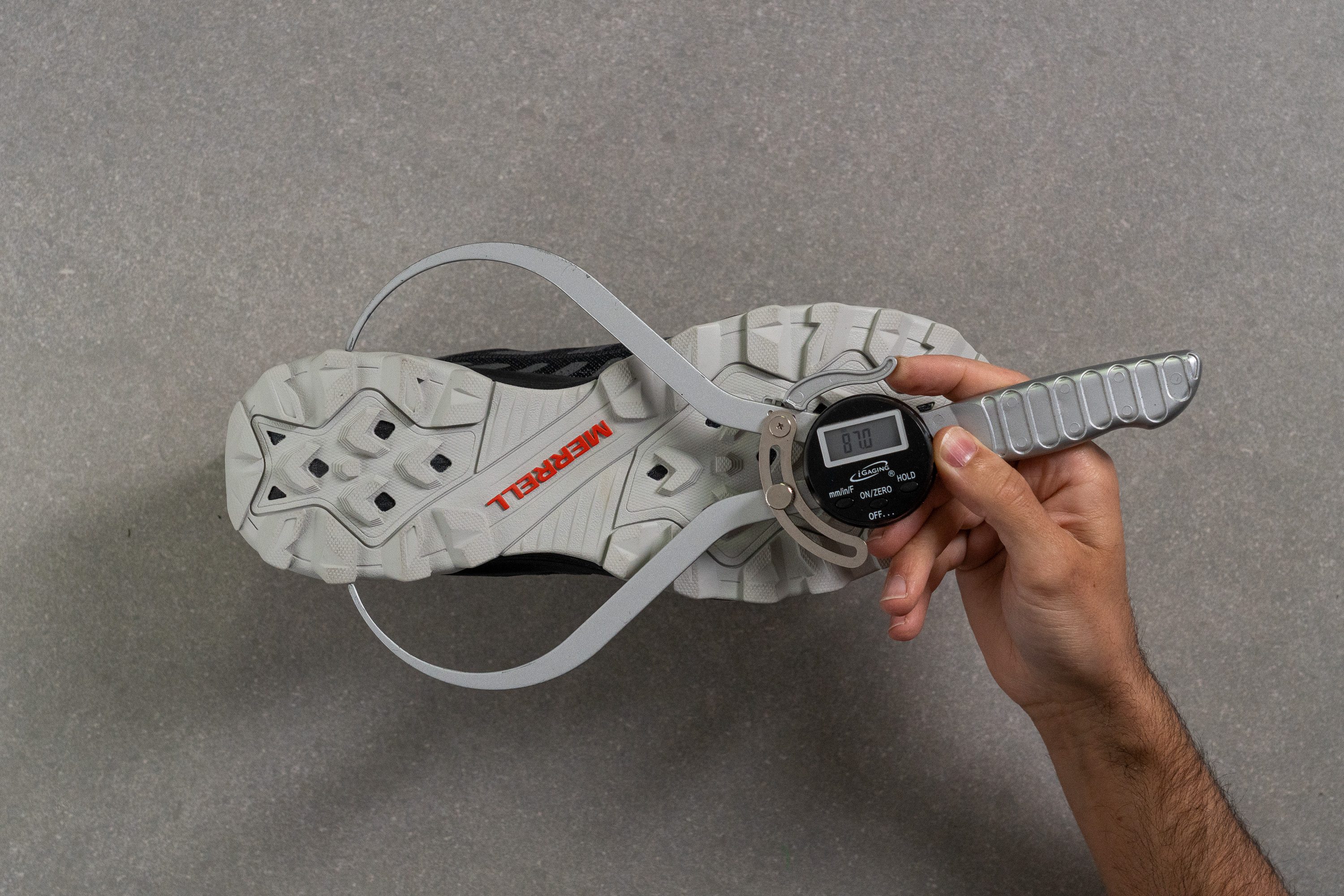
| Speed Eco | 87.0 mm |
| Average | 87.9 mm |
Durability
Toebox durability
But there is a bright side to the shoe's dense mesh upper - it can sustain a lot more wear and tear than the other textiles we've tested!
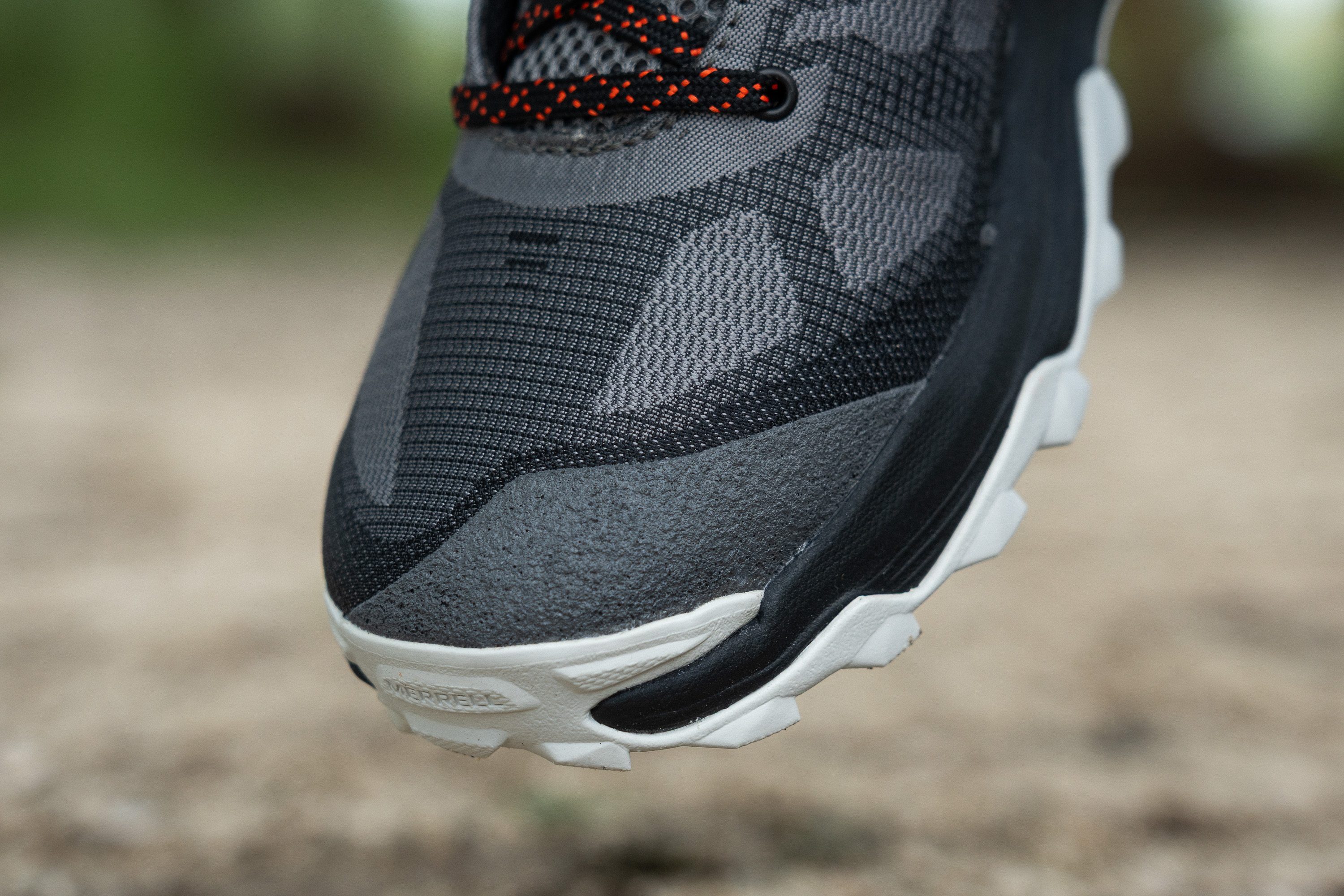
Exposing the Speed Eco's toebox to sandpaper for 12 seconds at a 5K RPM speed, we were amazed by its ability to hold up! Because of only minor scuffing, we rated the shoe's toebox durability at 4/5 which confirms its ability to fend off scrapes, slashes, and stick pokes.
| Speed Eco | 4 |
| Average | 3.7 |
Heel padding durability
Unfortunately, the inner lining of this Merrell shoe did not live up to the strength of its outer material.
It literally took the Dremel one second to tear the shoe's collar lining apart! Thus, we expect it to fail sooner than any other part of the shoe (and it won't be long before it does).
| Speed Eco | 1 |
| Average | 3 |
Outsole durability
We could live with the shoe's torn inner lining but we cannot forgive its lack of outsole durability...
Our Dremel went halfway through one of the shoe's rubber lugs within 18 seconds and left a dent as deep as 1.4 mm.
This demonstrates poor abrasion resistance and can lead to faster outsole wear, especially if you frequent concrete and asphalt or step out of lighter trails to tackle some rocky patches.
| Speed Eco | 1.4 mm |
| Average | 1.0 mm |
Outsole thickness
As a shoe meant for light terrain, the Speed Eco doesn't have a very thick rubber layer either. Measuring its thickness without the lugs, our caliper recorded only 1.7 mm.
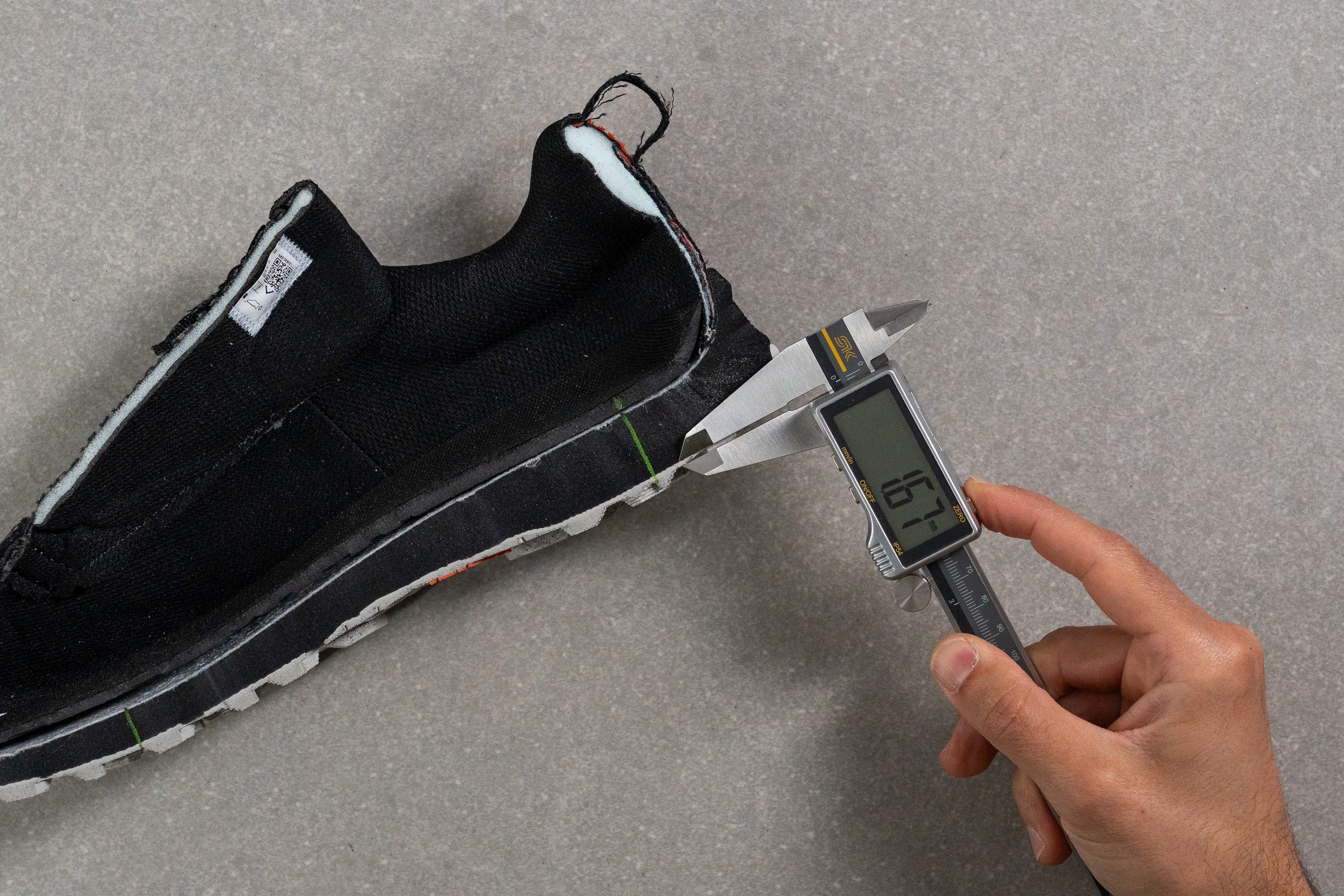
| Speed Eco | 1.7 mm |
| Average | 2.5 mm |
Misc
Insole thickness
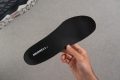
With a thickness of 4.5 mm, the shoe's insole is on par with the category average.
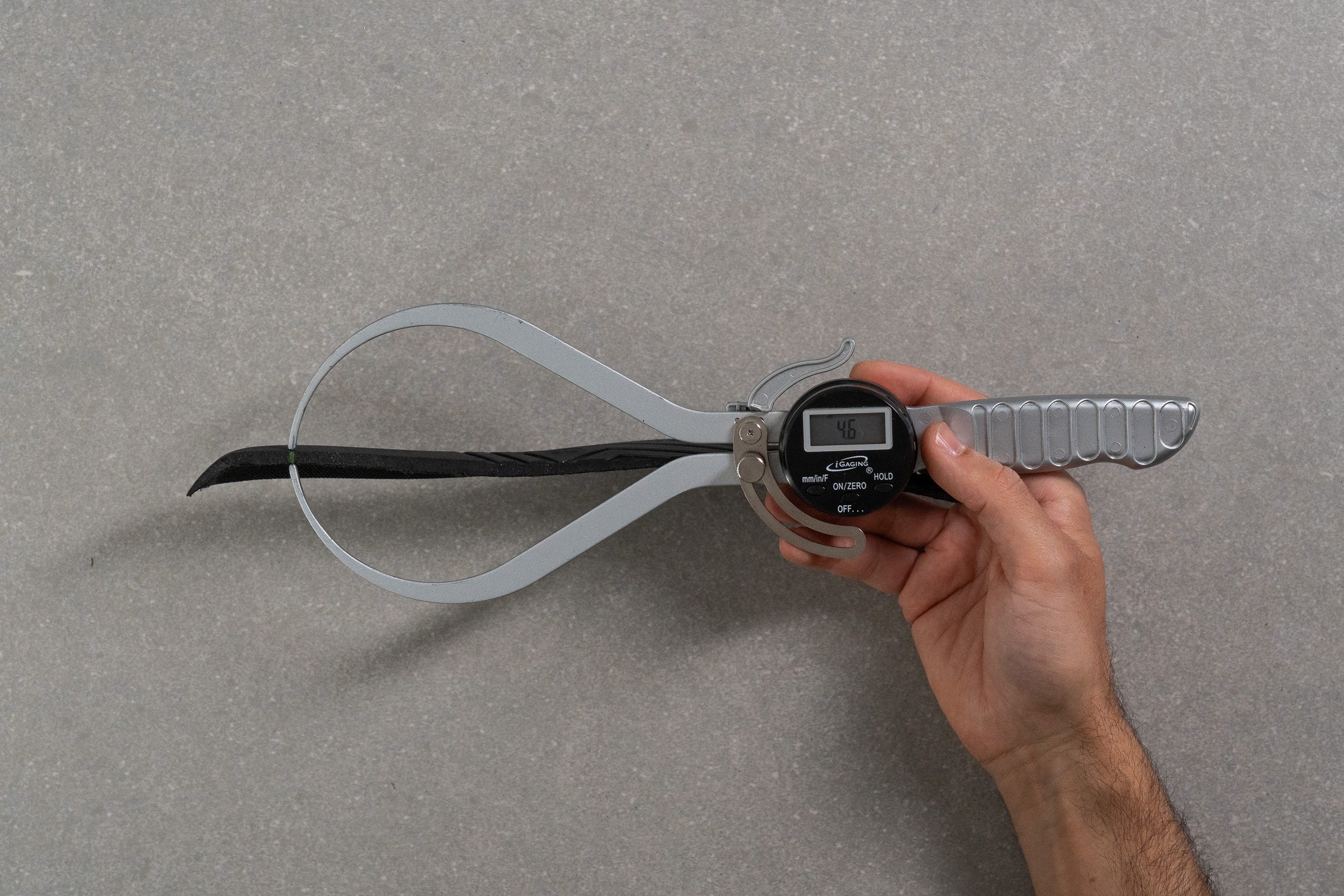
| Speed Eco | 4.6 mm |
| Average | 5.3 mm |
Removable insole
The shoe's insole is removable so you have the option to swap it for your own orthotic.
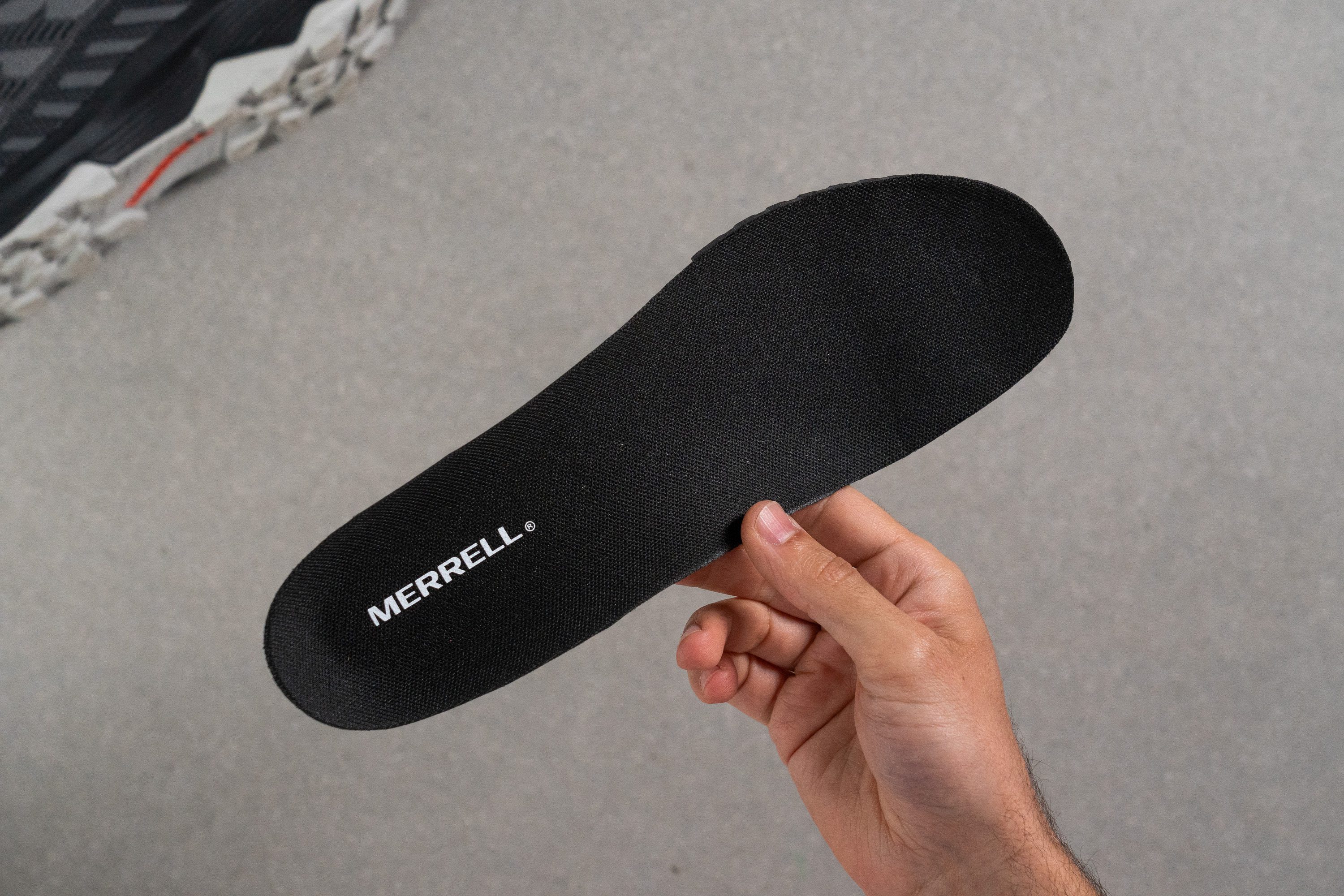
| Speed Eco | Yes |
Feels lively and responsive underfoot (%)
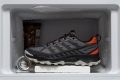
Firm at room temperature, the shoe's midsole doesn't get much harder in cold conditions.
Having kept the Speed Eco in the freezer for 20 minutes, we repeated the durometer measurement and found that it only firmed up by 12%.
Whether you're hiking in chilly weather or leaving the shoes outside overnight, you won't notice any major changes in this Merrell shoe's cushioning.
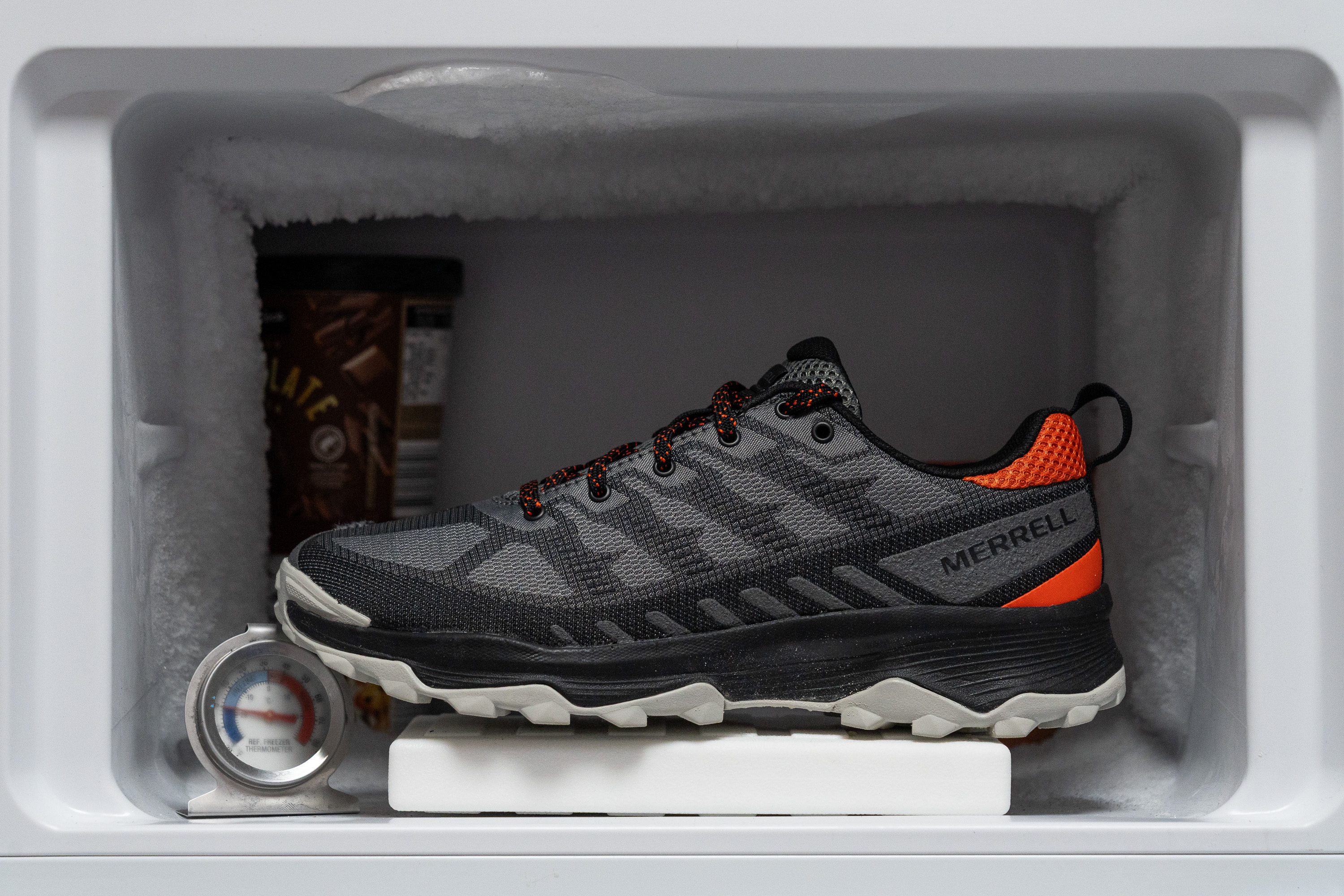
| Speed Eco | 12% |
| Average | 19% |
Reflective elements
None of the shoe's elements are reflective so there is no visibility in the dark.
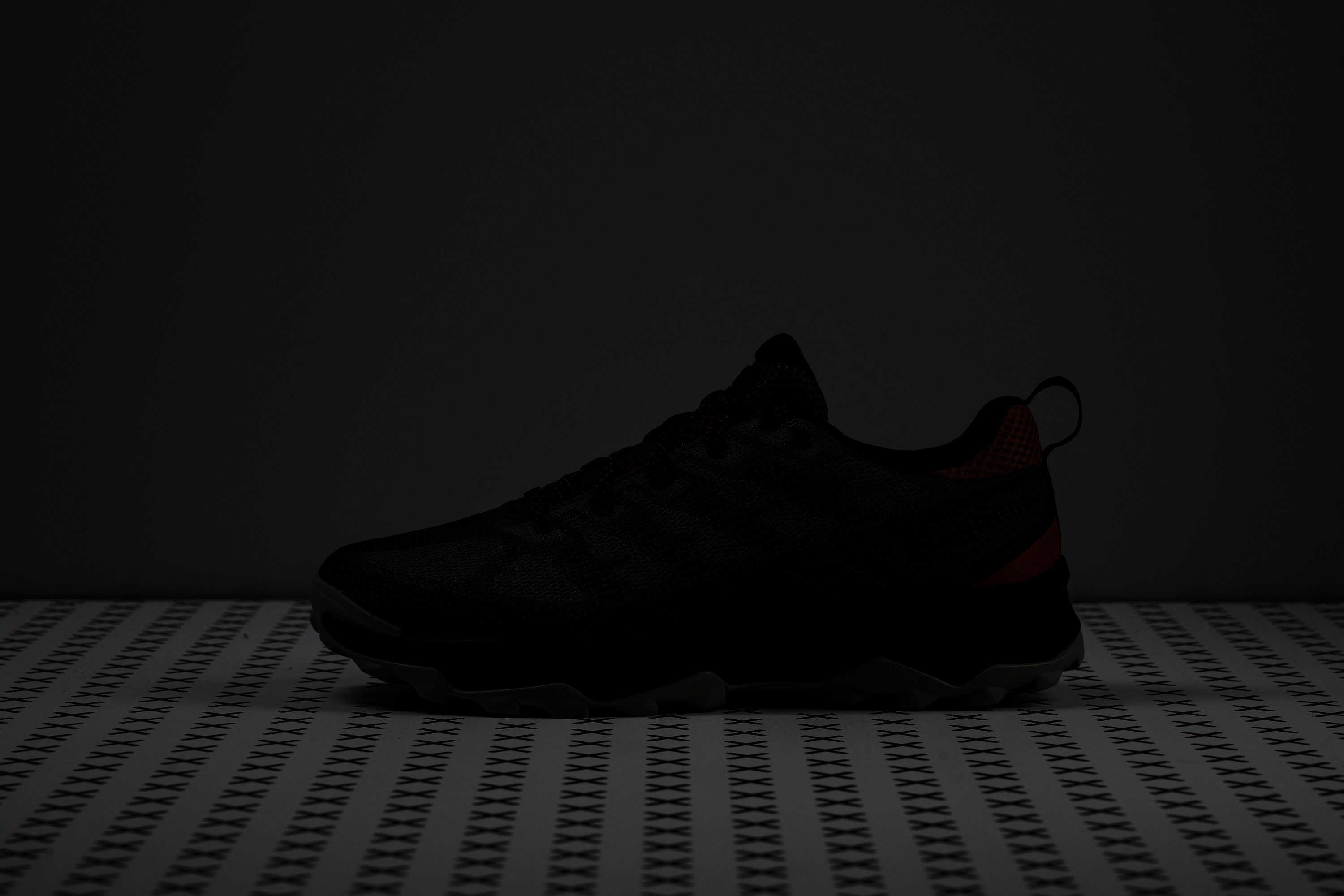
| Speed Eco | No |
Tongue padding
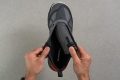
The shoe's interiors are decently padded with foam which is centred in the tongue and the collar. Measuring its tongue thickness returned a slightly below-average reading of 7.7 mm.
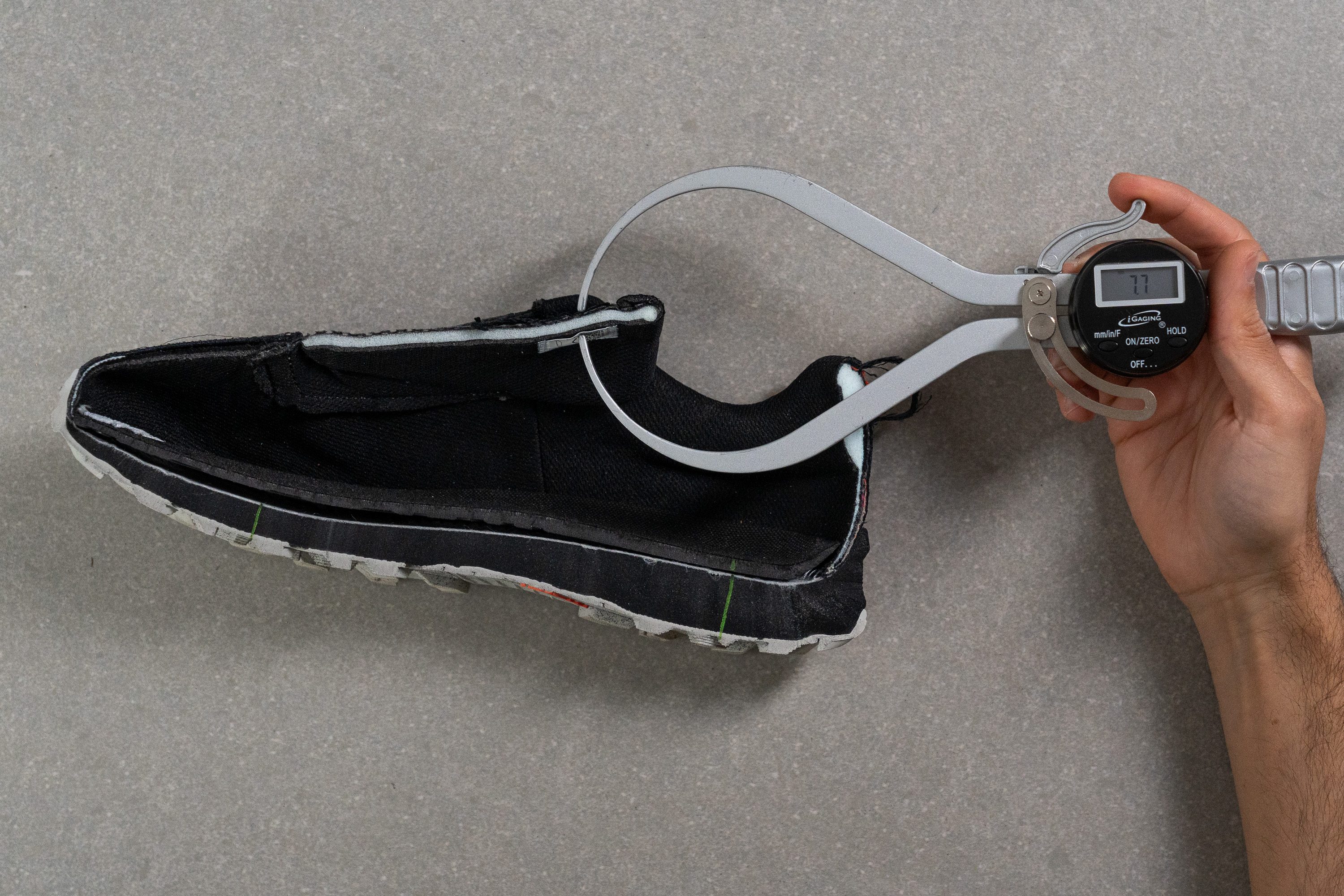
| Speed Eco | 7.7 mm |
| Average | 10.2 mm |
Tongue: gusset type
According to the brand's description, the Difference in midsole softness in cold comes with a bellows tongue (also known as a gusseted tongue).
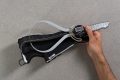
However, our inspection showed no gussets or other pieces connecting the tongue to the rest of the upper! It is completely separated with large gaps on both sides.
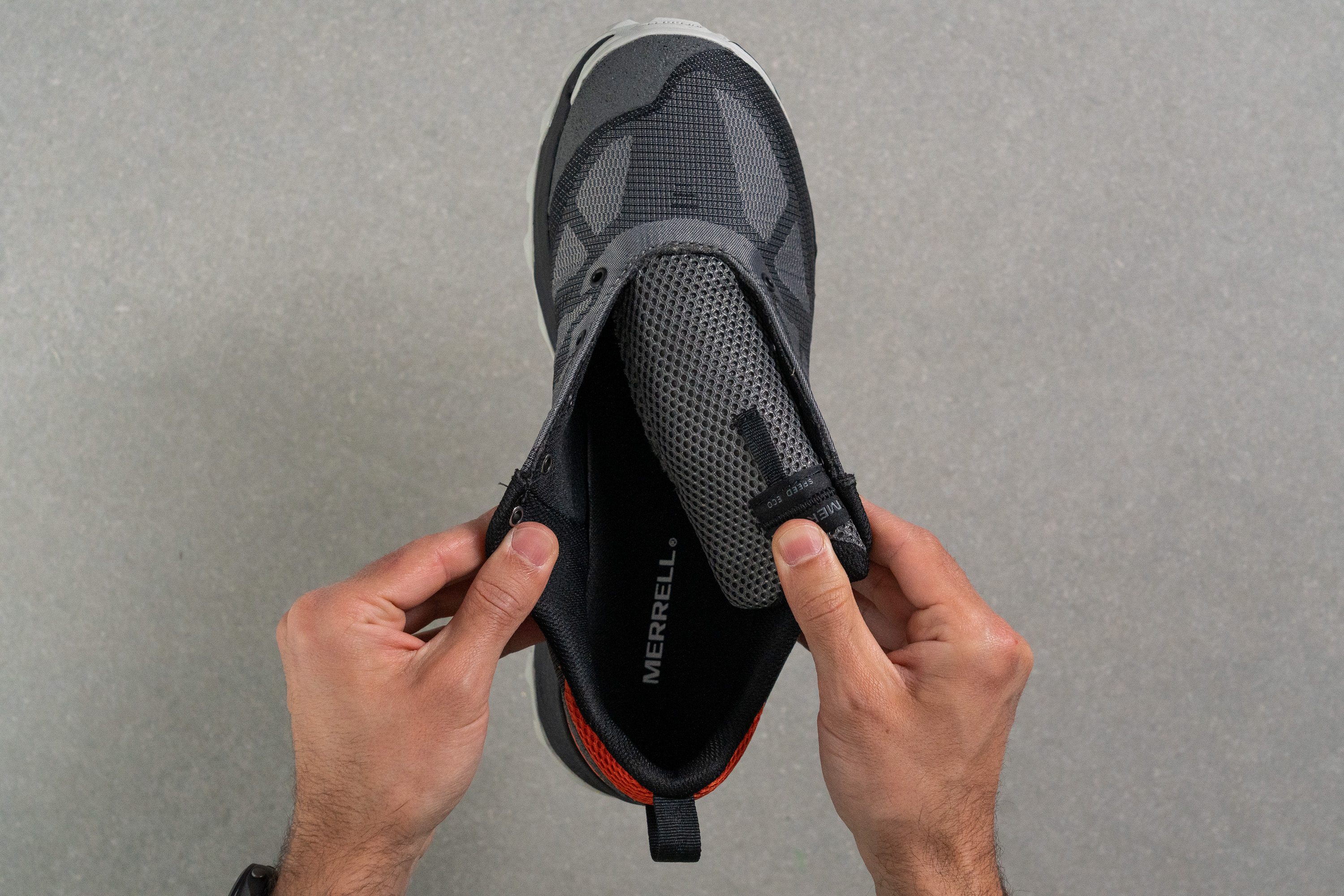
| Speed Eco | None |
Price
The Speed Eco is a more affordable option from Merrell and we consider it reasonably priced. The shoe has its shortcomings but our lab tests confirmed that it ticks all the boxes of a functional hiking shoe for easier hikes on light terrain.
What's more, it packs a tonne of sustainable recycled materials without raising the price point.
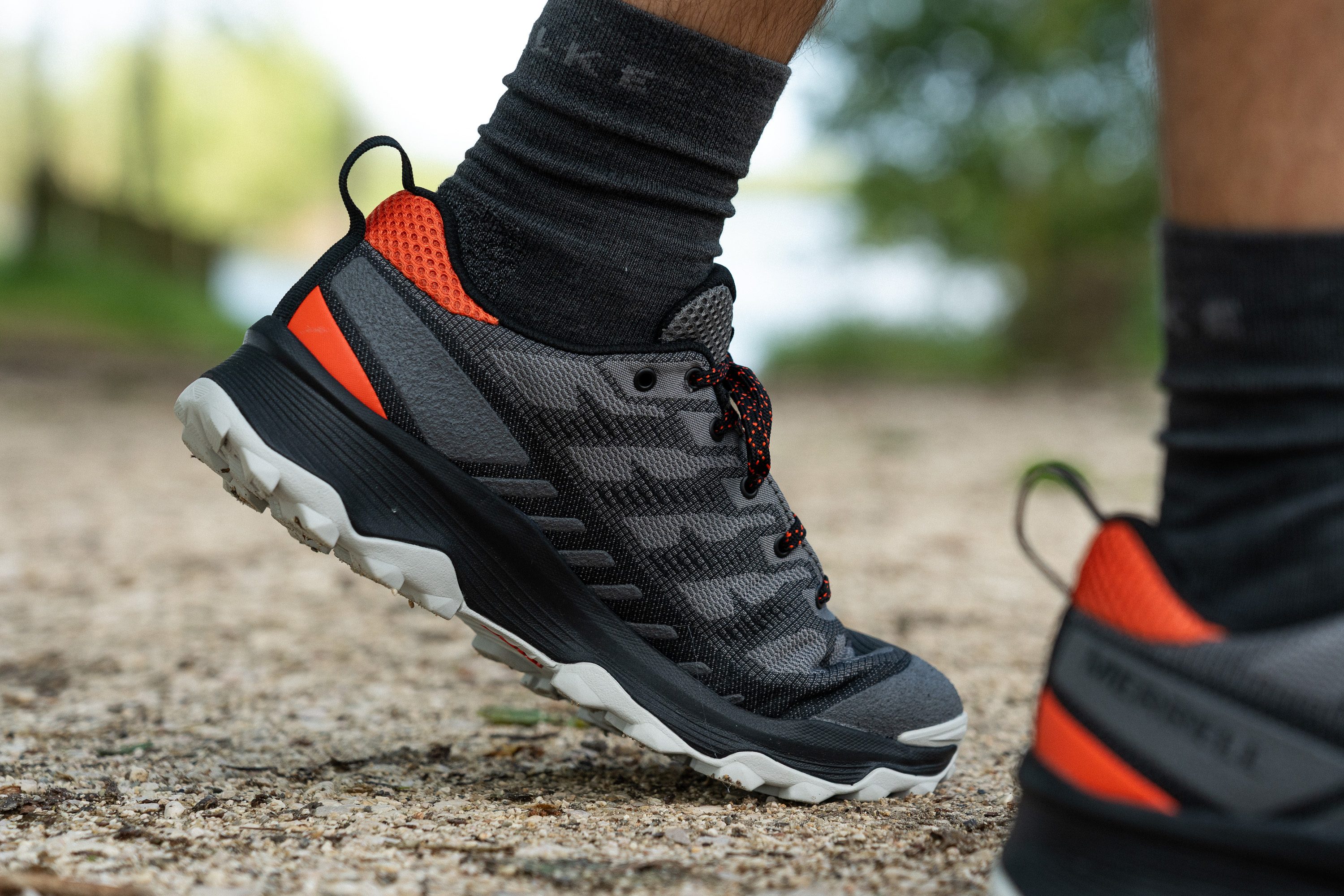
| Speed Eco | $110 |
Heel tab
A finger loop at the back helps to slip into the shoe with less effort.
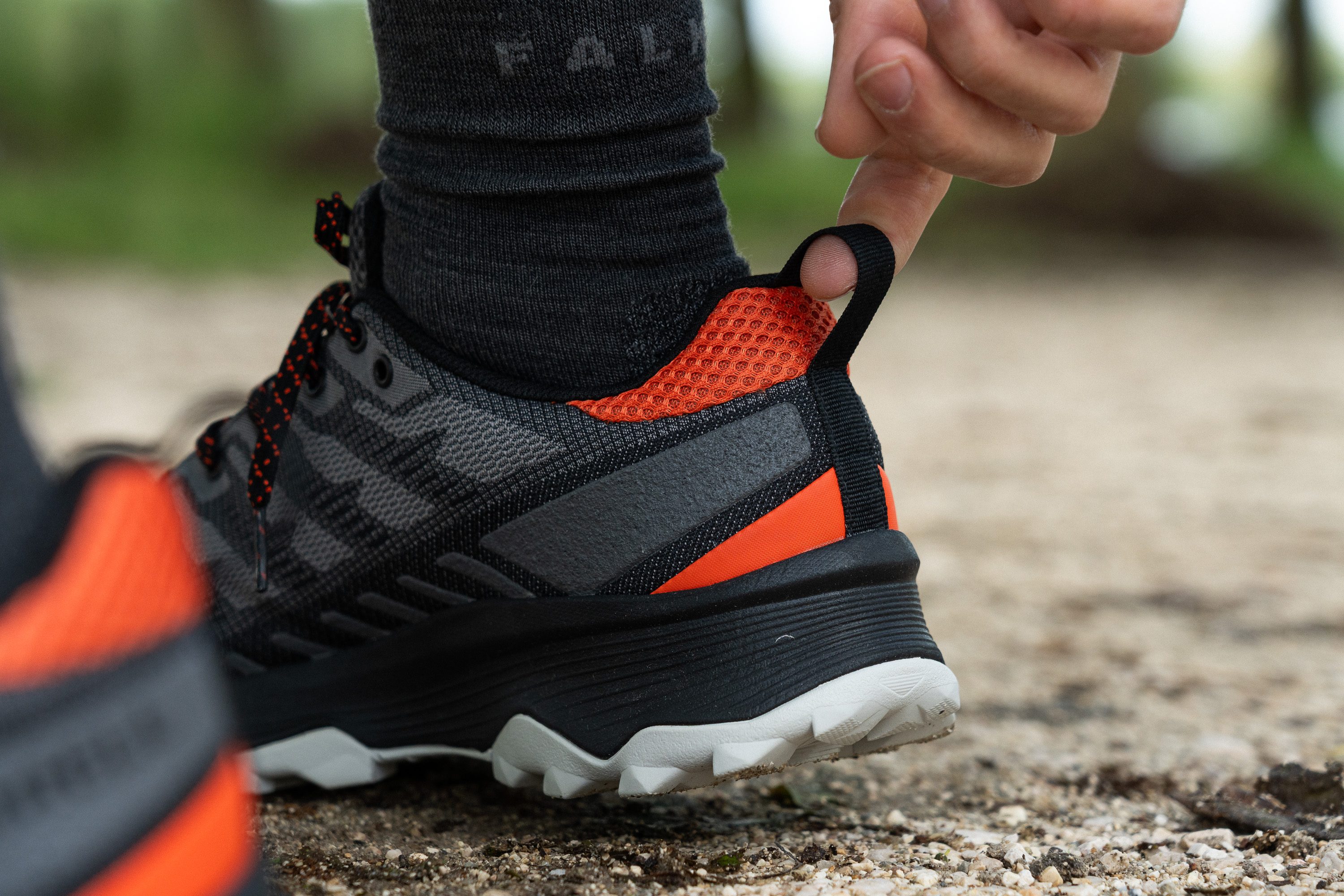
| Speed Eco | Finger loop |
Sustainable materials
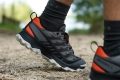
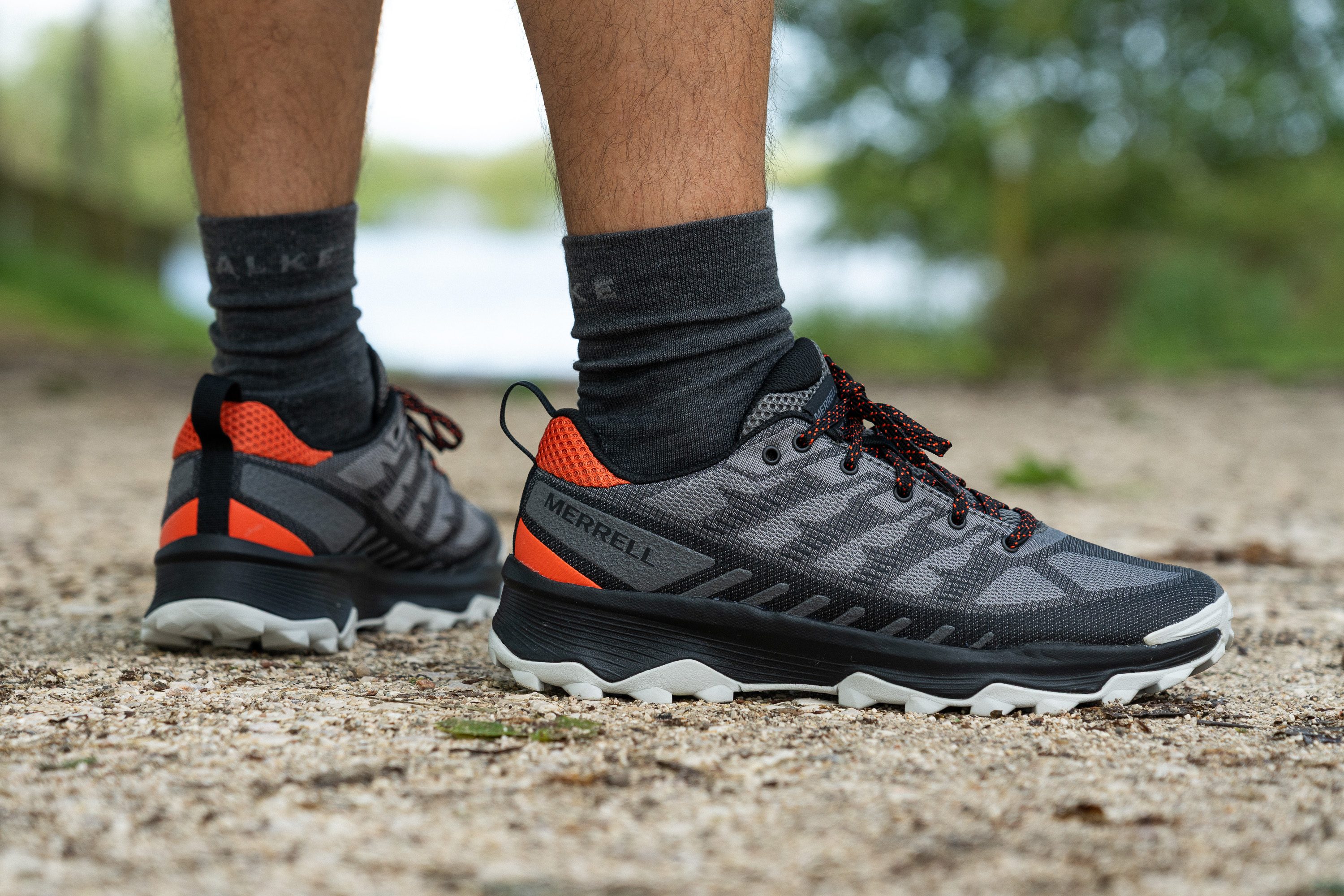
This Merrell shoe carries the word 'Eco' in its name for a good reason. Nearly every part of the Speed Eco is made of recycled sources:
- External Jacquard mesh (77%)
- Internal mesh lining (100%)
- Mesh insole lining (100%)
- Laces and webbing (100%)
- Removable insole (50%)
- Rubber outsole (30%)